Mahdi Ahmed

Scripting waves of imagination from the sunny side of the Maldives.

Posts tagged ‘MedianetMV’

ROBOMAN: THE MOVIE – A FAMILY MUSICAL WITH DANCE AND DRAMA

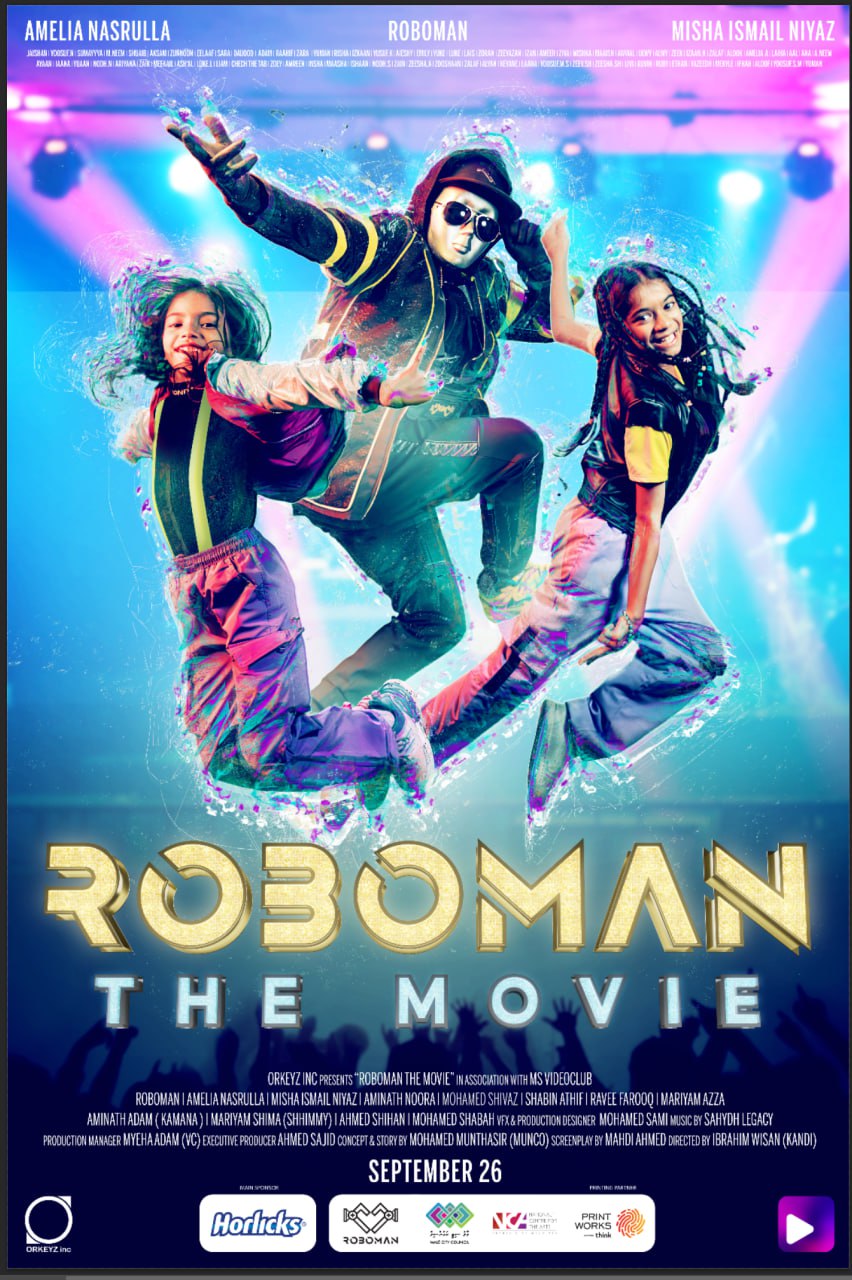
Roboman: The Movie is a family-oriented musical that beautifully blends heartwarming moments, dance, and stunning visual effects with an engaging time-travel narrative. Directed by Ibrahim Wisan and produced by Mohamed Munthasir and Ahmed Saji of Orkeyz Inc., the film is a bold, fresh entry into Dhivehi cinema. With standout performances from newcomers Amelia Nasrulla Shakeeb and Misha Ismail Niyaz, along with breathtaking cinematography and CGI by Mohamed Saami, this film is a cinematic treat for audiences of all ages.
The film begins in 2040, where Roboman, a beloved masked hero and national icon, is living peacefully—until he discovers that his timeline has been drastically altered. His arch-nemesis, Umar, has tampered with the past, specifically the events of 2024 during the finale of the Robo Junior Challenge. Due to this interference, Roboman finds himself labeled a convicted criminal, hunted by the authorities for crimes he didn’t commit. As the police close in, Roboman is forced to use time-travel technology to return to 2024 and stop Umar from rewriting history.

In 2024, the focus shifts to Ahu (played by Amelia) and Asee (played by Misha), two young cousins competing in the Robo Junior Challenge, a prestigious dance competition. Despite being the younger of the two, Ahu is more confident and self-assured. However, as an orphan living with her aunt, she feels the weight of being treated differently by the family. Although Ahu can sense the subtle discrimination, Asee’s unwavering support makes her feel truly part of the family. Ahu, in turn, becomes Asee’s source of strength, giving her the confidence to perform and pursue her dreams.

Unknown to both, their competition is at the center of Umar’s plan to discredit Roboman and shift the narrative of history in his favor.

As the competition unfolds, Roboman races against time to prevent Umar from permanently tarnishing his legacy. Along the way, Ahu and Asee’s journey intersects with Roboman’s, leading to a thrilling climax where friendship, family bonds, and the fate of the future are at stake.

Amelia brings depth and charisma to the role of Ahu, portraying her as a strong, confident young girl who faces discrimination but never lets it break her spirit. Despite being younger than Asee, Ahu is the more assured one, and it’s her quiet strength that inspires her cousin. Amelia’s portrayal of Ahu’s resilience and determination is captivating, particularly in moments where she has to balance her personal struggles with her role as Asee’s emotional anchor. Her dance performances are dynamic, reflecting not just her skill but her internal drive.

Misha excels as Asee, the cousin who struggles with the pressures of competition. While Asee initially lacks the confidence to perform at her best, it’s Ahu who bolsters her and gives her the courage to shine. Misha beautifully captures Asee’s vulnerability and her deep love for Ahu, making their bond one of the emotional highlights of the film.

Roboman (played by the real-life showman) delivers a performance filled with seriousness and mystery. As both the masked hero and the judge of the Robo Junior Challenge, Roboman’s silent yet expressive presence raises the stakes of the story. His dual role in both the present day and 2040 adds urgency and drama to the narrative.

Shabin portrays Umar (both in 2024 and 2040), bringing complexity to the antagonist. His depiction of the younger, bitter Umar highlights his jealousy and ambition, while his portrayal of the older Umar exudes menace and cunning. Shabin’s performances add depth to the film’s villain, making him a worthy adversary to Roboman.

Fathimath Noora and Mohamed Shivaz give strong performances as Asee’s loving parents, grounding the film in relatable family dynamics. However, subtle hints of favoritism toward Asee, despite their love for Ahu, provide an emotional undercurrent to Ahu’s story. Their support of Asee, along with their gradual realization of Ahu’s strength, adds an important layer to the narrative. Sobah and Gobbe, as Akbar and Aton, play Umar’s friends who eventually discover his nefarious plot and decide to help Roboman, adding complexity to their characters.

The film also features a fun cameo by superstars Mariyam Azza and Ravi Farooq as themselves, playing the cool judges of the Robo Junior Challenge, adding an exciting celebrity twist.

Mohamed Saami’s cinematography and visual effects are nothing short of spectacular. His portrayal of a futuristic Malé in 2040 is visually breathtaking. The futuristic scenes, particularly Roboman’s music show and his high-tech apartment with an AI bot, blend seamlessly with the live-action elements. Saami’s dynamic camera angles and fluid motion in the dance sequences add energy and excitement, while the time-travel sequences are handled with precision, making them visually captivating.

The music by Shahyd Legacy perfectly complements the story, enhancing both the emotional and action-packed moments. The soundtrack balances pulsating beats for the dance competition scenes with more poignant melodies for the quieter, introspective moments. Shahyd Legacy’s music drives the film’s energy while also underscoring its emotional depth, particularly during Ahu’s and Asee’s character development arcs.

Production Manager Fathimath Myeha plays a pivotal role in keeping the film on track, from coordinating auditions to managing the complex shooting schedules. Her work behind the scenes ensured that the film’s ambitious goals were met without sacrificing quality.

The production, led by Mohamed Munthasir and Ahmed Saji, demonstrates a clear vision and dedication to pushing the boundaries of Dhivehi cinema. Munthasir’s concept, inspired by the real-life showman Roboman, adds an authentic touch to the film, while Saji’s role in assembling a top-notch technical team ensures that every aspect—from CGI to choreography—meets the highest standards.

Director Ibrahim Wisan expertly handles the ambitious time-travel narrative while keeping the heart of the story grounded in its emotional core. His direction ensures a smooth transition between the futuristic 2040 and the more grounded 2024, maintaining tension and excitement throughout. Wisan’s balance between dance, humor, and heartfelt moments makes Roboman: The Movie an engaging watch for families and young audiences alike.

Roboman: The Movie is a landmark achievement in Dhivehi cinema, offering a unique blend of family-friendly storytelling, visually stunning effects, and emotional depth. With its innovative time-travel plot, strong performances, and heartfelt messages about perseverance, friendship, and family, the film sets a new standard for the Maldivian film industry. It’s a family entertainer you won’t want to miss!

P.S. Amelia and Misha are simply outstanding.

ROBOMAN: THE MOVIE: A VISUAL TRIUMPH BY SAMI

In the world of filmmaking, certain artists possess the power to elevate a story, creating visual spectacles that captivate audiences and linger in their minds long after the credits roll. Mohamed Sami is one such talent—a cinematographer and CGI artist whose exceptional work on Roboman: The Movie promises to mesmerize viewers. With his ability to seamlessly blend CGI with live-action footage and his eye for stunning cinematography, Sami has crafted a visually breathtaking portrayal of Malé and a futuristic apartment for Roboman in 2040, setting a new benchmark in Dhivehi cinema.

One of the most talked-about elements of Roboman: The Movie would be its strikingly vivid scenes of Malé in the year 2040. Sami’s vision of the city is both futuristic and familiar, capturing the essence of Malé’s landscape while infusing it with a dynamic, modern twist. His rendition of Roboman’s apartment is equally breathtaking. These scenes transport viewers to a futuristic Malé, where towering structures, vibrant colors, monorails, and other contemporary elements feel both aspirational and grounded.

Sami’s CGI work is nothing short of remarkable. His ability to create a futuristic cityscape that feels authentic and lived-in showcases his visionary talent. The CGI seamlessly integrates with live-action footage, enhancing the narrative without overpowering it. This delicate balance between visual effects and real-world elements is going to keep the audience deeply immersed in the story, fully believing in the world the characters inhabit.

What truly makes Sami’s work in Roboman: The Movie stand out is how effortlessly he merges CGI with live action. Instead of feeling like a separate layer, the CGI is woven into the fabric of the film, enriching the story’s emotional beats and adding depth to the narrative, instantly transporting the audience to a near-future version of Malé.

Sami’s attention to detail is evident in every frame. He uses CGI not merely to create a spectacle, but to tell a story—each visual element serves a purpose. His work demonstrates that CGI, when used effectively, can be a powerful storytelling tool that adds layers of meaning and emotion to a film.

Beyond his groundbreaking CGI work, Mohamed Sami’s expertise as a cinematographer is evident throughout Roboman: The Movie. His camera work is dynamic and fluid, capturing the energy and emotion of each scene with precision. From the vibrant dance sequences of the Robo Junior Challenge to the quieter, more intimate moments between characters, Sami’s camera movements are meticulously designed to draw viewers into the film’s world.

The film’s action-packed dance sequences are shot with a keen understanding of rhythm and flow, enhancing the choreography and allowing the audience to feel every beat and movement. Sami’s use of sweeping shots, tight close-ups, and innovative angles keeps the visuals fresh and engaging, ensuring that each scene feels distinct and purposeful.

Mohamed Sami’s work on Roboman: The Movie would undoubtedly set a new standard for visual storytelling in Dhivehi cinema. His ability to create a believable and immersive world through a combination of CGI and live action, coupled with his exceptional cinematography, marks him as a standout talent in the industry.

Roboman: The Movie is set to be released on September 26, 2024. Stay tuned for more!

GOODBYE GIRLFRIENDS

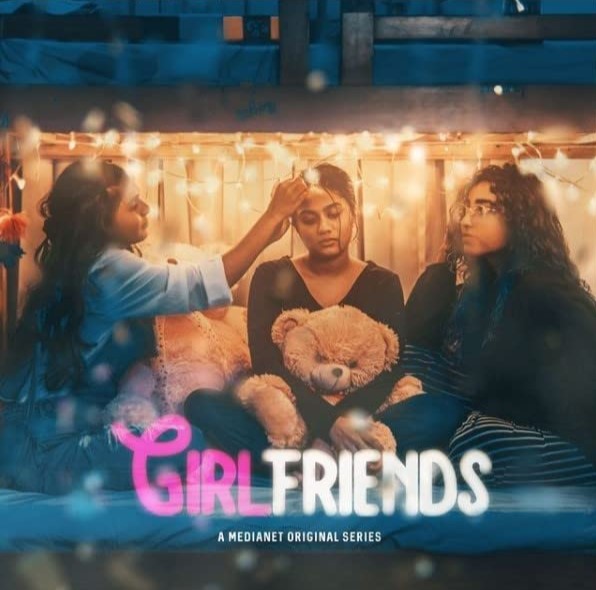
I found myself caught in a bittersweet whirlwind of emotions as I typed the words “END OF SEASON 2” on the last page of the twelfth episode of the hit series, Girlfriends. A wave of feelings swept over me, the result of two months of immersing myself in the lives of Zila, Shamla, and Firushan.

Their flat became like a second home to me, their joys and struggles etched in my mind. Season 2, a year and a half after the first, explored the intricate webs of their fates.

Zila’s ascent in the architecture world was haunted by the ghosts of her past, a tribute to her unbreakable resilience in the face of old scars. Shamla, now a sound engineer for a Dhivehi film, faced her own labyrinth of difficulties, including the unresolved hurt and a new relationship fraught with its own challenges.

Firushan became the key that linked their stories, adding richness and nuance to the plot. His battle with a dark secret and his involvement in Zila and Shamla’s lives added a touch of intrigue and mystery.

Each episode unraveled against the colorful scenery of Male’, exposing secrets, pain, love, and finally, healing. It was a story about the human spirit’s amazing ability to bounce back, the bravery to face inner demons, and the lasting power of friendship.

Writing Season 2 was a deeply personal journey, filled with moments so moving that they brought tears to my eyes. As I reflect, my heart is filled with gratitude for Munko, the series creator, and Saaji, the producer, for giving me this captivating story. Their unshakable faith in my writing has been a fountain of constant inspiration and support.

As I say goodbye to Season 2, my eyes look forward to the dawn of Season 3, if destiny permits it to be. Until then, I send my best wishes to the cast and crew who are working hard to make it a reality.

REUNITED WITH MY GIRLFRIENDS

After an agonizing 2 years, 0 months and 7 days hiatus, I’m finally back with my Girlfriends – no, not the kind you’re thinking, but the hit web series I penned for Orkeys Inc. that streamed on MediaNet. It just got a green light for season two, and I will be teaming up again with the genius series creator, Munko, to dish out another 12 episodes of pure awesomeness.

Our fab trio – Zila, Shamla, and Firshan, brilliantly portrayed by Mye, Aisha, and Sharif – are back in town. This season, they’ve packed up and moved to a brand-new apartment. Expect even more drama, adventures, and daily life face-offs. Not to mention, a cocktail of intriguing (and a bit menacing) old and new characters!

Quick brag: I’ve already penned down episodes one and two, and the first episode’s shoot? Done and dusted! Can’t wait to sneak a peek at the rough cut.

Alright, I think I’ve rambled on enough for now. Time to dive back into the world of my Girlfriends. Catch you on the flip side! Cheers! 🥂

I MISS MY GIRLFRIENDS

I wrapped up writing the web series, Girlfriends, 12 episodes yesterday. The feeling is indescribable, and my heart is overflowing with emotions. This was not just a project but a journey that left an imprint on my soul, and it was an experience I will forever cherish and hold close to my heart.

From the moment I sat in the first pitch meeting with the series creator, Munko, to the character build-up sessions with the entire cast, I knew this would be special. The concept was simple yet so emotionally charged that I was utterly drawn and immersed in it.

Girlfriends is a story of three twenty-something girls sharing one room, struggling to fulfill their dreams while making ends meet amidst the chaotic city life of Male’. It was a tale of trials and tribulations, heartbreaks and triumphs, and the unbreakable bond of friendship. It was a story that resonated with me on so many levels.

And yet, this was not the first series I have written where the entire series revolves around women. Hinithunvelaashey Kalaa, with fifty-two episodes aired on TVM eons ago, explored the lives of two best friends, girls living on the island of Kelai. While writing Girlfriends, I felt the same intensity and compassion I had for Hinithunvelaashey Kalaa, but a notch above, given that I had to deal with not just two but an array of women characters. And they were tossed into today’s society, which has changed considerably and is fierce and harsh.

I am grateful to Munko and executive producer Saaji for trusting me to write this series to all my heart’s desires. I hope I have delivered to their satisfaction. If only the streamer had given some analytics after premiering each episode. Otherwise, I wouldn’t have bugged them occasionally for feedback.

But my gratitude extends beyond Munko and Saaji. I am indebted to the entire cast, especially the four central characters, for their stunning performances. Zila, Shamla, Hawwa, and Firushan, acted by Ayecha, Myeha, Lahfa, and Sharif, respectively, are mesmerizing. They brought their characters to life in an authentic and heart-wrenching way. They are a treat to watch.

Even the actors in the supporting roles were fabulous. Shout out to Maria, Alam, Axam, Afrah, and the rest of the cast. They all stood out and brought a unique flavor to the series.

And let’s not forget the music. Shahyd Legacy’s composition touched every string of my heart, and it was the beat of the entire series, elevating every scene to another level.

Sami has given this series a striking visual with his lensing, an infectious color with his color grading, and his editing is well-paced. He is a true artist in every sense of the word.

Last, I bow to director Kandi Wisan for his assured direction and for giving this series a completely different visual flair with dramatic undertones. He has squeezed the very best out of every actor, and the result is a job well done.

Girlfriends have been etched deeply in my heart, and I miss writing about them. A few months back, I was making their lives happy, fun, sad, and miserable, sometimes putting them in grave danger. Sometimes I felt a lump in my throat to throw any of them into such emotional turbulence, and I felt that none deserved such treatment.

But that is the nature of storytelling. We create characters, put them through trials, and watch them grow. And that is precisely what we did with Girlfriends

Cheers!