AHMED NIMAL: LONG AFTER THE CREDITS ROLL
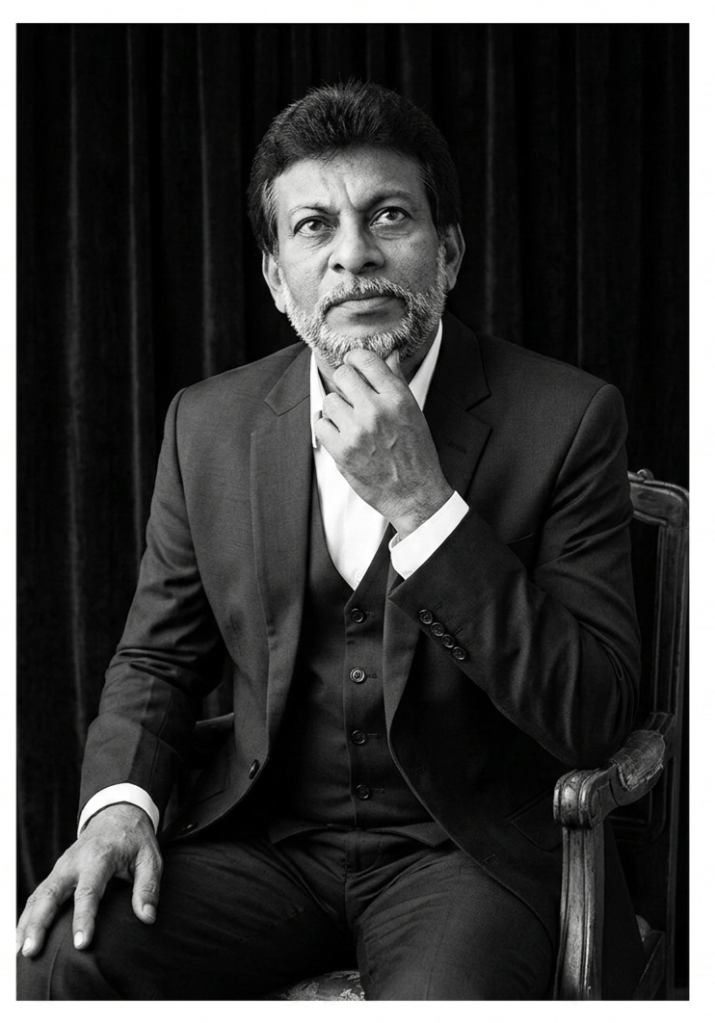
Today, Maldivian cinema feels a little quieter.
The screen feels a little emptier.
I’ve spent most of my life writing words for actors to breathe into. But this morning, as the news came from Indira Gandhi Memorial Hospital, words felt small. The passing of Ahmed Nimal at 62 is not just a loss to a family. It is a fracture in the very foundation of Dhivehi cinema.
He wasn’t just a veteran. He was structure. He was gravity.
For many, Nimal was authority personified on screen — the father whose silence carried more weight than a monologue, the man whose presence alone could steady a scene. For an entire generation of television audiences, he was simply Ali from the hit series Salhi Baisaa.
And what a creation that was.
Each episode gifted him a new shade — Birukuda (fearless) Ali, Ishqee (romantic) Ali — an adjective stitched to his name like a badge he wore effortlessly. It became more than a gimmick. It became a cultural rhythm. Viewers waited not just for the story, but for the next version of Ali he would embody. And somehow, each time, it felt organic. Never forced. Never loud. Just lived-in. Only an actor with deep internal control could pull that off without it becoming parody.
For me, though, he was something even rarer: a masterclass in restraint.
When I was writing Rauf for Kan’bulo, Director Hussain Munavvar and I never really debated casting. Some roles are written with ink. Others are written with a face already hovering between the lines. Rauf belonged to Nimal from the first draft.
On my blog, I’ve often said this — he never wasted a word. He commanded the frame without raising his voice. Watching him perform was like watching a seasoned editor trim excess emotion in real time. He knew something many forget: true power isn’t loud. It’s controlled.
His career was not just long; it was layered. From writing and directing Sitee in 1993, to unsettling an entire generation with Zalzalaa, to winning the Gaumee Film Award for Best Director for Vaaloabi Engeynama — he moved through filmmaking the way a true storyteller does. Writing. Directing. Editing. Producing. Acting. No noise. Just craft.
Even before Kan’bulo found its final rhythm, it was Nimal who assembled the first rough cut. I still remember watching it. He had this instinct — a quiet understanding of where a heartbeat should pause and where a silence should linger. He didn’t just perform stories. He shaped them.
And that look…
That chilling intensity he brought to Rauf. The way he could hold the camera hostage with a single glance. No dialogue. No theatrics. Just presence. It’s every screenwriter’s secret dream — to see something you wrote transformed into something deeper than you imagined. Nimal did that every single time. He filled the gaps between the lines with truth.
My deepest condolences go to his son, Jumayyil, and to his entire family. But let’s be honest — this grief stretches beyond a household. The Dhivehi film industry has lost one of its defining pillars. For over four decades, he helped shape our cinematic language. He helped define who we are on screen.
Legends don’t fade.
They echo.
Rest in peace, Nimal.
Long after the credits roll, your silence will still speak.
 Mahdi Ahmed
Leave a comment