Mahdi Ahmed

Scripting waves of imagination from the sunny side of the Maldives.

Posts tagged ‘reviews’

SAIYAARA (2025) – A LYRICAL REFLECTION ON LOVE, MEMORY AND TIME

Some films don’t rush to dazzle you; they quietly earn your trust, then break your heart—gently. Saiyaara is that kind of romance. Structurally, it’s a clean three-act glide, anchored by an early motif—a diary—that threads private feeling into shared experience. Without giving anything away, the film treats time and memory like tides: always moving, sometimes generous, sometimes unforgiving. You sense it more than you “spot” it.

What gives the film its beating heart is not perfection, but fracture. Vaani enters the story carrying the sting of betrayal—her trust shattered at the very moment she expected stability. Krish, on the other hand, is marked by angst and distance, shaped by an uneasy relationship with his father. They meet carrying these quiet wounds, and the romance doesn’t erase them; it begins with healing. Their brokenness is the foundation, their small acts of mending the mortar. That’s why their love feels earned rather than scripted.

Casting fresh faces in a big-hearted romance is a risk that pays off. Ahaan Panday as Krish and Aneet Padda as Vaani bring unvarnished innocence, chemistry that feels observed rather than engineered. Their performances turn first love into something lived-in rather than lab-grown. This feels like the true launchpad of their careers, and you can see why.

Director Mohit Suri shoots the film with an ear for music and an eye for youth. His grammar has always been songs as story, not interruptions, and Saiyaara leans into this conviction. You don’t wait for the music here—you ride it. The lyrics often function as dialogue, filling spaces that words alone can’t.

From a writer’s chair, what impresses most is the use of plot devices with quiet precision. A personal belonging becomes an emotional compass. A chance encounter propels the story without feeling contrived. Minor misplacements and slips are gentle foreshadowing, never telegraphed. And a parallel family subplot mirrors the central romance, echoing bigger questions of love, silence, and expression. These devices never draw attention to themselves; they act as invisible scaffolding, holding up the emotional architecture.

Last night, I watched Saiyaara on Netflix with my wife—my muse, my first reader, my fiercest critic. And here’s the thing: we didn’t just tear up at the end. No, we cried almost through the entire duration of the movie. We turned into two people locked in a tear-wiping competition. If a tissue box had been nearby, dozens wouldn’t have been enough—we’d have needed wholesale cartons. It’s not our usual style, but then again, it’s very us. That’s this film’s trick: it makes crying together feel less like defeat and more like a strange, soggy victory lap.

As a title, Saiyaara belongs exactly where it points—up there with the brightest of stars. Yes, among the Bollywood, Hollywood, or any-wood constellations. And it gets there the honest way: with feeling, craft, and faces you’ll believe in.

A must-see.

P.S. The editing by Rohit Makwana and Devendra Murdeshwar is crisp and potent, never indulgent, with many sequences that had me grinning ear to ear, even when I was crying.

HINITHUNVELAASHEY KALAA: MY SMILE, MY JOURNEY

Seventeen years ago, today—on August 25, 2008, at around 8:45 pm—I wrapped up the final episode (Episode 52) of Hinithunvelaashey Kalaa, a series from TVM that went on to win the hearts of the nation. I was sitting inside, wearing only shorts, with rain tapping a busy Morse code on the windows. My heart and body were warmed—not just by the embrace of my ever-loving wife, who helped me kiss goodbye to some corny lines—but by the sheer joy of finishing the journey.

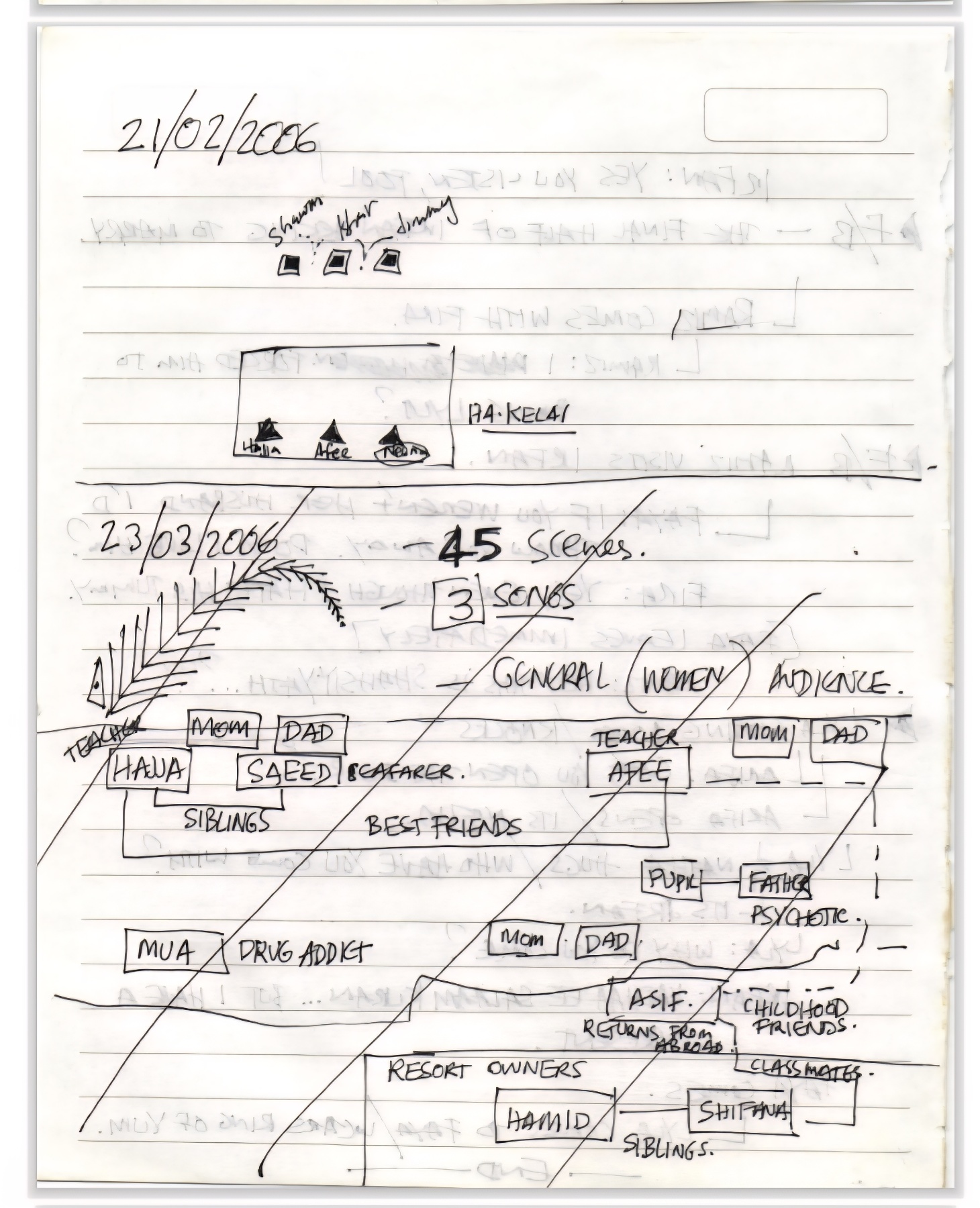
It all began on February 21, 2006, one late morning, under a breezy sky at West Park. I sat with director Abdul Faththaah by the sea, scribbling notes in my worn-out, flower-covered notebook, sipping papaya juice (plus a squeeze of lime), while he sipped a milk coffee. He had a seed of a concept—a 52-episode serial called Hinithunvelaashey Kalaa—about two childhood friends whose lives were wildly different yet bound by a shared past.

From that meeting, characters sprang to life. Ina, the tomboyish farmer girl in Kelai, cap on her head, sun on her shoulders. Fazu, the diligent teacher with a quiet soul. Around them, layers of family, history, and society emerged. The story wasn’t just a drama—it was a slice of the Maldives, its struggles and hopes stitched into every scene.

I scripted the first 32 episodes in just over a month—obsessed and restless, averaging almost an episode a day, since production had already begun in Ha. Kelai and the scripts had to keep flowing to match the shoot. My mind was on fire—literally waking at odd hours, skull burning, yet never able to stop typing. That first arc, set entirely in Kelai, poured out in one feverish burst.

Then something unexpected happened.

Once filming wrapped on the 32 episodes and editing began, the material didn’t quite fit the boxes I had built. Each episode overflowed into the next. Before long, the original 32 had ballooned into 40 episodes.

What could have been a headache turned out to be a gift. Suddenly, I had 12 more episodes to write—episodes that would bring the story to Malé. It was a creative second wind. Instead of dragging my feet, I leaned in. Those episodes gave space for new twists, deeper arcs, and an ending that felt more earned. To my surprise, even Faththaah sighed in relief—the story had room to breathe.

The series first went on air on July 26, 2006—Independence Day in the Maldives. A proud date to begin a journey. But like all long journeys, life had its way of testing us. Around Episode 33, one of our actors ran into real-life trouble, and TVM had no choice but to pull him off the screen. Policy was policy.

The series came to a sudden halt. Weeks stretched into months. And then, more than a year later, re-started again—from Episode 1. Frustration, yes. Suspense, absolutely. But looking back, it was also a strange kind of gift. The audience got to live the story twice, and I found the space to refine the series finale.

By late August 2008, writing Episodes 51 and 52 felt bittersweet. On that rainy evening, August 25th, I typed the final words of Episode 52, closed my laptop, and hugged my wife. That hug—warm, knowing, and peaceful—was my personal wrap party. The final episode later aired on November 11, 2008—Republic Day in the Maldives.

If I could send a postcard to that former me, I’d say:

You did it. You wrangled 52 episodes—that’s equivalent to thirteen feature films worth of storytelling.

You wrestled with long nights, reruns, rewrites, cast drama, and even a mid-series collapse. You turned chaos into creation. And you gave Maldivian audiences a story that made them laugh, cry, debate, and remember.

Hinithunvelaashey Kalaa wasn’t just a TV series. It was a chapter of my life. A love letter to storytelling. A memory stitched forever into the fabric of Maldivian television.

And more than that—it sharpened my craft. Writing this series allowed me to experiment with rhythm, dialogue, symbolism, cliffhangers, and emotional pacing in ways I never had before. I discovered the power of layering subplots, weaving historical flashbacks, planting narrative traps, and using pauses and silences as deliberately as dialogue itself. Many of the screenwriting “tricks” I still use today—those playful double meanings, those quiet beats before an explosion of emotion—were born in those 52 episodes. It was the project that turned me from a writer into a screenwriter. And I will always be indebted to director Fathaah for giving me this opportunity of a lifetime.

Seventeen years on, I look back and realize: every page, every scene, every sleepless night was part of a greater script—the story of my own becoming. That rainy evening in August 2008 was not an ending, but the beginning of everything that followed.

Because sometimes, the greatest journeys are written between two words—

FADE OUT.

IBRAHIM WISAN (KANDI): PAINTING KAN’BULO IN LIGHT AND SHADOW

Fresh off directing last year’s family blockbuster Roboman, Kandi returns to his roots behind the camera — not as a director this time, but as the cinematographer of Kan’bulo. His deep understanding of visual storytelling and how cinematography can shape emotional resonance is on full display here. Kan’bulo is a far cry from the lighter, broader appeal of Roboman. It’s a film rooted in silence, restraint, and emotional nuance. It demands sensitivity over spectacle, and Kandi delivers exactly that.

What makes this collaboration even more meaningful is the history Kandi shares with Hussain Munavvaru, the director of Kan’bulo. Few may know this, but Kandi isn’t just Munavvaru’s close relative — he’s also the one who introduced Munavvaru to the world of cinema. It was Kandi who first handed a teenage Munavvaru a camera, sparking the journey that would eventually lead to Munavvaru’s acclaimed directorial career. Before he helmed his breakout debut Sazaa, Munavvaru began his path through cinematography — a path illuminated by Kandi’s guidance.

For Munavvaru, having Kandi serve as cinematographer on Kan’bulo wasn’t just a professional choice; it was the fulfillment of a long-held creative dream. This collaboration feels like a full-circle moment — mentor and mentee reunited, now as equals, crafting a story that demands precision, empathy, and technical restraint.

Kan’bulo isn’t driven by spectacle. It breathes in small spaces, long silences, and fragile emotional landscapes. Kandi’s cinematography reflects that reality. His camera work is defined by discipline and clarity. There’s no unnecessary flourish — only carefully composed frames that serve the emotional architecture of the film. His use of muted palettes, purposeful lighting, and visual contrast to delineate memory from present tense demonstrates his deep understanding of the psychological demands embedded in the story.

As a screenwriter, my responsibility ends with the words on the page. It’s artists like Kandi who elevate those words into visual poetry — translating silence into space, subtext into shadow, and emotion into light. In Kan’bulo, his lens doesn’t demand attention; it simply exists where it needs to, holding every frame with quiet, deliberate weight. I have no doubt the audience will feel the presence of Kandi’s craft in every frame.

Kan’bulo is set to be released on 31 August 2025.

HUSSAIN MUNAWWARU: CRAFTING THE UNSEEN SILENCE OF KAN’BULO

My creative journey with Hussain Munawwaru spans well over a decade. From the brutal realism of Sazaa to the devastating truths of Dhilakani, and more recently the uncomfortable introspection of Kamanaa, our collaborations have always been rooted in a shared commitment to confronting uncomfortable realities through cinema. With Kan’bulo, our fourth project together, Munawwaru’s direction once again proves why he remains one of the most fearless filmmakers working in Dhivehi cinema today.

Kan’bulo began in the wake of Kamanaa’s success — fresh after its theatrical run. Munawwaru handed me a digital copy of Yuktha, the 2009 National Award-winning long story, itself inspired by true events. I finished reading it in a single breathless sitting.

At its core, it was a harrowing account of suffering through the eyes of a 9-year-old. But Munawwaru, in his wisdom and restraint as a responsible storyteller, proposed a crucial shift: the protagonist’s age should be increased to 16 or 17. His reasoning was both artistic and ethical. While Kan’bulo still demands courage from its audience, asking them to endure the discomfort of confronting realities often left unspoken, portraying such trauma through the innocence of a 9-year-old would veer too close to the unbearable for our already conservative audience.

That decision speaks volumes about Munawwaru’s maturity as a filmmaker. He doesn’t flinch from darkness, but he understands the weight of responsibility — knowing when to push, and when to protect. He understands that cinema isn’t just about shock; it’s about resonance. It’s about asking the audience to walk the line with you without turning away in numbness.

What Munawwaru achieves with Kan’bulo is perhaps his most restrained, yet most quietly brutal work to date. Where Kamanaa confronted violence with raw, graphic immediacy, Kan’bulo lingers in the silences. His direction here is defined not by how loudly a scene can speak, but by how deeply it can wound without words. This film doesn’t move on dramatic cues or conventional pacing — it breathes in long pauses, in glances, in the weight of what’s left unsaid. Munawwaru lets the camera observe, unblinking, without interference. In doing so, he allows the audience no escape. They must sit with the discomfort. They must feel the slow erosion of the human spirit unfold.

Technically, Munawwaru continues to refine his visual language — muted palettes, claustrophobic framing, and stillness used as both tension and release. His collaboration with Fai on sound and Inthi on music furthers this precision. But equally vital to shaping the fractured emotional rhythm of Kan’bulo is the meticulous work of Abdulla Muaz, whose editing serves as the narrative’s silent architect. Nothing is there by accident. Every moment feels curated to serve the psychological architecture of the film.

As a screenwriter, I trust few directors to carry the weight of my scripts with the same reverence for subtext and emotional integrity as Munawwaru. He reads beyond dialogue. He listens for what isn’t spoken. He understands that trauma doesn’t always scream; sometimes, it barely whispers. And it’s in that silence where Munawwaru does his most harrowing work.

Kan’bulo is not Kamanaa. It’s a different film with a different pulse. But like every film we’ve created together, it is guided by Munawwaru’s unwavering belief that the stories we tell matter only if they remain true — no matter how difficult they are to watch.

Kan’bulo is set to be released on 31 August 2025.

DRAGON (2025): A DRAMEDY ON REDEMPTION

“Dragon” (2025) is a Tamil cinematic gem that takes you on an emotional rollercoaster, blending humor, drama, and romance into a narrative that’s both engaging and thought-provoking. Written and directed by Ashwath Marimuthu, this film showcases the journey of D. Raghavan, affectionately known as ‘Dragon,’ portrayed with remarkable depth by Pradeep Ranganathan.

Pradeep masterfully captures the essence of Raghavan, a rebellious college student burdened with 48 arrears, making his journey from academic underachiever to a man confronting his past both believable and deeply engaging. Pradeep’s performance is a harmonious blend of humor and emotional depth, allowing audiences to connect with Raghavan’s struggles and triumphs on a personal level. His nuanced acting ensures that Raghavan’s transformation is not just seen but felt, making this film a truly immersive cinematic experience.

Anupama Parameswaran shines as Keerthi, bringing a nuanced performance that adds layers to the storyline. Kayadu Lohar, as Pallavi, delivers a compelling portrayal that complements the ensemble cast, including notable performances by Mysskin, Gautham Vasudev Menon, and K. S. Ravikumar.

Leon James’ musical score is the soul of the film, perfectly capturing the essence of each scene and elevating the overall experience. The cinematography by Niketh Bommireddy paints each frame with a vibrancy that mirrors the protagonist’s tumultuous journey.

The editing by Pradeep E. Ragav crafts a rhythm that effortlessly shifts from college mischief to heartfelt drama. Each scene flows smoothly, ensuring that even the predictable beats hit just right. It’s as if the cuts know exactly when to hit the gas or slam on the brakes, keeping the film crisp and engaging—solid editing that gives Dragon its cool, modern pulse.

However, what sets “Dragon” apart is the adept screenplay by Marimuthu, blending conventional narrative structures with inventive storytelling techniques. His screenplay seamlessly integrates humor and drama, ensuring that each scene propels the story forward while deepening character development. The strategic placement of comedic elements provides relief without undermining the narrative’s emotional weight. Additionally, the screenplay’s pacing maintains audience engagement, balancing moments of levity with poignant sequences that resonate on a human level.

This film seamlessly weaves a tale of redemption without being preachy. It holds a mirror to society’s pressures and the lengths one might go to overcome personal failures. The film doesn’t shy away from showcasing the protagonist’s flaws, making his redemption arc all the more satisfying.

In essence, “Dragon” is more than just a film; it’s an experience that resonates deeply, reminding us of the power of second chances and the human spirit’s resilience. A must-watch that leaves you reflecting long after the credits roll.

P.S. The poignant scene at the end between Dragon and his father, Dhanapal, portrayed with heartfelt sincerity by George Maryan, is one of the film’s most emotionally charged moments. If that scene doesn’t open your floodgates, then maybe nothing will.

KAMANAA: Unveiling the Haunting Reality of Domestic Violence

It all began one early morning on 04th June 2023 at Olympus Cafe. As usual, I sat with director Hussain Munawar, affectionately known as Kudafoolhu in the film fraternity, for our morning coffee. With his characteristic enthusiasm, he told me he had a story to share—a true one narrated by his wife, Rish, who got it from the source.

When he finished recounting the series of incidents, my coffee had gone cold, untouched except for one sip. Like the coffee, I felt a chill. Lately, stories with violence have been hard to stomach, and this one, about domestic violence, hit particularly hard. Munawar wanted it to be a spiritual sequel to his debut film “Sazaa,” which also dealt with violence against women and was our first collaboration in 2011. He promised to get an audio recording of the interview with the victim, and I agreed to start the detailed outlining once I received it. Little did I know this story would haunt me for the rest of the day.

The dramatic weight of the story put my brain into overdrive. That evening, on my way to Vilimale’ from Male’, I began crafting the screenplay on the ferry using my trusty Samsung S22 Ultra. By the time I reached Vilimale’, I had a rough outline. Later that evening, sprawled on the sitting room floor, I built up the backstory for all the separate acts of violence inflicted by a husband on his mild-mannered wife. I developed the characters, including the minor ones, and outlined the violent incidents leading up to the climax, staying true to the real story while reimagining it for the screen.

Days turned into weeks and weeks into months. I kept reminding Hussain about the interviews, but due to the subject’s sensitivity, Rish was still unable to record them. Meanwhile, casting had begun. Hussain locked down Mariyam Azza, the most sought-after actress, for the victimized wife and was negotiating with Yoosuf Shafeeu, the most decorated actor, for the violent husband role. He also scouted for an equally renowned actress to play the other woman. Despite some casting setbacks, he eventually onboarded the most up and coming actress, Aminath Rashfa, for the latter role. Veteran actor Mohamed Rasheed and promising actress Natasha Jaleel, along with Mohamed Manik, were assembled for the cast. I tweaked the characters and scenes to better fit the actors’ strengths, making my outline even more engaging.

Still waiting for the interviews, Hussain eventually informed me that he had set a date to begin production. He urged me to start writing. Luckily, I had the rough outline ready. I revised the outline in a day, removing repetitive violence and adding fresh, brutal scenes. Voila, the outline was complete and looked good.

With three weeks to write the screenplay, I divided my time, spending two hours in the morning and two in the evening. By the end of the final week, I had a draft ready and immediately sent it to Hussain for feedback. He shared it with the cast, and I received valuable input, particularly from Rish, who suggested additional scenes leading up to critical violent incidents and some character name changes.

The meeting with Yoosuf Shafeeu was a pivotal moment. When he approved the unrestricted interaction with the other woman, I couldn’t help but grin, my heart racing like a bullet train. I finished the final draft that night, adding intense violence and refining the interactions.

After a journey that began with a chilling tale over coffee, Hussain finally gave me the final title of the screenplay: ‘Kamanaa,’ a loving term in Dhivehi used to address a wife. What started as a daunting task had transformed into a powerful screenplay, getting ready to be brought to life on the big screen.

Kamanaa is set to release on 27th August 2024.

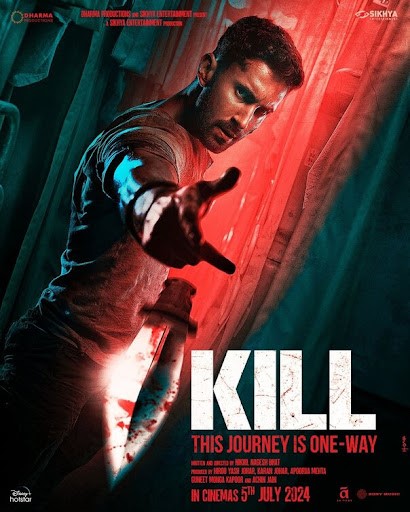
KILL: A Gripping, Brutal Ride on the Rails

“Kill,” the latest Hindi action thriller from writer-director Nikhil Nagesh Bhat, captivates critics and audiences worldwide with its intense action sequences and daring departure from traditional Bollywood formulas. Set entirely on a train, the film eschews song-and-dance numbers and larger-than-life heroes, opting instead for a raw and unrelenting portrayal of violence.

The plot follows Amrit, a stoic army commando portrayed with impressive intensity by Lakshya, who boards a train to New Delhi to prevent his love, Tulika (Tanya Maniktala), from entering an unwanted arranged marriage. His mission gets derailed violently when a ruthless gang of dacoits, led by the merciless Fani (Raghav Juyal), hijacks the train. Driven by love and a strong sense of justice, Amrit becomes a one-man army, taking down the dacoits in a series of bone-crunching, jaw-dropping, and blood-gushing fight sequences that intensify with each frame.

The true highlight of “Kill” is its unapologetic and astonishing action. The fight scenes, a mix of martial arts and raw street brawling, are expertly devised by action directors Se-yeong Oh and Parvez Sheikh. Their creativity, supported by Rafey Mehmood’s brilliant cinematography, leaves viewers claustrophobic and on the edge of their seats as Amrit navigates the confined train compartments, creating a relentless atmosphere of tension.

Bhat’s concept, surprisingly inspired by James Cameron’s “Aliens,” focuses on a protagonist protecting someone vulnerable. Howerver, Bhat shifts the narrative’s perspective back and forth from protagonist to antagonist, elevating “Kill” beyond a typical action film by making it grittier, more relatable, and unexpectedly dramatic.

Lakshya, as Amrit, embodies the quiet rage of a soldier pushed to his limits. His steely gaze and determined body language convey more than words could. Meanwhile, Raghav Juyal, more popular as a dancer and choreographer, transforms into the chillingly charismatic villain, Fani. His menacing demeanor and razor-sharp delivery make him a formidable adversary in the vein of Hans Gruber.

The supporting cast also delivers strong performances, especially the dacoits. Cleverly, Bhat makes the narrative compelling by making all of them family, and their familial ties add an explosive emotional depth. Each bloody confrontation and brutal death realistically intensifies their horror and thirst for vengeance. Bhat also keeps the tension escalating amongst them by adding a conflict between their patriarch, Beni (Ashish Vidyarthi), and his son as Fani.

Kudos to editor Shivkumar V. Panicker for the film’s impeccably calibrated pace. Bhat, who never sits in the first edit, found Panicker ruthlessly cutting 12 minutes from the opening of his original vision and placing the main title card at an unexpected moment, which served as a great shock to everyone.

Production designer Mayur Sharma also deserves praise for constructing the train on a soundstage with movable walls to accommodate the fast-paced and intricate fight scenes Bhat envisioned.

In “Kill,” Bhat highlights the importance of art in portraying graphic violence and blood. The explicit violence serves to emphasize the stakes, desperation, and raw human emotions at play, making the film not just a visual experience but an immersive, visceral journey.

“Kill” is a bold experiment in Hindi cinema. Its raw energy, stellar performances, and innovative fight choreography make it a must-watch for fans of action thrillers seeking something fresh from Bollywood. The film’s relentless intensity evokes a profound response, leaving the audience either shaken or mesmerized.

P.S. For some strange reason, I burst into tears once the end credits started rolling. I’m not sure if I was overwhelmed by the brutal violence or the arduous journey Amrit had to endure.