SHOLAY: A CINEMATIC FLAME STILL BURNING AT 50
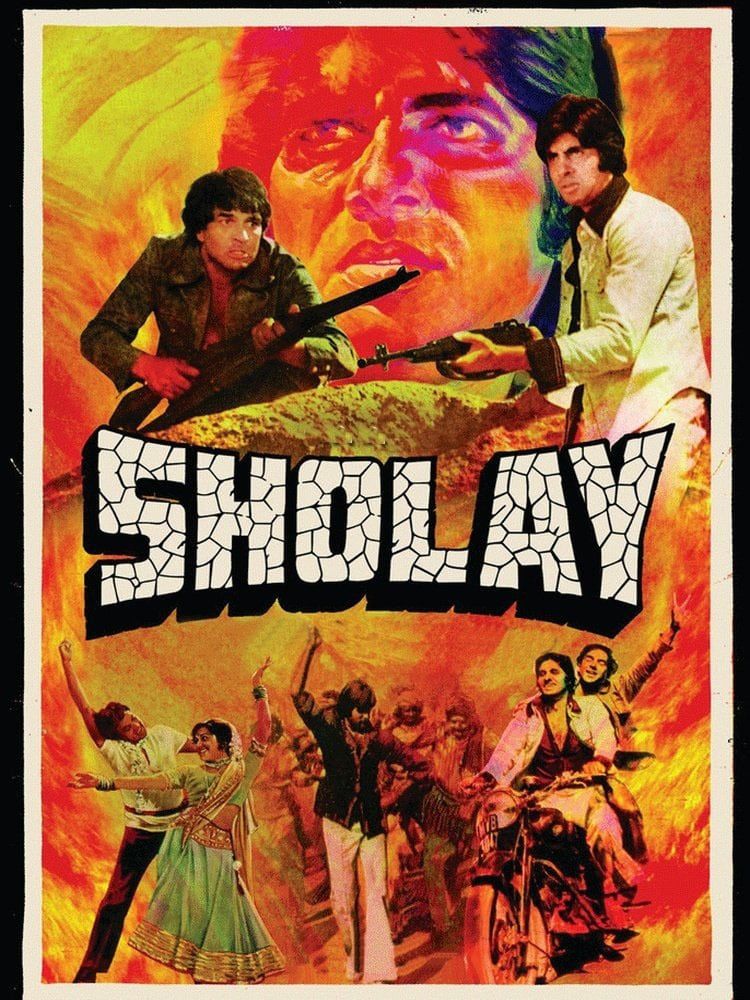
Sholay turned 50 on 15th August 2025, and I couldn’t resist revisiting this cinematic phenomenon that first burned into my memory when I was a boy of 10 or 12, sitting wide-eyed in Olympus Cinema. The screen was larger than life, and so were the men and women who strode across it. That memory is still with me.
Half a century later, Sholay is still fire.
A Story Told Like a Folk Ballad
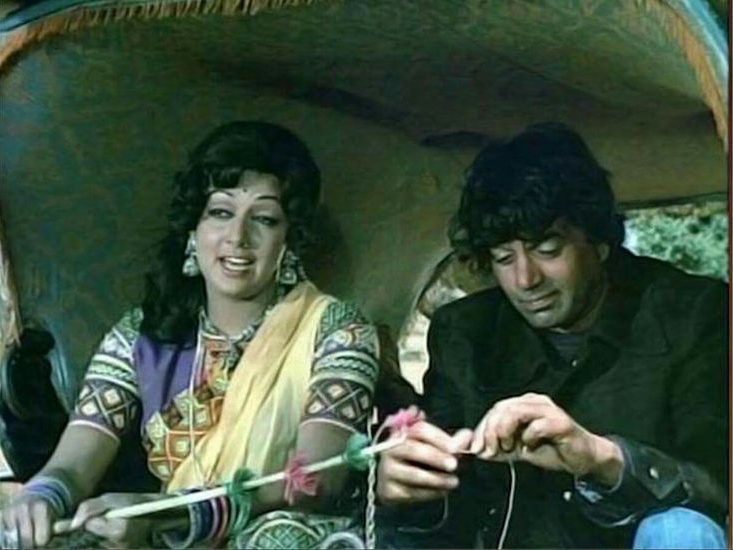
At its heart, Sholay is a story of friendship, revenge, and courage. But the beauty lies in how Ramesh Sippy crafted it — not just as a narrative, but as a ballad. Every frame feels soaked in dust, sweat, and echoes of Ramgarh. Screenwriter duo Salim–Javed wrote with such force that lines still roll off tongues like folk proverbs.
“Kitne aadmi the?”
Not just a question — but a line that has lived in film buffs’ bloodstream for 50 years.
Performances Etched in Fire
Every actor gave us something unforgettable.
Amitabh Bachchan’s Jai — quiet, brooding, carrying melancholy in his harmonica.
Dharmendra’s Veeru — mischievous and loud but golden-hearted.
Sanjeev Kumar’s Thakur — dignity wrapped in grief.
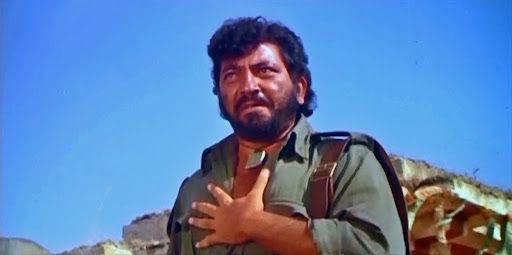
Amjad Khan’s Gabbar Singh — terror personified, redefining what a villain could be.
Hema Malini’s chatterbox Basanti added charm, and Jaya Bhaduri’s Radha reminded us that silence can sometimes be louder than words.
Scenes That Became Cinema Itself
Jai and Radha’s Silent Symphony
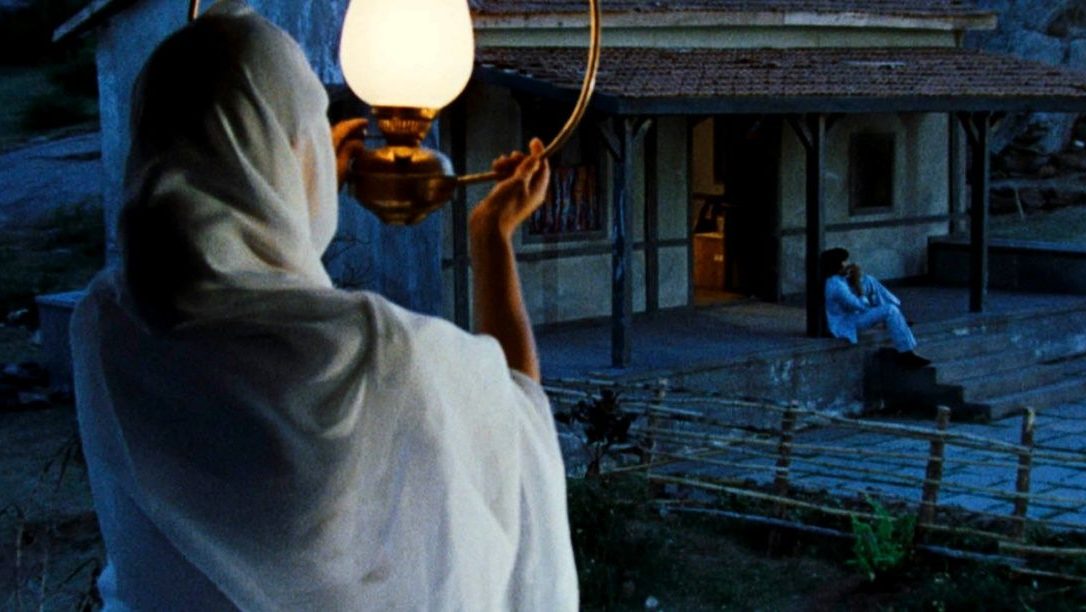
My personal favorite: Jai sits quietly on the veranda, playing his harmonica under the weight of night, while Radha moves through the opposite balcony, gently extinguishing the lanterns one by one. No words pass between them — none are needed. The sound of the harmonica and the dimming lights create a language of their own.
Each lantern Radha puts out is more than a simple act; it symbolizes the extinguishing of warmth and possibilities in her life. As a widow, bound by cultural expectations that deny her the chance of remarriage, those fading lights mirror the shadows she must live in — the quiet acceptance of a life dimmed by loss. In Jai’s music, there is empathy, perhaps even unspoken longing, but also the recognition of a love that cannot be voiced. The scene becomes both intimate and metaphoric — a communion of silence, where music and darkness carry the weight of connection, restraint, and yearning.
Veeru’s Drunken Proposal

On top of the water tank, Veeru — drunk as ever — threatening to end it all unless Basanti’s aunt agrees to their marriage. It’s comic, dramatic, and absurdly heartfelt — a reminder that Sholay knew how to balance intensity with levity.
The Final Showdown

The crippled Thakur taking on Gabbar — no hands, no guns. Just fury, pain, and justice. It’s one of the most cathartic climaxes ever staged in Indian cinema, where the hero isn’t Jai or Veeru anymore — it’s justice itself.
The Technical Brilliance
Sholay wasn’t just another film. It was a benchmark. Shot in 70mm with stereophonic sound — a first for Indian cinema — it was an event in itself. Dwarka Divecha’s cinematography turned Ramgarh into a mythic land, where dust, rock, and horizon became characters. R.D. Burman’s score — from the playful “Mehbooba” to the melancholic flute — didn’t just accompany the story, it told it.
MS Shinde’s editing kept the three-hour-plus film taut. And the action scenes? Bold, choreographed with raw energy, and still unmatched in their scale.
The Legacy of Friendship
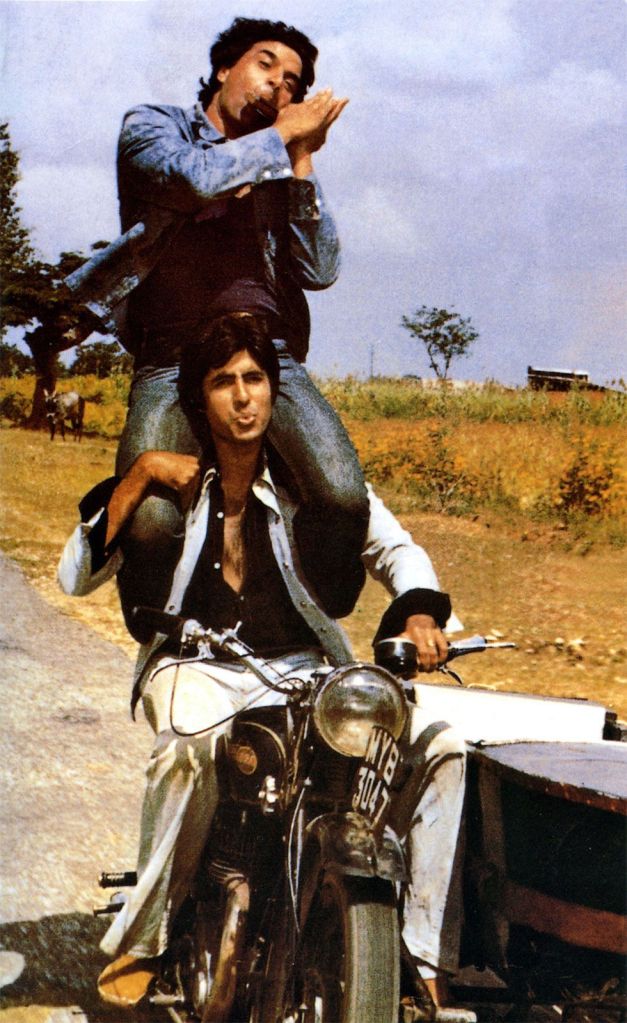
If one thing outlives even Gabbar’s terror, it’s the bond of Jai and Veeru. The two of them, riding the motorbike with Basanti’s horse cart trailing behind, is an image of friendship so iconic that it practically became India’s shorthand for loyalty.
“Yeh dosti hum nahin todenge.”
It wasn’t just a song. It was a promise.
Why It Still Matters
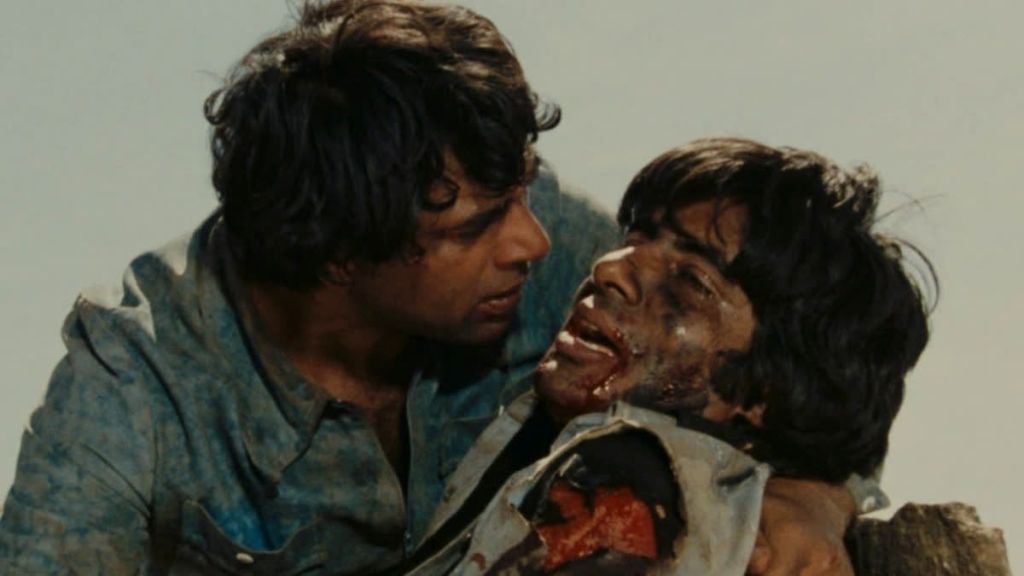
For me, watching Sholay at 50 wasn’t nostalgia. It was recognition. That this film didn’t just entertain, it showed us that a film could be both masala and masterpiece. That dialogues could outlive generations. That silence could speak volumes.
A Personal Reflection

When I first watched Sholay, I didn’t understand the layers. The subtext, the motifs, the metaphors — they all flew past me.
But as I stepped into screenwriting, I began to see differently. I understood the way silence can carry a scene, how a lamp can symbolize love and status, how even a villain’s laugh can echo with meaning. Today, watching it again, I felt the film not just as a story, but as a revelation — timeless in every sense.
From the precision of Salim–Javed’s screenplay — where every scene builds character and tension without waste — to the balance of humor, tragedy, action, and romance, Sholay is a masterclass.
Its narrative arcs are clean yet layered, its use of silence is as deliberate as its dialogues, and its motifs flow seamlessly through character and story. The film doesn’t merely entertain; it demonstrates, frame by frame, what cinematic storytelling can achieve when all elements — writing, direction, performance, music, and craft — converge with purpose.
Sholay is not just a film we remember — it’s a film that continues to teach cinema how to be cinema.
“Jo darr gaya, samjho mar gaya.”
But Sholay never feared time. And that’s why it never died.

 Mahdi Ahmed