Mahdi Ahmed

Scripting waves of imagination from the sunny side of the Maldives.

Posts tagged ‘mahdiahmedreviews’

KAN’BULO – TRUTH TOLD WITH TENDER BRUTALITY
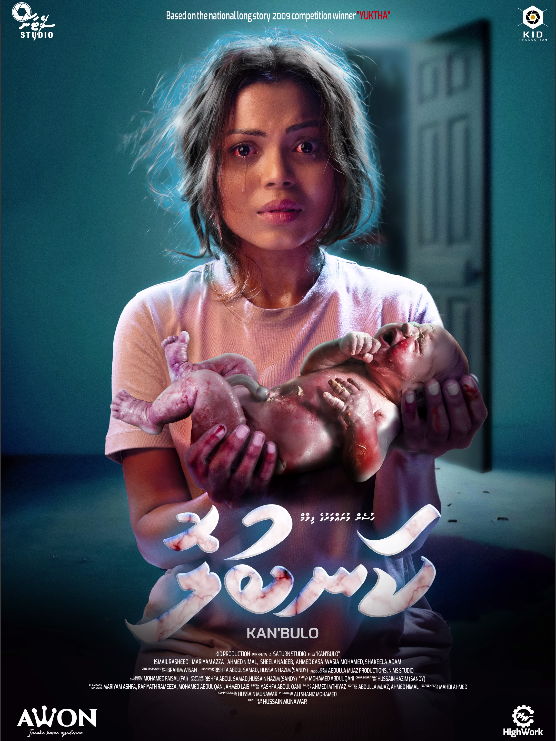
There are films that entertain, films that inspire, and then there are films like Kan’bulo — films that confront. Films that hold your gaze and refuse to blink first. Directed by Hussain Munawwaru, Kan’bulo is not a safe film. It’s a brave, emotionally volatile narrative that pulses with truth — sometimes uncomfortable, often heartbreaking, and always deeply human.

The story traces back to Yuktha, the award-winning long story by Yashfa Abdul Qani. Her delicate yet devastating writing carried the emotional weight that demanded adaptation. Reshaping it for the screen meant preserving its soul while finding a visual rhythm to match its intensity.

At the heart of the film is Mariyam Azza, delivering one of her strongest performances to date. Playing Kan’bulo demands range and endurance, and she handles every moment — from innocence to devastation to resilience — with precision. Even her silences carry meaning.

The ensemble brings depth and texture: Sheela Najeeb with quiet strength, Wasia Mohamed with loyal presence, Shakeela with protective resilience, Ahmed Easa with tenderness, Ahmed Nimal with chilling intensity, and Ismail Rasheed in a performance that feels like a powerful return. Together, they anchor the film’s emotional truth.

The makeup and costume work of Rishfa Abdul Samad and Hussain Hazim (Sandy) supports the characters with subtle authenticity, while Mohamed Faisal (Fai) shapes sound into an emotional undercurrent that lingers. Ahmed Imthiyaz (Inthi) adds music that mourns, observes, and uplifts without ever overwhelming.

Editor Abdulla Muaz, handling both edit and color grading, balances past and present with seamless precision, letting the story flow like fractured memory while keeping the emotions grounded. His work ensures the narrative is coherent yet haunting.

Producer Ali Shaniz deserves recognition for backing a film of such weight, reuniting the trusted team from Kamanaa and giving space for significance over safety.

And at the center, Munawwaru directs with restraint and conviction. He doesn’t exploit pain; he lets it speak. His choices give the film its raw honesty, making it less of a story told and more of an experience endured.

Kan’bulo is not an easy watch, nor was it an easy script to write. But it is necessary. It stares directly at what many would rather look away from — and by the end, neither can we.

Kan’bulo is currently running at Olympus.
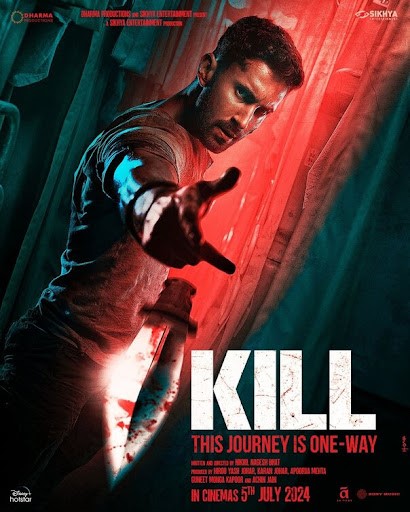
KILL: A Gripping, Brutal Ride on the Rails

“Kill,” the latest Hindi action thriller from writer-director Nikhil Nagesh Bhat, captivates critics and audiences worldwide with its intense action sequences and daring departure from traditional Bollywood formulas. Set entirely on a train, the film eschews song-and-dance numbers and larger-than-life heroes, opting instead for a raw and unrelenting portrayal of violence.

The plot follows Amrit, a stoic army commando portrayed with impressive intensity by Lakshya, who boards a train to New Delhi to prevent his love, Tulika (Tanya Maniktala), from entering an unwanted arranged marriage. His mission gets derailed violently when a ruthless gang of dacoits, led by the merciless Fani (Raghav Juyal), hijacks the train. Driven by love and a strong sense of justice, Amrit becomes a one-man army, taking down the dacoits in a series of bone-crunching, jaw-dropping, and blood-gushing fight sequences that intensify with each frame.

The true highlight of “Kill” is its unapologetic and astonishing action. The fight scenes, a mix of martial arts and raw street brawling, are expertly devised by action directors Se-yeong Oh and Parvez Sheikh. Their creativity, supported by Rafey Mehmood’s brilliant cinematography, leaves viewers claustrophobic and on the edge of their seats as Amrit navigates the confined train compartments, creating a relentless atmosphere of tension.

Bhat’s concept, surprisingly inspired by James Cameron’s “Aliens,” focuses on a protagonist protecting someone vulnerable. Howerver, Bhat shifts the narrative’s perspective back and forth from protagonist to antagonist, elevating “Kill” beyond a typical action film by making it grittier, more relatable, and unexpectedly dramatic.

Lakshya, as Amrit, embodies the quiet rage of a soldier pushed to his limits. His steely gaze and determined body language convey more than words could. Meanwhile, Raghav Juyal, more popular as a dancer and choreographer, transforms into the chillingly charismatic villain, Fani. His menacing demeanor and razor-sharp delivery make him a formidable adversary in the vein of Hans Gruber.

The supporting cast also delivers strong performances, especially the dacoits. Cleverly, Bhat makes the narrative compelling by making all of them family, and their familial ties add an explosive emotional depth. Each bloody confrontation and brutal death realistically intensifies their horror and thirst for vengeance. Bhat also keeps the tension escalating amongst them by adding a conflict between their patriarch, Beni (Ashish Vidyarthi), and his son as Fani.

Kudos to editor Shivkumar V. Panicker for the film’s impeccably calibrated pace. Bhat, who never sits in the first edit, found Panicker ruthlessly cutting 12 minutes from the opening of his original vision and placing the main title card at an unexpected moment, which served as a great shock to everyone.

Production designer Mayur Sharma also deserves praise for constructing the train on a soundstage with movable walls to accommodate the fast-paced and intricate fight scenes Bhat envisioned.

In “Kill,” Bhat highlights the importance of art in portraying graphic violence and blood. The explicit violence serves to emphasize the stakes, desperation, and raw human emotions at play, making the film not just a visual experience but an immersive, visceral journey.

“Kill” is a bold experiment in Hindi cinema. Its raw energy, stellar performances, and innovative fight choreography make it a must-watch for fans of action thrillers seeking something fresh from Bollywood. The film’s relentless intensity evokes a profound response, leaving the audience either shaken or mesmerized.

P.S. For some strange reason, I burst into tears once the end credits started rolling. I’m not sure if I was overwhelmed by the brutal violence or the arduous journey Amrit had to endure.

FUREYTHA: From Man to Beast

“Fureytha” presents a bold and unsettling portrayal of societal decay and the individual unraveling of its characters. Set in the crime-ridden streets of Malé City, the movie immerses viewers in the life of an ordinary man who becomes inadvertently embroiled in a gang-related murder. As the protagonist descends into a maelstrom of violence, the film paints a bleak and harrowing picture of a society trapped in its own web of injustice and brutality. Through its unflinching exploration of the darker aspects of human nature and the dire consequences of societal neglect, “Fureytha” confronts viewers with an uncompromising reflection of the precarious state of our society. The raw and daring portrayal of the protagonist’s journey serves as a poignant reminder of the fragile line between order and chaos, challenging audiences to contemplate the fragility of civilization and the consequences of forsaking societal well-being.

Ahmed Tholal, the screenwriter, has demonstrated exceptional finesse in his handling of the intricate narrative landscape in his inaugural solo endeavor. With compelling and incisive prose, Tholal intricately illuminates the pressing and convoluted issue of lawlessness and the prevailing influence of gang culture within our societal fabric. The movie deftly intertwines themes of power, impunity, and the unwavering quest for justice into its tapestry, skillfully prompting audiences to introspect upon the profound and weighty challenges that afflict our collective existence.

Sharaf Abdulla delivers a truly mesmerizing performance as the tortured protagonist, Hussain. He flawlessly portrays a man at war with himself, caught in a storm of violence. The layers of his character unfold through tender interactions with his son and ex-wife, adding a profound emotional depth to the film’s narrative. Sharaf’s ability to express the internal conflicts and external struggles of Hussain is simply exceptional. His portrayal captivates the audience, drawing them into the complexities of Hussain’s world. From subtle nuances to powerful moments, Sharaf’s performance leaves a lasting impression, making him a standout in the film and a talent to watch in the industry.

The portrayal of Ravee Farooq as Zulal, the antagonist, is truly a masterpiece. His performance delves deep into the complexities of the character, presenting a chilling and multi-dimensional depiction that challenges viewers to contemplate the nature of evil. Through Ravee’s masterful portrayal, the audience is compelled to consider whether Zulal’s actions are a product of his environment rather than an inherent evil within him. This adds a thought-provoking layer to the character, sparking conversations about the factors that shape individuals’ behaviors and choices.

Moreover, Ravee’s nuanced portrayal seamlessly weaves into the broader canvas of the film, complementing the skilled strokes of the cinematographer, Ahmed Zifaaf and the director, Ali Shifau. The synergy between Ravee’s performance and the visual storytelling elevates the overall impact of the film, creating an immersive experience for the audience. As the character of Zulal unfolds within the narrative, it becomes evident that Ravee’s dedication to portraying the complexity of the antagonist has contributed significantly to the depth and richness of the storytelling.

Shifau’s directorial prowess is on full display throughout the entire film, demonstrating a keen ability to capture the raw turmoil and underbelly of Malé City in equal measure through the lens of Zifaaf. Each frame is meticulously crafted to convey the complex emotions and depth of the characters, truly bringing the narrative to life. The visual storytelling is as compelling as the gripping plot, immersing audiences in a world that is as fractured as it is frightening. With a masterful blend of visual and narrative elements, the movie ensures a captivating and unforgettable cinematic experience.

Since “Fureytha” received an 18+R rating, it’s important to understand that the inclusion of violence and profanity in this film serves a specific purpose within the narrative. By fearlessly embracing these elements, the film creates a raw and unfiltered portrayal of the realities it seeks to explore. This bold artistic choice not only underscores the authenticity of the storytelling, but also serves as a powerful tool for emphasizing the film’s core message. Nevertheless, it’s crucial to recognize that such explicit content may potentially alienate more sensitive viewers, given its unapologetic nature. This juxtaposition of boldness and potential alienation exemplifies the complex balance that filmmakers often navigate when choosing to incorporate controversial elements in their work.

In conclusion, “Fureytha” is a magnificent piece of cinematic artistry that intricately weaves together a compelling narrative with profound themes. It delves into the heart of societal issues with a delicate touch, compelling viewers to engage in thoughtful reflection. “Fureytha” is an eloquent example of how cinema can serve as a medium for both entertainment and enlightenment, challenging its audience while leaving a lasting impression. Its nuanced exploration of complex topics is a testament to the potency of storytelling in sparking meaningful conversations and fostering a deeper understanding of the world around us.

P.S. While the fight sequences are thrilling, the dance between Sharaf and his son is heartwarming and adds a touch of tenderness to the film.

BIGIL (2019) REVIEW

This film is an entertaining mix of crime and sports. It’s engaging, action-packed, fast-paced, funny and dribbles its way to an exciting conclusion.

Bigil, played by Joseph Vijay, is a gifted soccer player whose career comes to a halt due to a tragic turn of events. Years later, he is forced to become the head coach of a women’s soccer team and steers them to their dream of winning the national championship, a feat he missed as a player.

The team comprising of women from impoverished rural areas with the dream of making it big, at first refuses Bigil as a coach due to his criminal life. But he eventually wins their heart and along the way not only earns their respect, but he empowers them on and off the field.

 Like a soccer match, the film has two halves. The first half is an intense build-up to the second half that entirely deals with the soccer team while examining the lives of the key players and tackling timely women related issues.

 Vijay is mesmerizing in a dual role as father and son. The scenes they share are heartwarming and at some point, heart-wrenching. 

Nayanthara as Aasirvatham is Gibil’s love interest. Here, she is not just a pretty face. Her character is pivotal to the narrative. She uses compassion when dealing with situations where Gibil fails, or most men would in general. Also, her comic timing is spot on.

The stories of Anitha and Gayathri performed with aplomb by Reba Monica and Varsha Bollamma respectively as the late inclusion to the team are both moving and inspiring.

It’s writer-director Atlee Kumar who steals the match. In the second half, he creatively puts the protagonist in the backseat and let the remarkable team of women take over to fight their way to victory. It has a rousing finale that made me jump out of my seat. 

The song Singappenney by A.R. Rahman gave me goosebumps. In it, watch for Rahman and Atlee in a cameo.

Though the film has a running time of almost three hours, I couldn’t care less. I enjoyed it thoroughly.

Highly recommended.

SUPER DELUXE (2019) REVIEW

This Tamil dark comedy with three main eccentric stories arrested me from its very opening credits on a black screen.

The first story has an unfaithful wife whose life turns into a whirlpool when she finds her secret lover dead on her bed right after having sex.

The second story has a group of students who gather to watch porn only to find that the leading lady in it is the mother of one of the boys.

The third and the most sensitive story has a small kid who is eagerly waiting at the arrival of his father after a long absence. But to his surprise, his father is now a transgender woman.

All these stories then branch out with more engaging subplots until its expository and sometimes philosophical ending about existence and the origin of life, the design pattern and similarity of the universe, solar system and atomic structure of atoms.

But I must admit that the way one subplot unfolded, I wish it was done differently. Nevertheless, the powerful performances kept me glued to the seat. Even its almost three hours running time which again I thought could have trimmed down a little bit, I didn’t mind.

Though all the cast standout, its Vijay Sethupathi as the transgender woman who steals the show. His portrayal of Shilpa is heartfelt and compassionate. The scene where he dresses up in front of his shocked wife Jyothi played wonderfully by Gyathrie is stunning.

Bagavathi Perumal also turns in an outstanding performance as Berlin, a sadistic cop that I wanted to strangle him to death so badly.

But the real star of this film is writer-director Thiagarajan Kumaraja for weaving such an engaging narrative with multiple subplots. And through these subplots, he not only exposed the real problems persisting in Chennai but also India as a whole.

Another striking feature is the cinematography by Nirav Shah and P.S. Vinod. The use of colours, the lighting, the camera shots and movements are exquisite. Even the first scene grabbed my attention that I knew I was going to watch something special.

The original music by Yuvan Shankar Raja added more depth to the unfolding stories evoking sadness, sympathy and menace.

This film is a winner. It is highly recommended.

JERSEY (2019) REVIEW

This heart-wrenching yet deeply satisfying Telugu underdog sports drama kept my floodgates opened long after the end credits rolled. My wife and I kept sobbing loudly.

Arjun, played with restraint and conviction by Nani, is gifted but a down on his luck retired cricketer. When his life hits rock-bottom, he is forced out of retirement, at a cost. But his raison d’etre would never leave a dry eye in the house.

The entire cast hit sixes with their exceptional performances, especially Shraddha Srinath as Arjun’s abandoned wife who carries the burden of supporting the family. Sathyaraj as Murthy who is the long-time mentor and the only person who never stops believing in Arjun. And Ronit Kamra as Arjun’s son who adores his father despite his pitiful struggle to keep his family together.

Anirudh Ravichander hits all the right chords with his engaging music, and the cinematography by Sanu John Varughese adds a solemn depth to the intense drama and the sports sequences.

The screenplay is creatively written by Gowtam Tinnanur, keeping his nonlinear narrative poignant and straightforward. He even hits a biggie out of the stadium with his solid direction.

Highly recommended.

BAVATHI review

First and foremost, I want to congratulate first-time writer-director Ilyaas Waheed for his above par effort to bring a movie not only dealing with an ominous subject but presenting it with such a never before seen visual flair and style. His work as a writer and a director is promising and deeply felt. Our film industry has found a force to be reckoned with.

This film also marks as the first Dhivehi psychological thriller that focuses mainly on the psychosis of the protagonist and delving deep into a few clinical practices used in psychology. It’s a slow burner, though. But once it starts to simmer and comes to a full boil, it’s an experience both spine-chilling and thought-provoking.

The narrative is hard to explain without spoilers. But I say this much, it’s surprisingly imaginative. In most part, there are glimmers of brilliance in Ilyas’ writing and directing. And it’s the way he peels off the narrative layer by layer using beautiful and sometimes creepy visuals mixed with intense drama that stands out. For a first-timer, I say he is impressive.

Nuzhath Shuaib has established herself as one of the most versatile actors in the local film industry today, showing her acting prowess in a vast range of roles. It’s not surprising that she accomplished her stardom in such a short span of time. Here, her performance, which is evenly balanced with restraint and nuance, will put her a notch above the rest. She plays an alienated woman who begins to experience strange occurrences around her once she relocates to Male’ after marrying a fitness trainer she meets from her island.

As the narrative progresses, she keeps raising the level of her performance as her life starts spiralling both physically and mentally to a point where her reality becomes blurry. In some sequences, she made me disconcerting and in one pivotal scene, gasping for air even.

However, its at the climax where she bites to the bone of her meaty role showing her acting brilliance with aplomb. It’s a role that any actor would die for. But she made her performance so convincingly powerful that it’s hard to imagine anyone else in it. I am her biggest fan now.

My admiration goes to all the newcomers in the cast, especially Ahmed Ifnaz Firag and Fathimath Latheefa. The former plays the fitness trainer that Nuzhath marries who is not only sympathetic, he’s likeable and will stop at nothing to protect the love of his life. And the latter plays Nuzhath’s uncompromising mother. For their debut, both give decent performances.

Even though veteran actor Mohamed Rasheed appears briefly, his role is crucial to the narrative and heavily supports the new actors. He gives assurance to them.

One of the highlights and in my opinion, also an essential character in this movie is the visual effects combined seamlessly into the narrative. I applaud Orkeyz, the VFX and the technical team behind this film to bring the unique vision of Ilyas to the screen with such finesse. If my memory serves me right, no other Dhivehi film to date has used visual effects so extensively, if not effectively as this.

Kandi Visan’s cinematography is another plus. The way he has set the mood elevates the mystery and the creepiness around Nuzhath. And the long tracking shots used sparingly are lively and a joy to watch.

Regardless of how much technical effort employed, a film is soulless without music. This is where Mistee, the music composer shines. After a praiseworthy composition for Illnoise, Hahdhu and the recent blockbuster, Gohraalhu, he has done it again. Unlike the previous films, which are of contrasting genres as well, he has composed a piece of brooding and moody music that’s so fitting to the sensitive theme of this film. It’s at times heart-pounding too.

In short, this film shines in all the filmmaking departments. For a film from a first timer, it’s technically good and well-performed by the entire cast with a gripping narrative. Highly recommended.