Mahdi Ahmed

Scripting waves of imagination from the sunny side of the Maldives.

Posts tagged ‘Kandi’

KAN’BULO – TRUTH TOLD WITH TENDER BRUTALITY
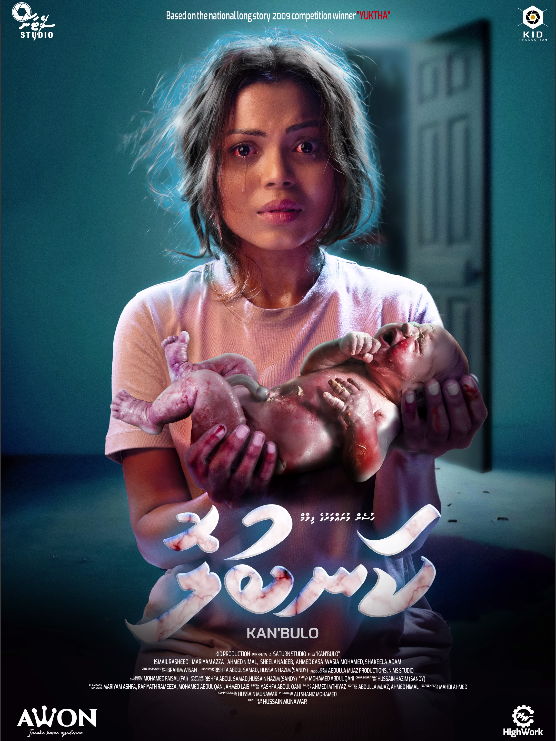
There are films that entertain, films that inspire, and then there are films like Kan’bulo — films that confront. Films that hold your gaze and refuse to blink first. Directed by Hussain Munawwaru, Kan’bulo is not a safe film. It’s a brave, emotionally volatile narrative that pulses with truth — sometimes uncomfortable, often heartbreaking, and always deeply human.

The story traces back to Yuktha, the award-winning long story by Yashfa Abdul Qani. Her delicate yet devastating writing carried the emotional weight that demanded adaptation. Reshaping it for the screen meant preserving its soul while finding a visual rhythm to match its intensity.

At the heart of the film is Mariyam Azza, delivering one of her strongest performances to date. Playing Kan’bulo demands range and endurance, and she handles every moment — from innocence to devastation to resilience — with precision. Even her silences carry meaning.

The ensemble brings depth and texture: Sheela Najeeb with quiet strength, Wasia Mohamed with loyal presence, Shakeela with protective resilience, Ahmed Easa with tenderness, Ahmed Nimal with chilling intensity, and Ismail Rasheed in a performance that feels like a powerful return. Together, they anchor the film’s emotional truth.

The makeup and costume work of Rishfa Abdul Samad and Hussain Hazim (Sandy) supports the characters with subtle authenticity, while Mohamed Faisal (Fai) shapes sound into an emotional undercurrent that lingers. Ahmed Imthiyaz (Inthi) adds music that mourns, observes, and uplifts without ever overwhelming.

Editor Abdulla Muaz, handling both edit and color grading, balances past and present with seamless precision, letting the story flow like fractured memory while keeping the emotions grounded. His work ensures the narrative is coherent yet haunting.

Producer Ali Shaniz deserves recognition for backing a film of such weight, reuniting the trusted team from Kamanaa and giving space for significance over safety.

And at the center, Munawwaru directs with restraint and conviction. He doesn’t exploit pain; he lets it speak. His choices give the film its raw honesty, making it less of a story told and more of an experience endured.

Kan’bulo is not an easy watch, nor was it an easy script to write. But it is necessary. It stares directly at what many would rather look away from — and by the end, neither can we.

Kan’bulo is currently running at Olympus.

ROBOMAN: THE MOVIE: VISION OF KANDI

Ibrahim Wisan, popular in the filmdom as Kandi, is a name that has become synonymous with drama and visual storytelling in Dhivehi cinema. Known for his work as an old-school cinematographer, Kandi has always had a keen eye for detail and a deep understanding of the visual language of film. With Roboman: The Movie, Kandi takes his career to new heights, marking his first venture into the family film genre and adding another remarkable chapter to his already illustrious career.

Before stepping into the director’s chair, Kandi was widely recognized for his exceptional work behind the camera. As a cinematographer, he contributed to many critically acclaimed projects, known for his ability to capture the perfect shot, evoke emotion, and enhance the narrative through his visual style. His technical prowess and creative vision were evident from the start, making him a sought-after name in the industry.

However, Kandi’s talents were not limited to cinematography alone. His passion for storytelling soon led him to explore the world of direction. His first foray into directing was with a children’s short film, Pink Fairy that charmed audiences with its innocence and imagination. The short film showcased his ability to connect with younger viewers, bringing out the pure and magical essence of childhood through his lens. This marked the beginning of his journey as a director—a journey that would soon take him to new heights.

Roboman: The Movie represents a significant leap for Kandi, as it is his first feature-length film in the family genre. This project allowed him to blend his skills as a cinematographer with his directorial vision, creating a movie that is both visually stunning and emotionally resonant. Kandi’s transition from shorts to feature films showcases his versatility and willingness to explore new genres, pushing the boundaries of his craft.

With Roboman: The Movie, Kandi has ventured into the family genre, a space that requires a delicate balance of humor, emotion, and drama. The film tells the story of two young cousins, Ahu and Asee, who navigate the highs and lows of friendship, rivalry, and dreams as they compete in the Robo Junior Challenge. It’s a narrative that is both heartwarming and thought-provoking, filled with moments of joy, tension, and redemption.

What sets Roboman: The Movie apart is Kandi’s ability to bring a fresh perspective to the family film genre. His background in cinematography is evident in the film’s visual language. Each frame is carefully composed to convey the story’s emotional beats, from the vibrant and energetic dance sequences to the more intimate, character-driven moments. Kandi’s dynamic direction, coupled with fluid camerawork and stunning visual effects by Mohamed Saami, creates a cinematic experience that is both entertaining and visually captivating.

Kandi’s direction also brings out the best in his cast, particularly the newcomers, Amelia and Misha, who play Ahu and Asee. Their chemistry and performances add a layer of authenticity and relatability to the film, making the story resonate with audiences of all ages.

Roboman: The Movie marks a new chapter in Kandi’s career, highlighting his growth as a filmmaker and his ability to handle a full-length feature in a genre he had not previously explored. His dedication to creating a film that appeals to both children and adults shows his commitment to expanding the horizons of Dhivehi cinema. Kandi’s approach to directing this film is not just about entertainment; it’s about telling a story that speaks to the hearts of its viewers, encouraging them to dream, to support each other, and to confront challenges with courage.

Kandi’s journey from cinematographer to director has been marked by bold choices, a relentless pursuit of excellence, and a deep understanding of the art of filmmaking. Roboman: The Movie is not just another film on his resume—it’s a statement of his growth, his vision, and his passion for storytelling.

Roboman: The Movie is set to hit cinemas on 26th September 2024. Stay tuned for more updates and keep an eye on Kandi’s ever-evolving journey as one of the Maldives’ most promising directors.

KANDI’S VERDICT ON KAMANAA

Ibrahim Wisan (Kandi), the talented director behind the upcoming family-oriented film Roboman: The Movie, recently watched Kamanaa and shared his insights on the film’s impact. Wisan praised Kamanaa for being both entertaining and deeply resonant with mass audiences. He highlighted the film’s ability to connect with viewers on a personal level, suggesting that it has found a successful format for capturing and holding audience attention.

For Wisan, Kamanaa stands out not only because of its gripping narrative but also due to its powerful storytelling approach, which addresses significant societal issues like domestic violence while maintaining a broad appeal. This format, he believes, is crucial for any film aiming to balance entertainment with social commentary.

Wisan’s recognition of Kamanaa’s success in capturing the audience’s attention is a reflection of the film’s creative team, led by director Hussain Munawar. The film has sparked important conversations while providing an engaging cinematic experience—a balance that Wisan himself hopes to achieve with his upcoming film, Roboman: The Movie.


As the Maldivian film industry continues to grow, filmmakers like Wisan are looking to Kamanaa as a template for combining compelling storytelling with socially relevant themes, showing that cinema can both entertain and inspire change. His acknowledgment of Kamanaa reinforces its place as a film that resonates well beyond its storyline, marking a significant moment for Maldivian cinema.