Mahdi Ahmed

Scripting waves of imagination from the sunny side of the Maldives.

Posts tagged ‘Kamanaa’

ALI SHANIZ: THE CAPTAIN WHO DIDN’T FLINCH

It takes a certain kind of producer to make a blockbuster. But it takes a braver one to follow it up with something as raw, unsettling, and emotionally demanding as Kan’bulo.

Ali Shaniz, the producer behind Kamanaa—the biggest Dhivehi blockbuster of 2024—could have played it safe. He had every reason to. After delivering one of the most commercially successful films in recent memory, most would steer toward lighter waters. But Shaniz chose the storm. He chose Kan’bulo.

This isn’t just a film. It’s a cinematic reckoning. A story laced with silence, trauma, and emotional violence—territory most producers would instinctively avoid. But not Shaniz. When director Hussain Munavvaru handed him the screenplay, Shaniz didn’t hesitate. He understood what the story was asking of him—not just financially, but morally. And he said yes.

Producing a film like Kan’bulo is not just about funding—it’s about backing the emotional and social weight of the story. Shaniz never once tried to soften the edges. He never once asked, “Can this be toned down?” Instead, he leaned in. He created the space for this film to be what it needed to be: unflinching and honest.

It’s also worth noting that this was the very same team that made Kamanaa what it was. From post-production to performances, Shaniz believed in bringing everyone back—not for familiarity’s sake, but because he understood that a story this delicate needed people who could hold it with care.

As a writer, it’s rare to find a producer who not only respects the page but also protects it. Shaniz is that kind of producer. He doesn’t just produce movies—he shoulders them. With grit. With grace. And most of all, with guts.

Producer Ali Shaniz is once again at the helm, this time navigating far rougher waters with Kan’bulo. But steady as ever, he’s steering this ship straight through the storm. And if there’s anyone I’d trust to sail a story this heavy into harbor—it’s him. Aye, Captain.

Kan’bulo is currently enjoying a successful run at Olympus.

YASHFA: ADAPTING HER AWARD-WINNING STORY INTO KAN’BULO

In 2009, a quiet storm passed through Maldivian literature. It came in the form of a long story titled Yuktha, penned with grace and conviction by Yashfa Abdul Qani. The piece went on to win first place at the National Long Story Competition — and rightfully so. It wasn’t just a work of fiction; it was a reflection of buried truths, crafted with emotional intelligence and a deep understanding of the unspoken.

When I was handed this story to adapt, I knew immediately that it demanded more than a simple retelling. It asked for care. It asked for bravery. And it asked for honesty.

Adapting a long story into a screenplay is never just about converting prose into scenes. It’s about translation — not of language, but of essence. What works powerfully on the page, nestled between narration and inner monologue, must now live and breathe through images, dialogue, silences, and performance. You’re not just recreating the story — you’re restructuring it so it thrives in a visual and temporal medium.

And with Kan’bulo, the weight of that responsibility was greater than usual. The story had resonance. It had urgency. But most of all, it had a protagonist who demanded her truth be told — not sensationalized, not softened — but told with authenticity.

I approached the adaptation process not as someone trying to rework a text, but as someone trying to protect it. To preserve the emotional heartbeat of Yashfa’s writing while allowing the film version to have its own rhythm. That meant hard choices — what to keep, what to let go, what to reimagine, and how to give characters a voice when the page had once carried their silence.

It was a delicate balance of loyalty and liberty. And I hope I’ve honored the spirit of what Yashfa created.

As Kan’bulo prepares to meet its audience, I want to take a moment to express my respect and gratitude to Yashfa Abdul Qani. Without her vision, there would be no story to adapt. Her courage in telling this story laid the foundation for everything that followed. I was just the one invited to build on it.

Kan’bulo is set to be released on 31 August 2025.

WASIA MOHAMED: THE STRENGTH OF SILENT LOYALTY

As screenwriters, we often craft characters who serve as mirrors — reflections of resilience, of quiet strength, of the loyalty that endures even when it fractures under its own hidden weight. In Kan’bulo, that mirror is Maree. And bringing her to life with sincerity and depth is the talented Wasia Mohamed, a young actor whose performance has exceeded every expectation.

Maree’s character was always designed to walk a delicate line. On the surface, she is the steadfast friend — the one who remains when others fade, the one who stands shoulder-to-shoulder with Kan’bulo even when the world feels impossible. But beneath that loyalty is complexity. Maree carries layers the audience may not see at first glance — contradictions, internal struggles, and choices born from survival. These dimensions required an actor who could convey strength without bravado, vulnerability without overt displays of weakness. Wasia brought precisely that.

What struck me most while watching the dailies and the rough cut is Wasia’s understanding of emotional rhythm. She knows when to hold back. She knows when to let the cracks show. And more importantly, she understands that Maree’s impact is not in dramatic declarations but in her presence — her being there, quietly, consistently, even when it costs her something.

From a writing perspective, Maree is a vital piece of the film’s emotional architecture. She softens the darkness while never being spared from it. Watching Wasia step into this role with such maturity and nuance affirms why emerging talents deserve space in stories like this. Her work doesn’t demand attention; it earns it, moment by moment, scene by scene.

In Kan’bulo, loyalty and friendship aren’t written as easy. They’re written as choices — and Wasia Mohamed reminds us, through Maree, just how powerful those choices can be.

Kan’bulo is set to be released on 31 August 2025.

TURNING PAIN INTO ART

I’m thrilled to announce that I’ve just wrapped up my latest screenplay, my first project of 2025—a journey that has been as emotionally taxing as it has been creatively liberating. This new film is a follow-up to Kamanaa, last year’s mega blockbuster, and I’m excited to be pairing once again with producer/ director, Hussain Munawwaru—our fourth collaboration together. Production is set to kick off in early April, and I can hardly wait to see our shared vision come to life on screen.

This screenplay is loosely based on a National Award-winning Dhivehi novel inspired by true events. Without giving away any spoilers, I can share that this film follows the remarkable journey of a resilient protagonist—a tale of survival, redemption, and finding hope amid life’s deepest sorrows.

In writing this screenplay, I dove into the raw, unfiltered depths of human emotion. I explored the painful echoes of a troubled past, the agony of loss, and the slow, often painful road toward healing. Every page challenged me to confront the complexities of the human spirit and its capacity to endure, even when burdened by unbearable weight. There were moments when the emotional toll felt almost overwhelming, yet every tear shed in the creative process became a tribute to the strength that emerges when vulnerability is embraced.

I hope this screenplay jolts audiences awake, exposing the raw, horrifying truths of our society that too many have tried to bury.

Stay tuned for more updates as we approach the start of production in April.

Cheers!

2024: TRIUMPHS, TWISTS AND TALES

If 2024 were a screenplay, it would be a genre-defying blockbuster—a mix of heartfelt drama, laugh-out-loud comedy, and plot twists worthy of Tarantino himself. It had highs, lows, and moments so surreal they felt scripted. And let’s not forget the standout cast of characters who made it unforgettable.

First up, my family—my homegrown, award-winning ensemble cast. My wife, the muse of all muses and queen of feedback (and my heart), hit a milestone birthday this year. I won’t reveal her age—lest I end up sleeping on the balcony with her bougainvilleas. We also celebrated 20 years of marriage—two decades of travel, love, and spirited debates over soft-shell versus cut crab. (Pro tip: always double-check the shopping list.) She’s the mastermind behind her bougainvillea-parenting initiative, tolerates my hair experiments with Batana oil (still no miracles), and joins me in face-mask selfie sessions.

Then there’s Kokko, our 13-year-old whirlwind of energy. Alhamdulillahi, this kid had an incredible year! He juggled school, basketball, and soccer like a pro while I balanced ferry rides, script deadlines, and debated whether to charge him for taxi services. Watching him clatter away on Instagram with my phone during commutes has become a quiet joy—a moment of calm amidst the chaos. And when he solves the crossword faster than I can, I wonder if he’s auditioning to be the lead in my life’s next chapter. Fist bump!

The real showstopper? Kokko brought home not one but two golds this year. His team clinched the Plate Championship in the International Junior Soccer Tournament U14 held in KL, Malaysia, and his school triumphed in the U13 Inter-School Basketball Tournament. Watching him play felt like the climax of a sports movie—sweat, grit, victory, and me in the stands, trying not to ugly cry.

Professionally, 2024 was a whirlwind. Kamanaa, my latest blockbuster, proved that a well-told story can captivate audiences. Behind the scenes, a difference in perspectives over the worth of “words on screen” served as a quiet reminder of the nuances in creative partnerships. Lessons learned, dignity preserved, and the audience’s cheers were far louder than any quiet undervaluation.

And then came Roboman: The Movie—my personal redemption arc. A clean, family-friendly flick, it proved I could leave behind my infamous double entendres and still deliver a hit. Watching it with Kokko and seeing him predict the ending before the climax? Pure gold—as a writer and a dad.

Another standout moment of 2024 was winning Best Screenplay for the MNU drama Manaal at the NCA Officer Teledrama Competition. It was humbling to see my work recognized after a long hiatus. Manaal, a story about familial bonding and women’s empowerment, explored themes close to my heart. The award was a reminder that storytelling, when done with sincerity, resonates deeply—and moments like this make the countless late nights at the keyboard worth it.

Creatively, I dove into a new story in late December, carrying me into the New Year with fresh energy and ambition. This project feels raw, emotional, and layered, pushing me to explore uncharted storytelling territory. Outlining will be both challenging and cathartic, and I’m hoping this script sets the tone for a year of creativity and growth in 2025.

2024 wasn’t just about writing stories; it was about living them. From Kokko’s victories to celebrating two decades of marriage, this year reminded me that life’s best plots aren’t planned—they’re the unexpected twists that shape us.

Oh, and a special shoutout to February 2024—the month my jaw got rearranged. Yes, ouch—it still hurts. Life, as always, leaves its marks in the most unexpected ways.

As the curtain falls on 2024, I’m reminded that life, like a good script, thrives on twists, growth, and moments of brilliance—planned or otherwise. If 2024 taught me anything, it’s that the best stories are written not just with ink, but with courage, resilience, and a sprinkle of chaos.

So here’s to 2025: a fresh page, a new act, and countless opportunities to turn life’s plot twists into masterpieces. And remember, if life hands you a messy first draft, don’t be afraid to rewrite—or stretch a little, especially if screenwriting has you flirting with tennis elbow.

Happy New Year, everyone!

THE HISTORIC SUCCESS OF KAMANAA

Kamanaa has achieved a groundbreaking milestone in Dhivehi cinema with an incredible 37 housefull shows at Olympus Cinema. This unprecedented achievement marks a new chapter for local films, as it’s the first time a Dhivehi film has been screened at 02:30 PM—a slot never tried before. Not only did Kamanaa break barriers with 02:30 PM shows, but it also managed to fill seats for all four screenings in one day: 02:30 PM, 04:30 PM, 08:30 PM, and 11:30 PM. The demand for the film was so overwhelming that every show ran to a packed house, underscoring the film’s magnetic appeal.

A massive queue at Olympus Cinema, eager to grab their tickets for Kamanaa.

The excitement surrounding Kamanaa extended far beyond the capital. The film’s compelling storytelling, powerful performances, and socially relevant themes have sparked a nationwide craze. To date, Kamanaa has been screened in 74 islands with a total of 104 shows, a remarkable feat that reflects its wide-reaching impact. Moreover, the demand continues to grow, with 38 more islands already requesting screenings, proving that the film has captured the hearts of audiences across the Maldives.

While Kamanaa ends its historic run at Olympus Cinema, the journey is far from over. Starting from 20th September, the film will continue to captivate audiences at Shwack Cinema HM, giving more fans the opportunity to experience this groundbreaking film. The overwhelming response is a clear reflection of the film’s ability to resonate with viewers and foster meaningful conversations on important societal issues.

Kamanaa director and Shwack Cinema team up to bring the groundbreaking film to a new audience.

The success of Kamanaa is not just a victory for the filmmakers and cast but also a defining moment for Dhivehi cinema. It showcases the potential of local stories to inspire, challenge, and entertain, and it sets a new benchmark for future films in the industry.

KANDI’S VERDICT ON KAMANAA

Ibrahim Wisan (Kandi), the talented director behind the upcoming family-oriented film Roboman: The Movie, recently watched Kamanaa and shared his insights on the film’s impact. Wisan praised Kamanaa for being both entertaining and deeply resonant with mass audiences. He highlighted the film’s ability to connect with viewers on a personal level, suggesting that it has found a successful format for capturing and holding audience attention.

For Wisan, Kamanaa stands out not only because of its gripping narrative but also due to its powerful storytelling approach, which addresses significant societal issues like domestic violence while maintaining a broad appeal. This format, he believes, is crucial for any film aiming to balance entertainment with social commentary.

Wisan’s recognition of Kamanaa’s success in capturing the audience’s attention is a reflection of the film’s creative team, led by director Hussain Munawar. The film has sparked important conversations while providing an engaging cinematic experience—a balance that Wisan himself hopes to achieve with his upcoming film, Roboman: The Movie.


As the Maldivian film industry continues to grow, filmmakers like Wisan are looking to Kamanaa as a template for combining compelling storytelling with socially relevant themes, showing that cinema can both entertain and inspire change. His acknowledgment of Kamanaa reinforces its place as a film that resonates well beyond its storyline, marking a significant moment for Maldivian cinema.

KAMANAA: UNPRECEDENTED BOX OFFICE TRIUMPH

Since its release on 27th August 2024, Kamanaa has taken the Maldivian box office by storm, surpassing all expectations and becoming an unexpected blockbuster. The film’s gripping storyline, powerful performances, and raw portrayal of domestic violence have resonated deeply with audiences, leading to a massive surge in demand.

A Phenomenal Start and Growing Momentum

From the very first day, Kamanaa has been a runaway success. The scheduled shows sold out well in advance, prompting the producer to add late-night screenings to accommodate eager moviegoers. In a testament to the film’s popularity, even these additional late-night shows have quickly sold out. The overwhelming demand has made Kamanaa a cultural phenomenon, with fans flocking to theaters to witness the story unfold on the big screen.

A Nationwide Sensation

The excitement around Kamanaa isn’t limited to the capital city of Malé; it has spread like wildfire across the Maldives. The reception in the islands has been nothing short of overwhelming, with many islands queuing up to host the film’s premiere. The producer has been inundated with requests, showcasing the film’s wide-reaching impact. The anticipation and enthusiasm from audiences in every corner of the country have turned Kamanaa into more than just a film—it has become a nationwide event.

The Ingredients of Success

Several factors have contributed to the extraordinary success of Kamanaa. First and foremost, the direction by Hussain Munawar has been lauded for its raw and honest portrayal of a deeply sensitive issue. The gripping story, based on true events, has struck a chord with viewers, making them feel every moment of tension and emotion on screen. The performances by the stellar cast are central to this film’s success:

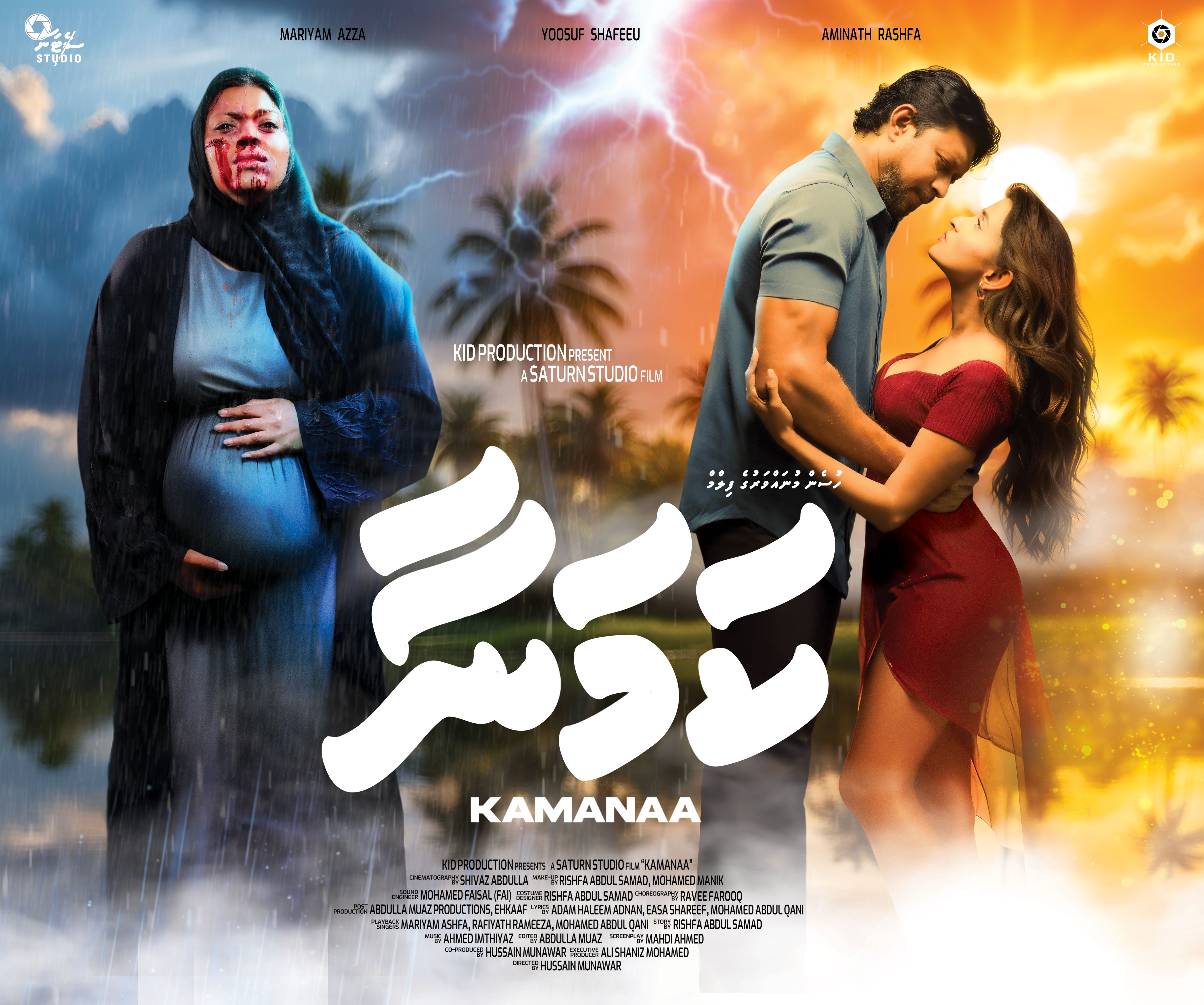
  • Yoosuf Shafeeu delivers a chillingly authentic performance as Haider, transitioning from a loving husband to a man consumed by his darker impulses. His depth and nuance bring Haider’s complex character to life.
  • Mariyam Azza shines in the titular role of Kamanaa, portraying the strength and resilience of a woman enduring domestic violence with heartbreaking authenticity. Her transformation, both physically and emotionally, adds immense weight to her character.
  • Aminath Rashfa as Nora brings complexity and depth to her role. As the woman caught in an illicit affair with Haider, she navigates her character’s emotional turmoil with finesse, capturing both allure and guilt, while her chemistry with Yoosuf Shafeeu creates an electrifying tension.
  • Mohamed Rasheed as Abbas delivers a dignified performance, portraying a husband unknowingly caught in a web of deceit. His portrayal adds weight to the story, grounding it in the stark reality of betrayal and broken trust.
  • Natasha Jaleel as Zulfa, Abbas’s elder wife, exudes a calm yet commanding presence. Her character embodies wisdom and stability, serving as a quiet counterbalance to the turmoil surrounding the main characters.
  • Mohamed Manik shines in a supporting role as Nabeel, a friend trying to reform Haider. His nuanced portrayal adds emotional depth, enhancing the film’s dramatic impact and making Nabeel a memorable character.

Creative Contributions

The creative efforts of the crew have significantly elevated the film’s impact. Abdulla Muaz, responsible for editing, CGI, and color grading, has delivered exceptional work that shapes the film’s narrative flow and visual tone. His precise editing ensures the film maintains its tension and intensity throughout, while his CGI and color grading add a hauntingly realistic quality to the story’s most gripping moments.

Cinematography by Shivaz Abdulla further enhances the storytelling, with carefully crafted shots that capture both the beauty and brutality of the narrative. His use of lighting and framing creates a visual contrast between the characters’ outward appearances and their hidden struggles, drawing viewers deeper into the emotional landscape of the film.

Rishfa Abdul Samad significantly shaped Kamanaa with her compelling story and sharp casting choices, ensuring a strong ensemble. As a costume designer and makeup artist, her meticulous attention to detail brought authenticity to each character, enhancing the film’s emotional depth and realism.

Sound Design and Music

The sound design by Mohamed Faisal (Fai) has played a critical role in the film’s immersive experience. Utilizing the newly installed 5.1 surround sound system at Olympus Theatre, Fai has created an auditory landscape that amplifies the emotional highs and lows, making each scene more impactful. The music score by Ahmed Imthiyaz (Inthi) complements this, adding layers of emotion that underscore the film’s most powerful moments. Ravee Farooq’s song choreography adds yet another dimension to the film, bringing cultural vibrancy and rhythm that enriches the narrative.

Ali Shaniz: The Driving Force Behind the Success

A special mention must go to Ali Shaniz, the producer whose tireless dedication made Kamanaa a reality. His hands-on approach throughout every phase—from pre-production to marketing—ensured that every detail was meticulously executed. His efforts to promote the film, particularly in reaching audiences across the islands, have been instrumental in the overwhelming success of Kamanaa.

A Film That Sparks Conversations

Kamanaa’s unexpected success is not just about numbers; it’s about its ability to resonate with the audience and spark essential conversations on domestic violence and societal norms. The film’s raw portrayal and thought-provoking narrative have encouraged viewers to reflect on these realities long after they’ve left the cinema.

Looking Ahead: The Journey Continues

With its unprecedented box office run, Kamanaa continues to capture hearts and minds across the Maldives. As more islands line up to screen the film, and as audiences continue to clamor for more shows, it’s clear that Kamanaa is more than just a cinematic success—it’s a cultural moment. The film’s triumph is an indication to the power of storytelling, the strength of its cast and crew, and the importance of tackling vital social issues through art.

Kamanaa is not just a movie; it is an experience that leaves a profound impact, one that challenges and inspires. And this is only the beginning of its journey.

KAMANAA: A Raw Portrayal of Domestic Violence

Kamanaa is a profound exploration of domestic violence and betrayal, a thought-provoking journey skillfully directed by Hussain Munawar. This spiritual sequel to his earlier work, Sazaa, delves deep into the complexities of human relationships, offering a raw, unfiltered portrayal of the often-hidden realities that many women endure.

The narrative centers on Haider, a man who initially appears to be a devoted husband. However, his darker side emerges as he embarks on an extramarital affair with Nora. When his wife, Kamanaa, discovers the affair, Haider’s true nature comes to the forefront, leading to a series of violent and emotionally charged events. Based on actual incidents shared by Rishfa Abdul Samad, the film is both intense and brutally honest, offering a raw portrayal of domestic violence that is as compelling as it is unsettling.

Yoosuf Shafeeu (Youppe) delivers a masterful performance as Haider, seamlessly transitioning from a loving husband to a man driven by dark impulses. His portrayal is chillingly authentic, particularly during moments of intense emotional conflict. Youppe’s ability to convey deep internal turmoil through subtle expressions and gestures is remarkable. In the post-credit scene, he proves why he continues to reign in the Dhivehi film industry.

Mariyam Azza excels in the titular role, portraying Kamanaa with quiet strength and resilience. Her performance is deeply moving, capturing the character’s pain and endurance with sensitivity and grace. Azza’s commitment to the role, including gaining weight and donning a burqa, adds an extra layer of authenticity to her portrayal. Her scenes, particularly those where she grapples with her husband’s betrayal and violence, are filled with raw emotion, making Kamanaa a character who resonates deeply with the audience.

Aminath Rashfa (Asha), as Nora, brings complexity and depth to her character. As the other woman in Haider’s life, she navigates the emotional intricacies of her role with finesse, capturing both the allure and the inevitable consequences of her actions. Her chemistry with Youppe is electric, creating a captivating and unsettling tension.

Mohamed Rasheed as Abbas, Nora’s husband, and Nathasha Jaleel as Zulfa, Abbas’s elder wife, provide strong supporting performances. Rasheed’s portrayal of Abbas is one of quiet dignity, while Nathasha’s Zulfa offers wisdom and stability, grounding the film in moments of intense drama.

Rishfa’s role as the glamour makeup artist and costume designer in Kamanaa is nothing short of transformative. Her keen eye for detail and deep understanding of character development allowed her to craft looks perfectly encapsulating each character’s personality and journey. From the subtle yet impactful wardrobe choices to the meticulously designed costumes, Rishfa ensured that every visual element added depth to the story. Her spot-on casting decisions brought together a cast that embodied their roles, elevating the film’s emotional and dramatic impact.

Mohamed Manik played a crucial role as the dynamic Production Manager of Kamanaa, seamlessly handling the film’s challenging logistics while contributing to the creative process. His expertise in special effects makeup added a layer of realism to the characters, particularly in portraying violence and its aftermath. Additionally, Manik took on the supporting role as Nabeel, a character who earnestly tries to reform Haider, adding depth and nuance to the story. His multifaceted involvement was vital in bringing Kamanaa to life.

Shivaz Abdulla’s cinematography complements Munawar’s vision with carefully crafted shots that enhance the emotional intensity of the narrative. The lighting and framing are particularly effective in highlighting the contrast between the characters’ public facades and their private turmoil.

The sound design by Mohamed Faisal (Fai) is a critical element of Kamanaa‘s success. Utilizing the newly installed 5.1 surround sound system at Olympus Theatre, Fai creates an immersive auditory experience that heightens the film’s emotional impact. Every sound, from the quiet moments of tension to the explosive outbursts of violence, is meticulously crafted to draw the audience deeper into the story.

Ahmed Imthiyaz (Inthi)’s rousing score complements the narrative and underscores the film’s most poignant moments, while Ravee Farooq’s song choreography adds more depth to the relationship of the pairs appearing in each song.

Abdulla Muaz’s work as an editor, CGI artist, and color grader is exemplary, contributing significantly to the film’s overall impact. The editing is sharp and precise, ensuring the narrative flows seamlessly while maintaining the tension and suspense driving the story. The CGI is used sparingly but effectively, enhancing the film’s realism without detracting from its gritty, grounded tone. The color grading is particularly noteworthy, with muted tones and stark contrasts that reflect the bleakness and emotional weight of the story.

Hussain Munawar directs Kamanaa with an unflinching eye, committed to portraying violence in its rawest, most honest form. Munawar’s approach to filmmaking is marked by his dedication to realism. He believes that the only way to confront societal issues like domestic violence is to present them without filters. Kamanaa is a film that challenges its audience to confront uncomfortable truths, making them more socially aware. Kudos to him for assembling the right cast and an effective crew to bring his vision to success.

Last but not least, Ali Shaniz’s unwavering dedication as the producer of Kamanaa is admirable. From pre-production to the final release, Shaniz was deeply involved in every aspect of the film’s journey. His hands-on approach ensured that every detail was meticulously managed, from securing resources during production to overseeing the intricate post-production processes. His passion extended beyond the creative realm as he drove marketing efforts to ensure Kamanaa reached its audience. Shaniz’s relentless commitment is the cornerstone that made Kamanaa a reality.

In short, Kamanaa is a film that does not shy away from the harsh realities of domestic violence. It is a powerful, thought-provoking piece of cinema that challenges its audience to confront uncomfortable truths. The performances, particularly by Youppe, Azza and Asha, bring depth and authenticity to their roles. Hussain Munawar’s direction, combined with the stellar work of his devoted crew, including Muaz’s exceptional editing, visual effects and color grading, makes Kamanaa a must-see film that will leave a lasting impact on its viewers, sparking important conversations and raising awareness about domestic violence.

P.S. Wait for the post-credit scene to witness Azza’s unbelievable physical transformation.
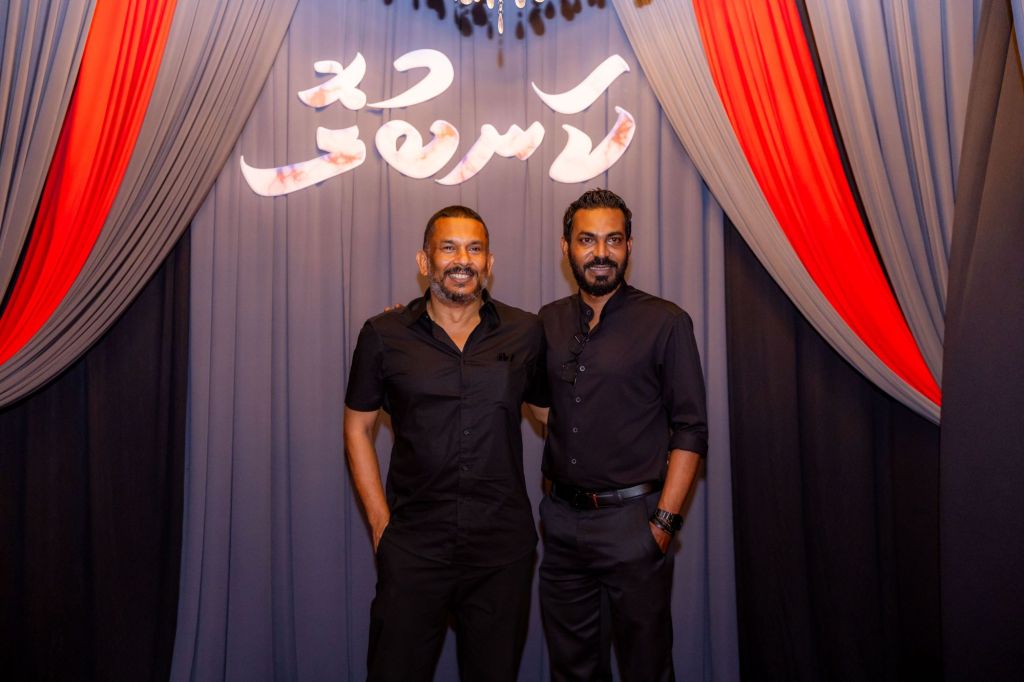
KAMANAA: MUNAVVAR UNFILTERED

Thirteen years ago, on a sweltering afternoon, I first encountered Hussain Munawar. The image is still clear. A slightly battered red Toyota Ist was chasing on the road. There he was, squeezing through the backseat window. He wore a long-sleeved horizontally striped T-shirt clinging to his frame, his hair tightly braided. His demeanor was far from pleasant as he harassed a young girl on the back of a motorbike. This unsettling introduction was my first glimpse of the character Tomas. Hussain portrayed this role so convincingly in the critically acclaimed Dhivehi film Loodhifa.

This gritty scene encapsulated the essence of Munawar’s directing style—unflinching realism.

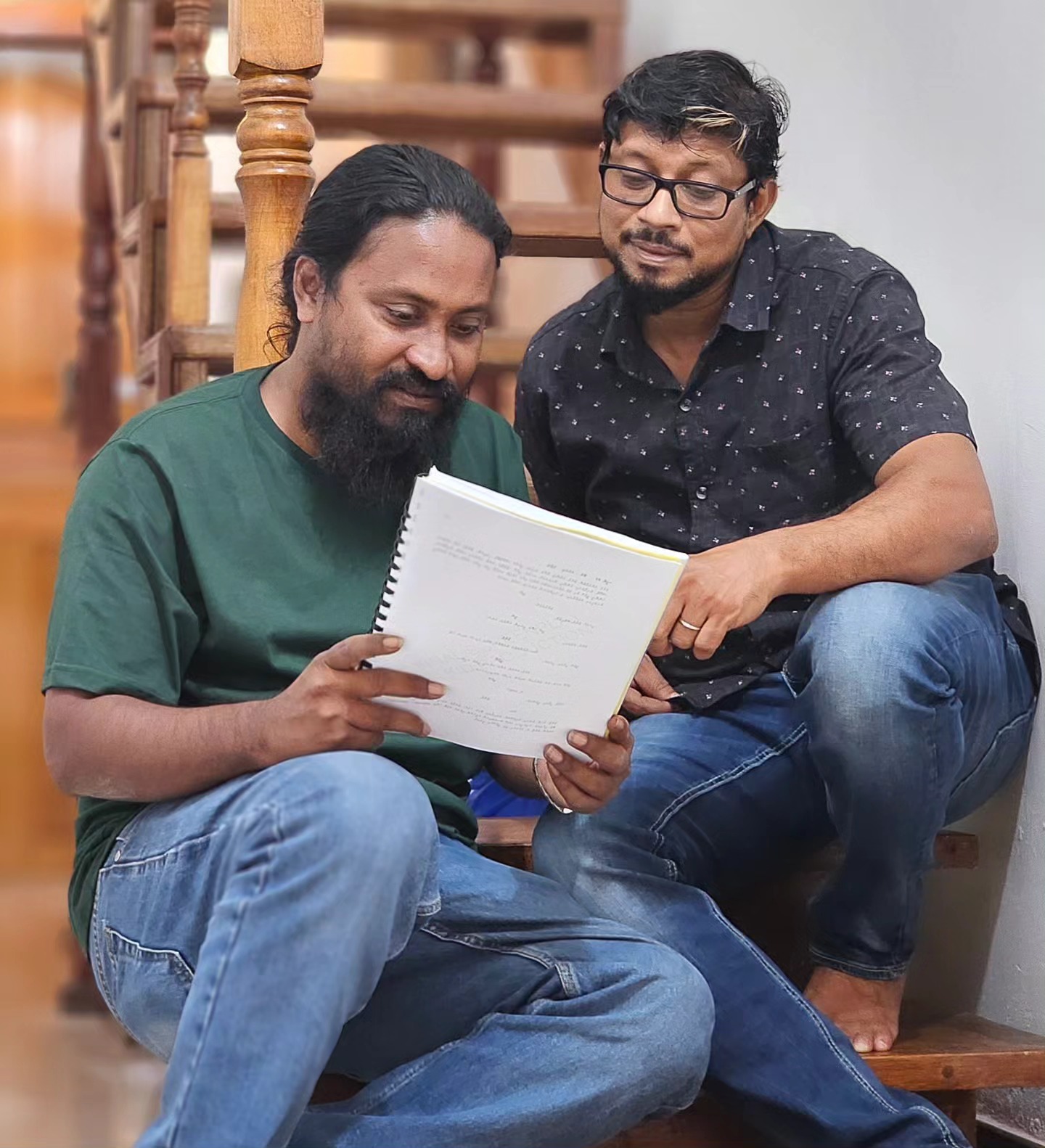
My collaboration with Hussain began in late April 2010. He was only 22 years. He asked me to doctor a screenplay. The screenplay was eventually re-structured and re-written for his directorial debut. That screenplay became Sazaa, the first Dhivehi film to confront the issue of violence against women with such raw intensity.

Hussain’s approach to Sazaa was unapologetic. He believed that to make a genuine impact, the violence had to be depicted as it happened—brutal and graphic. His reasoning was clear. The public needed to understand the shocking reality some women endure. The only way to convey that was through an honest portrayal.

We continued working together on Dhilakani in 2013, and eleven years later, Hussain approached me again. Over coffee at Olympus, he shared a story his wife, Rish, had told him. It was a true account of a loving husband who resorted to extreme violence. We immediately saw the connection to Sazaa and decided that this story would be its spiritual sequel. Thus, Kamanaa was conceived.

Hussain’s commitment to portraying violence in its rawest form has never wavered. He is a deep thinker who approaches each project with a seriousness that demands authenticity. His philosophy is straightforward. If the public is to grasp the gravity of domestic violence, they must see it as it truly is. No filters, no sugar-coating.

Kamanaa is not just a film; it’s a re-enactment of real incidents. The violence portrayed is graphic and shockingly brutal, but it’s necessary. Hussain wants the public to confront the harsh reality some women face. He aims to spark a conversation that needs to happen.

Kamanaa is set to be released on 27 August 2024. Brace yourselves for a film that doesn’t shy away from the truth but forces us to confront it head-on.