Mahdi Ahmed

Scripting waves of imagination from the sunny side of the Maldives.

Posts tagged ‘Ismail Rasheed’

KAN’BULO – TRUTH TOLD WITH TENDER BRUTALITY
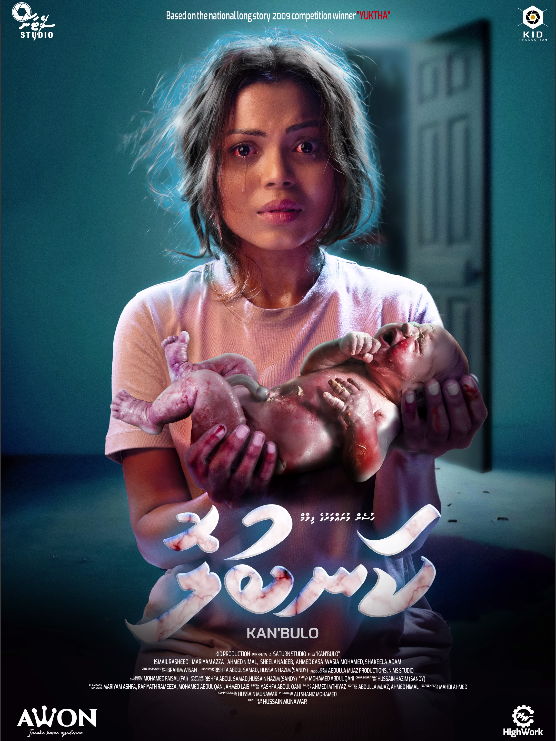
There are films that entertain, films that inspire, and then there are films like Kan’bulo — films that confront. Films that hold your gaze and refuse to blink first. Directed by Hussain Munawwaru, Kan’bulo is not a safe film. It’s a brave, emotionally volatile narrative that pulses with truth — sometimes uncomfortable, often heartbreaking, and always deeply human.

The story traces back to Yuktha, the award-winning long story by Yashfa Abdul Qani. Her delicate yet devastating writing carried the emotional weight that demanded adaptation. Reshaping it for the screen meant preserving its soul while finding a visual rhythm to match its intensity.

At the heart of the film is Mariyam Azza, delivering one of her strongest performances to date. Playing Kan’bulo demands range and endurance, and she handles every moment — from innocence to devastation to resilience — with precision. Even her silences carry meaning.

The ensemble brings depth and texture: Sheela Najeeb with quiet strength, Wasia Mohamed with loyal presence, Shakeela with protective resilience, Ahmed Easa with tenderness, Ahmed Nimal with chilling intensity, and Ismail Rasheed in a performance that feels like a powerful return. Together, they anchor the film’s emotional truth.

The makeup and costume work of Rishfa Abdul Samad and Hussain Hazim (Sandy) supports the characters with subtle authenticity, while Mohamed Faisal (Fai) shapes sound into an emotional undercurrent that lingers. Ahmed Imthiyaz (Inthi) adds music that mourns, observes, and uplifts without ever overwhelming.

Editor Abdulla Muaz, handling both edit and color grading, balances past and present with seamless precision, letting the story flow like fractured memory while keeping the emotions grounded. His work ensures the narrative is coherent yet haunting.

Producer Ali Shaniz deserves recognition for backing a film of such weight, reuniting the trusted team from Kamanaa and giving space for significance over safety.

And at the center, Munawwaru directs with restraint and conviction. He doesn’t exploit pain; he lets it speak. His choices give the film its raw honesty, making it less of a story told and more of an experience endured.

Kan’bulo is not an easy watch, nor was it an easy script to write. But it is necessary. It stares directly at what many would rather look away from — and by the end, neither can we.

Kan’bulo is currently running at Olympus.
KAN’BULO: A TRAILER THAT LEAVES NO ROOM FOR ESCAPE

There’s a kind of silence in cinema that isn’t empty. It lingers. It presses down. It forces the audience to confront things they would rather not. With the release of the official trailer for Kan’bulo, that silence now belongs to us.

Watching this trailer unfold, even though I know the story inside out, I found myself holding my breath — not because of what it shows, but because of what it dares to suggest. This is not a film that chases spectacle. It chases truth. And it doesn’t ask for permission.

What strikes me most from a technical and structural perspective is how deliberately the trailer mirrors the film’s emotional architecture. It begins with tenderness, shifts into unease, and descends — not with melodrama, but with precision — into something far more suffocating. Director Hussain Munawwaru’s vision is clear: this is a story about the quiet destruction that happens behind closed doors, the kind of suffering that society often overlooks until it’s too late. The trailer reflects that ethos with restraint, leaving just enough unsaid to force the audience into those uncomfortable gaps.

From the trailer alone, the performances speak volumes, even in fragments. Mariyam Azza, in the titular role of Kan’bulo, carries a haunting vulnerability that’s impossible to look away from. In just a few glimpses, her embodiment of pain, fear, and defiance cuts deep. Sheela Najeeb’s restrained but devastating presence adds a maternal weight that lingers. Ismail Rasheed, with his trademark intensity, dominates his scenes with quiet menace and authority. Ahmed Easa, Wasia Mohamed, Shakeela, and Ahmed Nimal each bring a lived-in truth to their characters — even from these brief moments, you sense the years of pain, resilience, and buried secrets these roles demand. These are not performances built on spectacle; they are performances built on humanity, on raw emotional honesty, and on the quiet devastation of survival.

From a screenwriting standpoint, seeing this trailer gives me a sense of quiet satisfaction — it captures the essence of why I wrote it. Kan’bulo was never about shock value. It was about honesty. About confronting a truth that refuses to stay silent any longer.

And then there’s that ending — the harrowing wail of Kan’bulo’s newborn, piercing through the silence, rising with unbearable weight until it amplifies and collapses into the film’s haunting title. It’s a sound that stays with you, a cry that speaks not only for the newborn but for every unspeakable pain that has been buried beneath silence. The final post-title shot, with Kan’bulo weeping, her voice breaking as she cries out to her father in the background, “I would never sin,” leaves no doubt about the depths this story is prepared to explore. It’s a moment not designed for shock, but for reflection — and it lands with devastating clarity.

I believe this trailer has done exactly what it needed to do. It doesn’t offer easy answers. It invites questions. And it demands we listen — even when it’s uncomfortable. Because some stories don’t shout to be heard. Some stories whisper… and leave us haunted.

Kan’bulo is set to release on 31 August 2025

ISMAIL RASHEED: A MASTERCLASS IN PRECISION

Some collaborations in this industry aren’t born from coincidence — they’re built through trust, craft, and a shared commitment to storytelling that challenges both the artist and the audience. My journey with Ismail Rasheed goes back over a decade, to 2013’s Ingili — a film that, at the time, was considered experimental for Maldivian cinema. It was a project I wrote and produced alongside Munawwaru and Ravee, and it marked a milestone for all of us. Ingili became the first Dhivehi film to receive international recognition, earning a Bronze Award while Ismail Rasheed took home Best Actor for a performance that redefined expectations of psychological tension on screen.

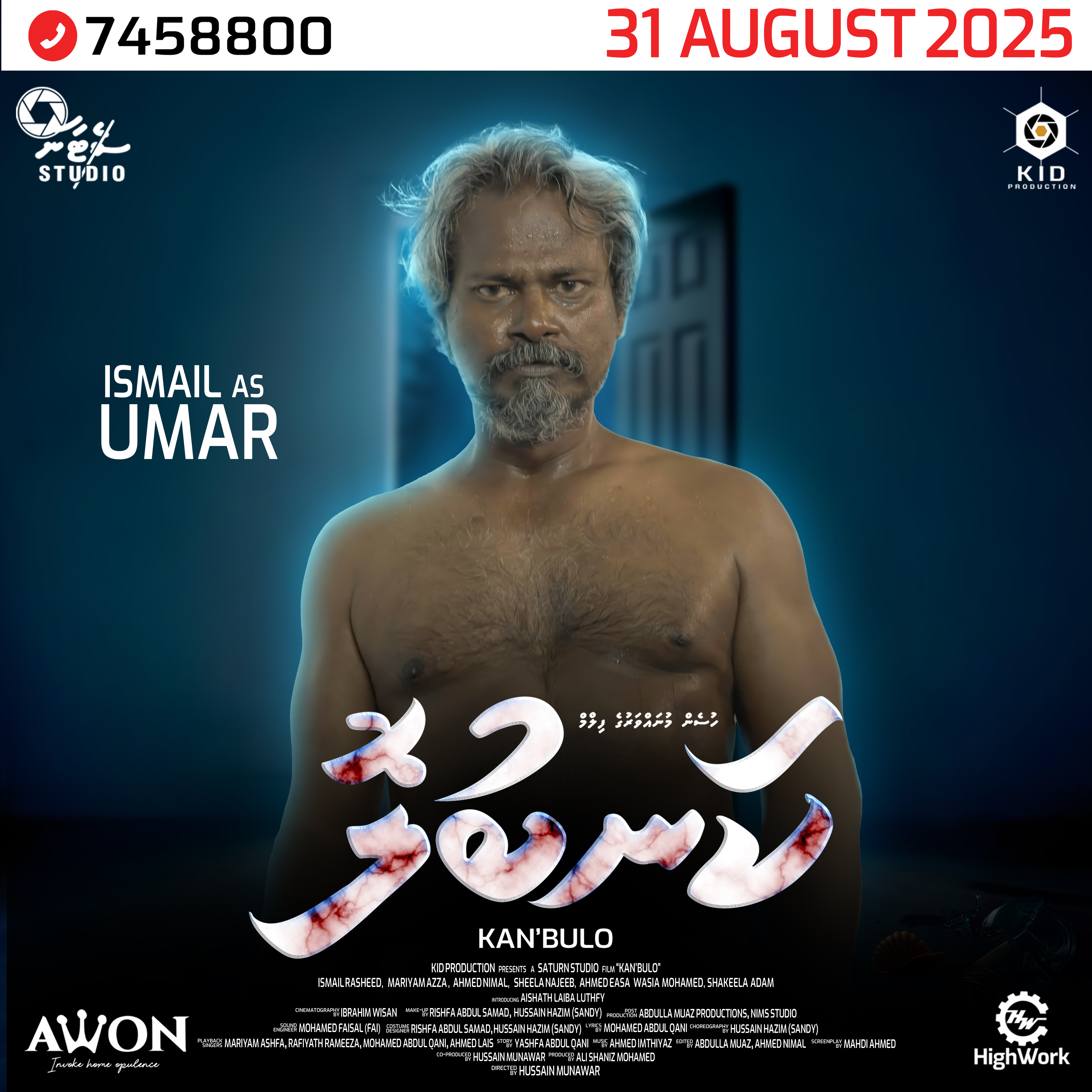
Fast forward to Kan’bulo, and once again, Ismail Rasheed proves why he remains one of the most versatile and consistently brilliant actors working today. His role as Umarbe may seem quieter on the surface, but like many of the characters in this film, it’s not about volume — it’s about precision. About knowing when to hold back and when to let a crack of emotion bleed through. That level of restraint isn’t taught. It’s earned through years of honing one’s instincts.

As a screenwriter, working with an actor like Ismail Rasheed is both a privilege and a rare alignment of intent. He understands nuance. He understands rhythm. And most importantly, he understands the unsaid — the spaces between the lines where real character work lives. Watching the dailies and rough cut of Kan’bulo, it’s clear he approaches this role with the same dedication to detail and truth that earned him accolades in Ingili. He shapes scenes through posture, silence, and the subtlest shifts in gaze — choices that don’t announce themselves, but leave an undeniable impact.

What I admire most about Ismail Rasheed is that he never approaches a role as “just another character.” Whether in a psychological thriller like Ingili or a deeply human drama like Kan’bulo, he fully inhabits the emotional architecture of the story. He’s an actor who brings gravity to every frame, reminding us why storytelling matters in the first place.

For me, this collaboration isn’t just professional. It’s a continuation of a creative conversation we began years ago — one rooted in respect for the craft and a shared belief in the power of honest, unflinching cinema.

Kan’bulo is set to be released on 31 August 2025.