Mahdi Ahmed

Scripting waves of imagination from the sunny side of the Maldives.

Posts tagged ‘Hussain Munavvaru’

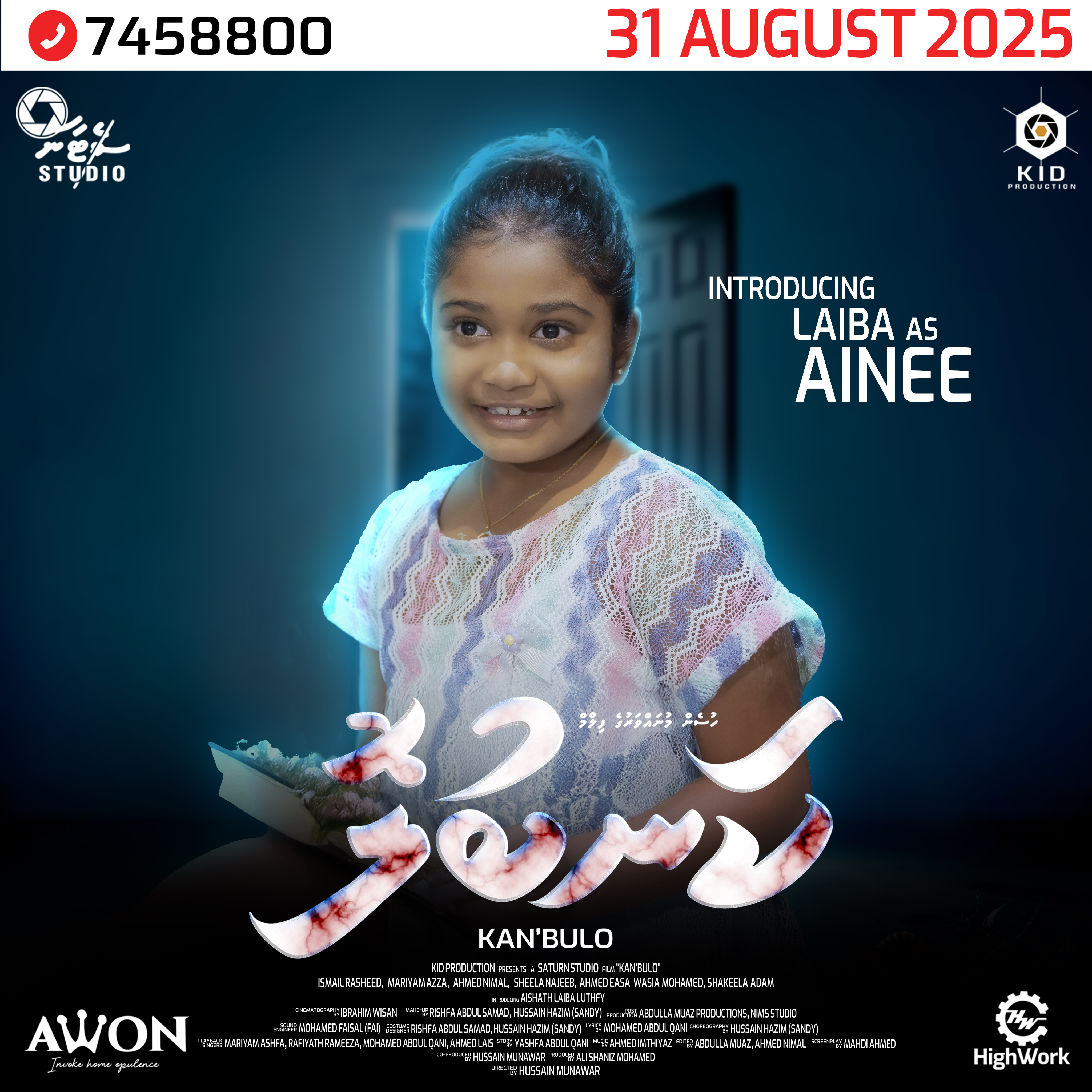
LAIBA: THE LIGHT IN THE DARK

As a screenwriter, you often write characters knowing they serve as emotional anchors for the story. Sometimes it’s not the protagonist, nor the antagonist, but a quiet presence — a small yet vital light that reminds everyone, including the audience, what is still worth holding onto. In Kan’bulo, that light is Ainee. And bringing her to life is the young and incredibly talented Laiba.

Laiba’s portrayal of Ainee goes beyond simply playing a child on screen. She brings an authenticity and warmth that is rare, even among seasoned actors. In a story shaped by silence, grief, and healing, her innocence doesn’t just soften the narrative — it sharpens its emotional impact. She makes us believe in hope without forcing it. She becomes the pulse of gentleness within a world weighed down by pain.

What impressed me most, as I watched the dailies and the early cuts, was her natural understanding of emotional rhythm. She listens in scenes. She reacts honestly. There’s no artificial sweetness in her performance — only truth. Her interactions with the cast bring out dimensions in their performances that even I, as the writer, hadn’t fully anticipated.

Writing Ainee was my attempt to thread hope through a heavy narrative. Seeing Laiba embody that hope so effortlessly is a reminder that sometimes, the smallest characters carry the greatest emotional weight.

Laiba’s Ainee doesn’t just brighten scenes. She lifts the film.

Kan’bulo is set to be released on 31 August 2025.

MARIYAM SHAKEELA: THE WEIGHT OF COMPASSION

Writing Kan’bulo was, from the very beginning, a study in contrasts — silence and screams, darkness and light, survival and surrender. Among the constellation of characters, there is one figure who quietly becomes the lighthouse in this storm: Zaheena, portrayed with absolute depth and dignity by the legendary Mariyam Shakeela.

What makes Zaheena essential to this story isn’t simply her relationship to the protagonist. It’s the emotional function she serves within the structure of the screenplay. She is the still point in a world spinning out of control. She is not reactive but grounded. Where others in the narrative waver, she holds steady — and in doing so, carries more emotional weight than she will ever speak aloud.

Shakeela brings to Zaheena a quiet ache beneath her strength, a heaviness in her presence that only seasoned actors can deliver with such restraint. It’s not what she says; it’s what she allows herself to carry between the lines. That is a difficult thing to write. It’s even harder to perform. Yet Shakeela moves through this role as though she’s been living with Zaheena’s quiet burden long before the cameras rolled.

Watching her in the dailies and the rough cut, I was struck by how often she anchors a scene without a single dramatic flourish. She listens. She absorbs. She reacts with precision. It’s a masterclass in subtext-driven performance. Her warmth isn’t soft — it’s forged from experience. Her compassion isn’t theatrical — it’s survival.

As a writer, Zaheena was always meant to symbolize hope, resilience, and the unseen cost of bearing witness to pain over time. Shakeela embodies this with a grace that elevates everyone who shares the frame with her.

Kan’bulo is a story about survival. But without Zaheena, it would lack the humanity that makes survival possible.

Kan’bulo is set to be released on 31 August 2025.

AHMED NIMAL: COMMANDING THE SCREEN WITHOUT A WORD WASTED

One of the great pleasures of writing for cinema is crafting characters who carry weight without explanation — characters who can shift the energy of a scene the moment they step into frame. In Kan’bulo, that weight belongs to Ahmed Nimal’s portrayal of Rauf.

Working with Nimal is a lesson in how less is always more when you trust the actor. His performance isn’t loud. It’s not theatrical. It doesn’t demand attention — it commands it. From the earliest drafts, Director Munavvaru and I knew Rauf needed to be played by someone who could embody presence with precision. Someone who understands that authority doesn’t come from shouting; it comes from the quiet confidence of someone who believes they control the room, the situation — and sometimes, the people.

Watching the dailies and the rough cut, it became clear to me how much Nimal brought beyond what was written. His understanding of pacing, of silence, of stillness, transformed simple scenes into something tense, layered, and unforgettable. His performance shapes the emotional landscape of this film. He fills the gaps between the lines with something unspoken but deeply felt.

Audiences may not know what to make of Rauf at first. And that’s by design. Ahmed Nimal ensures that with every glance, every gesture, they’ll lean in closer — trying to understand him, trying to figure him out. That is the mark of an actor fully in control of his craft.

As a screenwriter, there’s no greater reward than seeing an actor breathe life into a role in ways you didn’t even imagine. Ahmed Nimal does this, and more. His work in Kan’bulo will stay with you long after the credits roll.

Kan’bulo is set to be released on 31 August 2025.

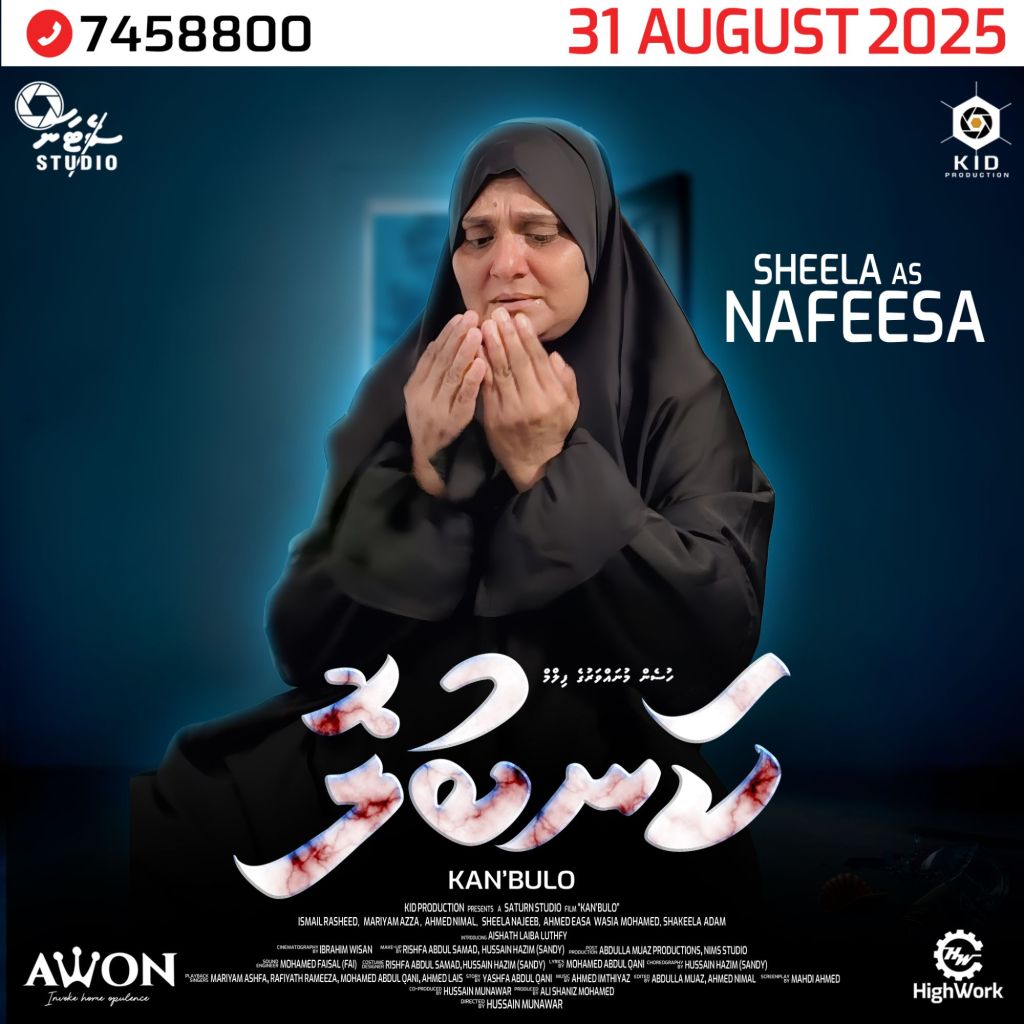
SHEELA NAJEEB: THE QUIET FORCE BEHIND NAFEESA

As a screenwriter, you often build characters knowing full well they require an actor with presence beyond words — someone who understands that not all performances are loud, but the best ones linger long after the scene ends. In Kan’bulo, Sheela Najeeb’s portrayal of Nafeesa is a textbook example of this rare craft.

Sheela doesn’t just perform — she elevates. What she brings to Nafeesa isn’t simply emotion; it’s a kind of silent authority, a dignity wrapped in layers of grief, faith, and resilience. She carries the weight of the character’s suffering with remarkable restraint, never slipping into melodrama. Her stillness, her pauses, the precision in how she delivers even the smallest reaction — these are not accidental choices. They are the marks of an actor deeply tuned into the unspoken architecture of a scene.

What’s equally remarkable is how Sheela’s performance functions like a gravity well for the ensemble. She anchors those around her, allowing other actors to find the right emotional temperature within their own roles. In scenes where the material is heavy, she brings balance. In scenes where others might falter, she raises the bar through sheer presence.

As a screenwriter, this is the kind of actor you dream of writing for — someone who understands the power of subtext, who knows the difference between playing a line and living inside it. Watching the dailies and now the rough cut, I can say this with certainty: Sheela Najeeb gives Nafeesa the quiet strength the story demands. And through her, everyone else shines brighter.

In Kan’bulo, her work isn’t just a performance. It’s a masterclass in understanding that sometimes, a mother’s grief and love can fill a screen more completely than any dialogue ever could.

Kan’bulo is set to be released on 31 August 2025.

WHEN A POSTER HURTS MORE THAN A SCENE

This morning, the official poster for Kanbulo was released.
And if it made your heart skip a beat — good.
It’s meant to.

A girl. A newborn.
Blood-soaked hands.
Eyes wide open — not with fear… but with something worse: disbelief.
And yet, she’s still standing.

The girl on this poster — portrayed heartbreakingly by Mariyam Azza — came to me first through the pages of Yuktha, the 2006 National Award-winning novel inspired by true events.
I remember the moment I finished reading it: I was frozen. Gasping. Shattered.
And I knew — without a doubt — that she would never leave me until her voice reached the screen.

The poster doesn’t sell a fantasy. It doesn’t glamorize. It doesn’t comfort.
It unsettles.
Because Kanbulo isn’t here to entertain.
She’s here to speak — for those who never could.

Writing Kanbulo wasn’t like any other screenplay.
It tore something out of me.
There were days I sat blank, unable to type a word.
And nights when writing just a single scene left me emotionally gutted.
But I kept going.
Because silence was never an option — not for her.

We renamed the film Kanbulo — a name spoken with affection, like “sweetie” or “darling.”
But don’t be fooled by its softness.
This film bites. It bleeds. It fights back.
It confronts the quiet violence so many women endure — behind closed doors, beneath polite conversations, under the weight of shame that isn’t theirs to carry.

The official poster, brilliantly designed by Abdulla Muaz, captures that very roar—unflinching, visceral, and impossible to look away from.

This isn’t fiction.
It’s a mirror.
One many will want to look away from.
But I hope you won’t.

I’m proud to be reuniting with director Hussain Munavvaru for our fourth film together. After Kamanaa, this film takes a very different turn.
Kanbulo doesn’t flirt. It doesn’t seduce.
It screams.
And for once, we’re ready to listen.

Kan’bulo opens 31 August 2025.
And when it does — I hope it stirs something in you.
Not just pity. Not just rage.
But action.
Empathy.
Reflection.
And the courage to believe those who’ve been silenced for far too long.

Until then —
Hold your daughters.
Protect the vulnerable.
And when someone finally trusts you enough to speak…
Listen. Fully. Fiercely. Without turning away.

TURNING PAIN INTO ART

I’m thrilled to announce that I’ve just wrapped up my latest screenplay, my first project of 2025—a journey that has been as emotionally taxing as it has been creatively liberating. This new film is a follow-up to Kamanaa, last year’s mega blockbuster, and I’m excited to be pairing once again with producer/ director, Hussain Munawwaru—our fourth collaboration together. Production is set to kick off in early April, and I can hardly wait to see our shared vision come to life on screen.

This screenplay is loosely based on a National Award-winning Dhivehi novel inspired by true events. Without giving away any spoilers, I can share that this film follows the remarkable journey of a resilient protagonist—a tale of survival, redemption, and finding hope amid life’s deepest sorrows.

In writing this screenplay, I dove into the raw, unfiltered depths of human emotion. I explored the painful echoes of a troubled past, the agony of loss, and the slow, often painful road toward healing. Every page challenged me to confront the complexities of the human spirit and its capacity to endure, even when burdened by unbearable weight. There were moments when the emotional toll felt almost overwhelming, yet every tear shed in the creative process became a tribute to the strength that emerges when vulnerability is embraced.

I hope this screenplay jolts audiences awake, exposing the raw, horrifying truths of our society that too many have tried to bury.

Stay tuned for more updates as we approach the start of production in April.

Cheers!

KAMANAA: UNPRECEDENTED BOX OFFICE TRIUMPH

Since its release on 27th August 2024, Kamanaa has taken the Maldivian box office by storm, surpassing all expectations and becoming an unexpected blockbuster. The film’s gripping storyline, powerful performances, and raw portrayal of domestic violence have resonated deeply with audiences, leading to a massive surge in demand.

A Phenomenal Start and Growing Momentum

From the very first day, Kamanaa has been a runaway success. The scheduled shows sold out well in advance, prompting the producer to add late-night screenings to accommodate eager moviegoers. In a testament to the film’s popularity, even these additional late-night shows have quickly sold out. The overwhelming demand has made Kamanaa a cultural phenomenon, with fans flocking to theaters to witness the story unfold on the big screen.

A Nationwide Sensation

The excitement around Kamanaa isn’t limited to the capital city of Malé; it has spread like wildfire across the Maldives. The reception in the islands has been nothing short of overwhelming, with many islands queuing up to host the film’s premiere. The producer has been inundated with requests, showcasing the film’s wide-reaching impact. The anticipation and enthusiasm from audiences in every corner of the country have turned Kamanaa into more than just a film—it has become a nationwide event.

The Ingredients of Success

Several factors have contributed to the extraordinary success of Kamanaa. First and foremost, the direction by Hussain Munawar has been lauded for its raw and honest portrayal of a deeply sensitive issue. The gripping story, based on true events, has struck a chord with viewers, making them feel every moment of tension and emotion on screen. The performances by the stellar cast are central to this film’s success:

  • Yoosuf Shafeeu delivers a chillingly authentic performance as Haider, transitioning from a loving husband to a man consumed by his darker impulses. His depth and nuance bring Haider’s complex character to life.
  • Mariyam Azza shines in the titular role of Kamanaa, portraying the strength and resilience of a woman enduring domestic violence with heartbreaking authenticity. Her transformation, both physically and emotionally, adds immense weight to her character.
  • Aminath Rashfa as Nora brings complexity and depth to her role. As the woman caught in an illicit affair with Haider, she navigates her character’s emotional turmoil with finesse, capturing both allure and guilt, while her chemistry with Yoosuf Shafeeu creates an electrifying tension.
  • Mohamed Rasheed as Abbas delivers a dignified performance, portraying a husband unknowingly caught in a web of deceit. His portrayal adds weight to the story, grounding it in the stark reality of betrayal and broken trust.
  • Natasha Jaleel as Zulfa, Abbas’s elder wife, exudes a calm yet commanding presence. Her character embodies wisdom and stability, serving as a quiet counterbalance to the turmoil surrounding the main characters.
  • Mohamed Manik shines in a supporting role as Nabeel, a friend trying to reform Haider. His nuanced portrayal adds emotional depth, enhancing the film’s dramatic impact and making Nabeel a memorable character.

Creative Contributions

The creative efforts of the crew have significantly elevated the film’s impact. Abdulla Muaz, responsible for editing, CGI, and color grading, has delivered exceptional work that shapes the film’s narrative flow and visual tone. His precise editing ensures the film maintains its tension and intensity throughout, while his CGI and color grading add a hauntingly realistic quality to the story’s most gripping moments.

Cinematography by Shivaz Abdulla further enhances the storytelling, with carefully crafted shots that capture both the beauty and brutality of the narrative. His use of lighting and framing creates a visual contrast between the characters’ outward appearances and their hidden struggles, drawing viewers deeper into the emotional landscape of the film.

Rishfa Abdul Samad significantly shaped Kamanaa with her compelling story and sharp casting choices, ensuring a strong ensemble. As a costume designer and makeup artist, her meticulous attention to detail brought authenticity to each character, enhancing the film’s emotional depth and realism.

Sound Design and Music

The sound design by Mohamed Faisal (Fai) has played a critical role in the film’s immersive experience. Utilizing the newly installed 5.1 surround sound system at Olympus Theatre, Fai has created an auditory landscape that amplifies the emotional highs and lows, making each scene more impactful. The music score by Ahmed Imthiyaz (Inthi) complements this, adding layers of emotion that underscore the film’s most powerful moments. Ravee Farooq’s song choreography adds yet another dimension to the film, bringing cultural vibrancy and rhythm that enriches the narrative.

Ali Shaniz: The Driving Force Behind the Success

A special mention must go to Ali Shaniz, the producer whose tireless dedication made Kamanaa a reality. His hands-on approach throughout every phase—from pre-production to marketing—ensured that every detail was meticulously executed. His efforts to promote the film, particularly in reaching audiences across the islands, have been instrumental in the overwhelming success of Kamanaa.

A Film That Sparks Conversations

Kamanaa’s unexpected success is not just about numbers; it’s about its ability to resonate with the audience and spark essential conversations on domestic violence and societal norms. The film’s raw portrayal and thought-provoking narrative have encouraged viewers to reflect on these realities long after they’ve left the cinema.

Looking Ahead: The Journey Continues

With its unprecedented box office run, Kamanaa continues to capture hearts and minds across the Maldives. As more islands line up to screen the film, and as audiences continue to clamor for more shows, it’s clear that Kamanaa is more than just a cinematic success—it’s a cultural moment. The film’s triumph is an indication to the power of storytelling, the strength of its cast and crew, and the importance of tackling vital social issues through art.

Kamanaa is not just a movie; it is an experience that leaves a profound impact, one that challenges and inspires. And this is only the beginning of its journey.

KAMANAA: A Raw Portrayal of Domestic Violence

Kamanaa is a profound exploration of domestic violence and betrayal, a thought-provoking journey skillfully directed by Hussain Munawar. This spiritual sequel to his earlier work, Sazaa, delves deep into the complexities of human relationships, offering a raw, unfiltered portrayal of the often-hidden realities that many women endure.

The narrative centers on Haider, a man who initially appears to be a devoted husband. However, his darker side emerges as he embarks on an extramarital affair with Nora. When his wife, Kamanaa, discovers the affair, Haider’s true nature comes to the forefront, leading to a series of violent and emotionally charged events. Based on actual incidents shared by Rishfa Abdul Samad, the film is both intense and brutally honest, offering a raw portrayal of domestic violence that is as compelling as it is unsettling.

Yoosuf Shafeeu (Youppe) delivers a masterful performance as Haider, seamlessly transitioning from a loving husband to a man driven by dark impulses. His portrayal is chillingly authentic, particularly during moments of intense emotional conflict. Youppe’s ability to convey deep internal turmoil through subtle expressions and gestures is remarkable. In the post-credit scene, he proves why he continues to reign in the Dhivehi film industry.

Mariyam Azza excels in the titular role, portraying Kamanaa with quiet strength and resilience. Her performance is deeply moving, capturing the character’s pain and endurance with sensitivity and grace. Azza’s commitment to the role, including gaining weight and donning a burqa, adds an extra layer of authenticity to her portrayal. Her scenes, particularly those where she grapples with her husband’s betrayal and violence, are filled with raw emotion, making Kamanaa a character who resonates deeply with the audience.

Aminath Rashfa (Asha), as Nora, brings complexity and depth to her character. As the other woman in Haider’s life, she navigates the emotional intricacies of her role with finesse, capturing both the allure and the inevitable consequences of her actions. Her chemistry with Youppe is electric, creating a captivating and unsettling tension.

Mohamed Rasheed as Abbas, Nora’s husband, and Nathasha Jaleel as Zulfa, Abbas’s elder wife, provide strong supporting performances. Rasheed’s portrayal of Abbas is one of quiet dignity, while Nathasha’s Zulfa offers wisdom and stability, grounding the film in moments of intense drama.

Rishfa’s role as the glamour makeup artist and costume designer in Kamanaa is nothing short of transformative. Her keen eye for detail and deep understanding of character development allowed her to craft looks perfectly encapsulating each character’s personality and journey. From the subtle yet impactful wardrobe choices to the meticulously designed costumes, Rishfa ensured that every visual element added depth to the story. Her spot-on casting decisions brought together a cast that embodied their roles, elevating the film’s emotional and dramatic impact.

Mohamed Manik played a crucial role as the dynamic Production Manager of Kamanaa, seamlessly handling the film’s challenging logistics while contributing to the creative process. His expertise in special effects makeup added a layer of realism to the characters, particularly in portraying violence and its aftermath. Additionally, Manik took on the supporting role as Nabeel, a character who earnestly tries to reform Haider, adding depth and nuance to the story. His multifaceted involvement was vital in bringing Kamanaa to life.

Shivaz Abdulla’s cinematography complements Munawar’s vision with carefully crafted shots that enhance the emotional intensity of the narrative. The lighting and framing are particularly effective in highlighting the contrast between the characters’ public facades and their private turmoil.

The sound design by Mohamed Faisal (Fai) is a critical element of Kamanaa‘s success. Utilizing the newly installed 5.1 surround sound system at Olympus Theatre, Fai creates an immersive auditory experience that heightens the film’s emotional impact. Every sound, from the quiet moments of tension to the explosive outbursts of violence, is meticulously crafted to draw the audience deeper into the story.

Ahmed Imthiyaz (Inthi)’s rousing score complements the narrative and underscores the film’s most poignant moments, while Ravee Farooq’s song choreography adds more depth to the relationship of the pairs appearing in each song.

Abdulla Muaz’s work as an editor, CGI artist, and color grader is exemplary, contributing significantly to the film’s overall impact. The editing is sharp and precise, ensuring the narrative flows seamlessly while maintaining the tension and suspense driving the story. The CGI is used sparingly but effectively, enhancing the film’s realism without detracting from its gritty, grounded tone. The color grading is particularly noteworthy, with muted tones and stark contrasts that reflect the bleakness and emotional weight of the story.

Hussain Munawar directs Kamanaa with an unflinching eye, committed to portraying violence in its rawest, most honest form. Munawar’s approach to filmmaking is marked by his dedication to realism. He believes that the only way to confront societal issues like domestic violence is to present them without filters. Kamanaa is a film that challenges its audience to confront uncomfortable truths, making them more socially aware. Kudos to him for assembling the right cast and an effective crew to bring his vision to success.

Last but not least, Ali Shaniz’s unwavering dedication as the producer of Kamanaa is admirable. From pre-production to the final release, Shaniz was deeply involved in every aspect of the film’s journey. His hands-on approach ensured that every detail was meticulously managed, from securing resources during production to overseeing the intricate post-production processes. His passion extended beyond the creative realm as he drove marketing efforts to ensure Kamanaa reached its audience. Shaniz’s relentless commitment is the cornerstone that made Kamanaa a reality.

In short, Kamanaa is a film that does not shy away from the harsh realities of domestic violence. It is a powerful, thought-provoking piece of cinema that challenges its audience to confront uncomfortable truths. The performances, particularly by Youppe, Azza and Asha, bring depth and authenticity to their roles. Hussain Munawar’s direction, combined with the stellar work of his devoted crew, including Muaz’s exceptional editing, visual effects and color grading, makes Kamanaa a must-see film that will leave a lasting impact on its viewers, sparking important conversations and raising awareness about domestic violence.

P.S. Wait for the post-credit scene to witness Azza’s unbelievable physical transformation.
KAMANAA: MUNAVVAR UNFILTERED

Thirteen years ago, on a sweltering afternoon, I first encountered Hussain Munawar. The image is still clear. A slightly battered red Toyota Ist was chasing on the road. There he was, squeezing through the backseat window. He wore a long-sleeved horizontally striped T-shirt clinging to his frame, his hair tightly braided. His demeanor was far from pleasant as he harassed a young girl on the back of a motorbike. This unsettling introduction was my first glimpse of the character Tomas. Hussain portrayed this role so convincingly in the critically acclaimed Dhivehi film Loodhifa.

This gritty scene encapsulated the essence of Munawar’s directing style—unflinching realism.

My collaboration with Hussain began in late April 2010. He was only 22 years. He asked me to doctor a screenplay. The screenplay was eventually re-structured and re-written for his directorial debut. That screenplay became Sazaa, the first Dhivehi film to confront the issue of violence against women with such raw intensity.

Hussain’s approach to Sazaa was unapologetic. He believed that to make a genuine impact, the violence had to be depicted as it happened—brutal and graphic. His reasoning was clear. The public needed to understand the shocking reality some women endure. The only way to convey that was through an honest portrayal.

We continued working together on Dhilakani in 2013, and eleven years later, Hussain approached me again. Over coffee at Olympus, he shared a story his wife, Rish, had told him. It was a true account of a loving husband who resorted to extreme violence. We immediately saw the connection to Sazaa and decided that this story would be its spiritual sequel. Thus, Kamanaa was conceived.

Hussain’s commitment to portraying violence in its rawest form has never wavered. He is a deep thinker who approaches each project with a seriousness that demands authenticity. His philosophy is straightforward. If the public is to grasp the gravity of domestic violence, they must see it as it truly is. No filters, no sugar-coating.

Kamanaa is not just a film; it’s a re-enactment of real incidents. The violence portrayed is graphic and shockingly brutal, but it’s necessary. Hussain wants the public to confront the harsh reality some women face. He aims to spark a conversation that needs to happen.

Kamanaa is set to be released on 27 August 2024. Brace yourselves for a film that doesn’t shy away from the truth but forces us to confront it head-on.

KAMANAA: Unveiling the Haunting Reality of Domestic Violence

It all began one early morning on 04th June 2023 at Olympus Cafe. As usual, I sat with director Hussain Munawar, affectionately known as Kudafoolhu in the film fraternity, for our morning coffee. With his characteristic enthusiasm, he told me he had a story to share—a true one narrated by his wife, Rish, who got it from the source.

When he finished recounting the series of incidents, my coffee had gone cold, untouched except for one sip. Like the coffee, I felt a chill. Lately, stories with violence have been hard to stomach, and this one, about domestic violence, hit particularly hard. Munawar wanted it to be a spiritual sequel to his debut film “Sazaa,” which also dealt with violence against women and was our first collaboration in 2011. He promised to get an audio recording of the interview with the victim, and I agreed to start the detailed outlining once I received it. Little did I know this story would haunt me for the rest of the day.

The dramatic weight of the story put my brain into overdrive. That evening, on my way to Vilimale’ from Male’, I began crafting the screenplay on the ferry using my trusty Samsung S22 Ultra. By the time I reached Vilimale’, I had a rough outline. Later that evening, sprawled on the sitting room floor, I built up the backstory for all the separate acts of violence inflicted by a husband on his mild-mannered wife. I developed the characters, including the minor ones, and outlined the violent incidents leading up to the climax, staying true to the real story while reimagining it for the screen.

Days turned into weeks and weeks into months. I kept reminding Hussain about the interviews, but due to the subject’s sensitivity, Rish was still unable to record them. Meanwhile, casting had begun. Hussain locked down Mariyam Azza, the most sought-after actress, for the victimized wife and was negotiating with Yoosuf Shafeeu, the most decorated actor, for the violent husband role. He also scouted for an equally renowned actress to play the other woman. Despite some casting setbacks, he eventually onboarded the most up and coming actress, Aminath Rashfa, for the latter role. Veteran actor Mohamed Rasheed and promising actress Natasha Jaleel, along with Mohamed Manik, were assembled for the cast. I tweaked the characters and scenes to better fit the actors’ strengths, making my outline even more engaging.

Still waiting for the interviews, Hussain eventually informed me that he had set a date to begin production. He urged me to start writing. Luckily, I had the rough outline ready. I revised the outline in a day, removing repetitive violence and adding fresh, brutal scenes. Voila, the outline was complete and looked good.

With three weeks to write the screenplay, I divided my time, spending two hours in the morning and two in the evening. By the end of the final week, I had a draft ready and immediately sent it to Hussain for feedback. He shared it with the cast, and I received valuable input, particularly from Rish, who suggested additional scenes leading up to critical violent incidents and some character name changes.

The meeting with Yoosuf Shafeeu was a pivotal moment. When he approved the unrestricted interaction with the other woman, I couldn’t help but grin, my heart racing like a bullet train. I finished the final draft that night, adding intense violence and refining the interactions.

After a journey that began with a chilling tale over coffee, Hussain finally gave me the final title of the screenplay: ‘Kamanaa,’ a loving term in Dhivehi used to address a wife. What started as a daunting task had transformed into a powerful screenplay, getting ready to be brought to life on the big screen.

Kamanaa is set to release on 27th August 2024.