HINITHUNVELAASHEY KALAA: MY SMILE, MY JOURNEY
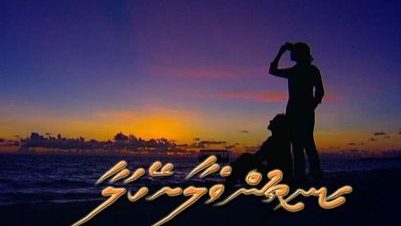
Seventeen years ago, today—on August 25, 2008, at around 8:45 pm—I wrapped up the final episode (Episode 52) of Hinithunvelaashey Kalaa, a series from TVM that went on to win the hearts of the nation. I was sitting inside, wearing only shorts, with rain tapping a busy Morse code on the windows. My heart and body were warmed—not just by the embrace of my ever-loving wife, who helped me kiss goodbye to some corny lines—but by the sheer joy of finishing the journey.
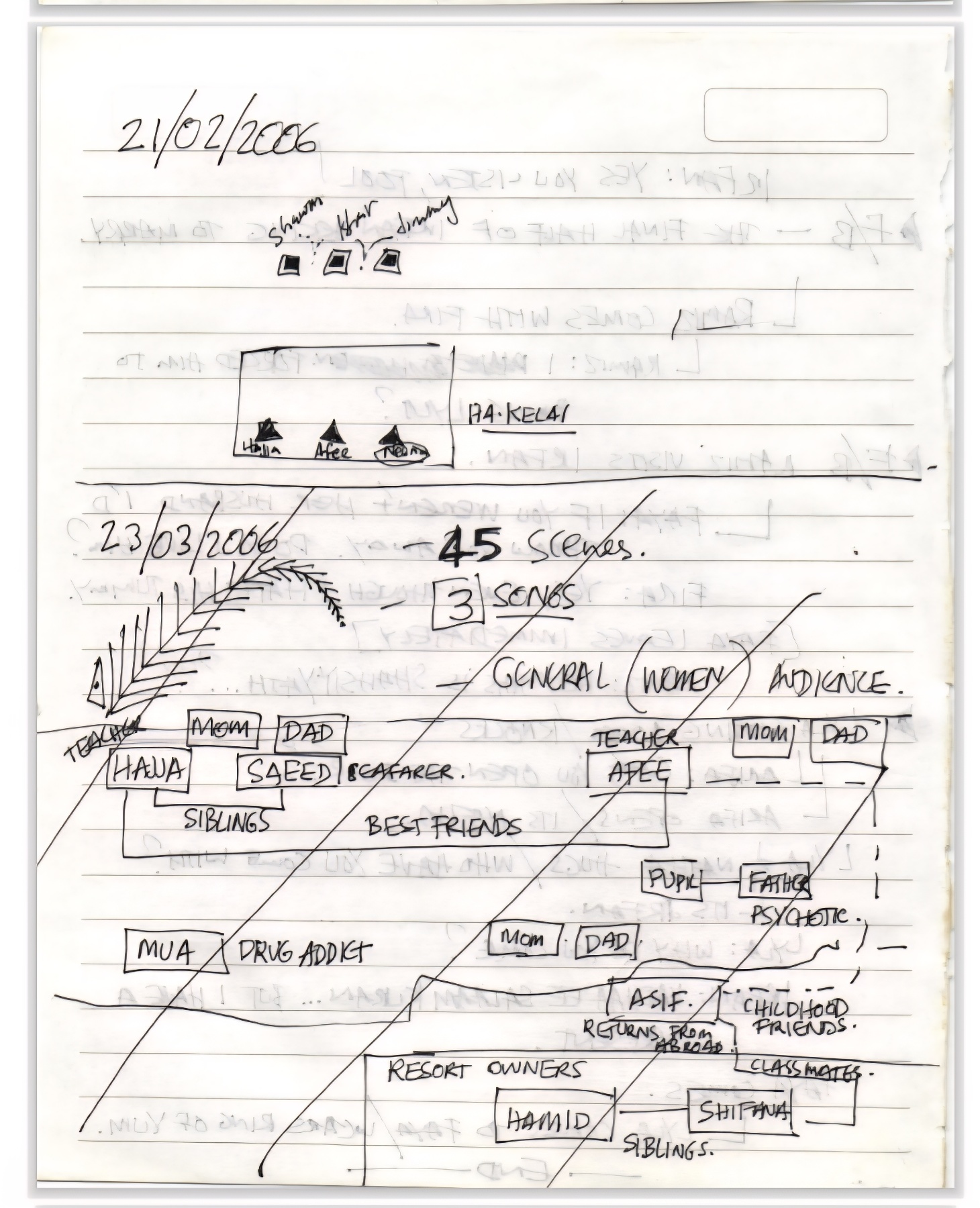
It all began on February 21, 2006, one late morning, under a breezy sky at West Park. I sat with director Abdul Faththaah by the sea, scribbling notes in my worn-out, flower-covered notebook, sipping papaya juice (plus a squeeze of lime), while he sipped a milk coffee. He had a seed of a concept—a 52-episode serial called Hinithunvelaashey Kalaa—about two childhood friends whose lives were wildly different yet bound by a shared past.

From that meeting, characters sprang to life. Ina, the tomboyish farmer girl in Kelai, cap on her head, sun on her shoulders. Fazu, the diligent teacher with a quiet soul. Around them, layers of family, history, and society emerged. The story wasn’t just a drama—it was a slice of the Maldives, its struggles and hopes stitched into every scene.

I scripted the first 32 episodes in just over a month—obsessed and restless, averaging almost an episode a day, since production had already begun in Ha. Kelai and the scripts had to keep flowing to match the shoot. My mind was on fire—literally waking at odd hours, skull burning, yet never able to stop typing. That first arc, set entirely in Kelai, poured out in one feverish burst.
Then something unexpected happened.
Once filming wrapped on the 32 episodes and editing began, the material didn’t quite fit the boxes I had built. Each episode overflowed into the next. Before long, the original 32 had ballooned into 40 episodes.

What could have been a headache turned out to be a gift. Suddenly, I had 12 more episodes to write—episodes that would bring the story to Malé. It was a creative second wind. Instead of dragging my feet, I leaned in. Those episodes gave space for new twists, deeper arcs, and an ending that felt more earned. To my surprise, even Faththaah sighed in relief—the story had room to breathe.

The series first went on air on July 26, 2006—Independence Day in the Maldives. A proud date to begin a journey. But like all long journeys, life had its way of testing us. Around Episode 33, one of our actors ran into real-life trouble, and TVM had no choice but to pull him off the screen. Policy was policy.
The series came to a sudden halt. Weeks stretched into months. And then, more than a year later, re-started again—from Episode 1. Frustration, yes. Suspense, absolutely. But looking back, it was also a strange kind of gift. The audience got to live the story twice, and I found the space to refine the series finale.
By late August 2008, writing Episodes 51 and 52 felt bittersweet. On that rainy evening, August 25th, I typed the final words of Episode 52, closed my laptop, and hugged my wife. That hug—warm, knowing, and peaceful—was my personal wrap party. The final episode later aired on November 11, 2008—Republic Day in the Maldives.
If I could send a postcard to that former me, I’d say:
You did it. You wrangled 52 episodes—that’s equivalent to thirteen feature films worth of storytelling.
You wrestled with long nights, reruns, rewrites, cast drama, and even a mid-series collapse. You turned chaos into creation. And you gave Maldivian audiences a story that made them laugh, cry, debate, and remember.
Hinithunvelaashey Kalaa wasn’t just a TV series. It was a chapter of my life. A love letter to storytelling. A memory stitched forever into the fabric of Maldivian television.

And more than that—it sharpened my craft. Writing this series allowed me to experiment with rhythm, dialogue, symbolism, cliffhangers, and emotional pacing in ways I never had before. I discovered the power of layering subplots, weaving historical flashbacks, planting narrative traps, and using pauses and silences as deliberately as dialogue itself. Many of the screenwriting “tricks” I still use today—those playful double meanings, those quiet beats before an explosion of emotion—were born in those 52 episodes. It was the project that turned me from a writer into a screenwriter. And I will always be indebted to director Fathaah for giving me this opportunity of a lifetime.
Seventeen years on, I look back and realize: every page, every scene, every sleepless night was part of a greater script—the story of my own becoming. That rainy evening in August 2008 was not an ending, but the beginning of everything that followed.
Because sometimes, the greatest journeys are written between two words—
FADE OUT.

 Mahdi Ahmed