Mahdi Ahmed

Scripting waves of imagination from the sunny side of the Maldives.

Posts tagged ‘31 August 2025’

KAN’BULO: WHEN SILENCE BECAME THE LOUDEST VOICE

Last night, Kan’bulo completed its historic run at Olympus — 52 housefull shows. The first Dhivehi film ever to achieve such a milestone. Sitting with that number, I don’t just feel pride, I feel a deep sense of gratitude. For me, this journey has never been about breaking records. It has always been about reaching hearts. And knowing that so many people stepped into Kan’bulo’s world, carried her pain, and walked out changed — that’s the real triumph.

When I began writing Kan’bulo, I told myself this couldn’t simply be another screenplay. It had to be a lived experience. I wanted every silence, every breath, every hesitation on the page to pull the audience into Kan’bulo’s skin. I didn’t want them to merely watch her story unfold. I wanted them to breathe with her, to ache with her, to hold her fear as if it were their own.

This demanded restraint. It is easy for a writer to fall into the trap of overexplaining, to wrap emotion in too many words. But Kan’bulo taught me the power of what remains unsaid. The silences became my dialogue. And in those silences, the audience leaned closer, feeling more than words could ever spell out.

The shell motif will always remain the heart of my writing journey in this film. In that moment where Kan’bulo tries to cast her half of the shell into the sea, all hope gone — Ariz stops her, placing his half upon hers. That single gesture carried the weight of volumes of dialogue I could have written. But instead, silence filled the hall. A silence so profound that it became shared, collective, almost sacred. I remember sitting in the cinema, watching the audience hold their breath with me, and I knew then — the silence had spoken.

Structurally, the screenplay was written with a clear emotional trajectory: the simmer, the boil, and then the eruption. The pacing isn’t accidental. Every scene builds incrementally, creating pressure just beneath the surface until it inevitably breaks. That breaking point — the climax — is where craft and emotion converge. It’s not spectacle for the sake of shock, but catharsis in the truest Aristotelian sense: the purging of emotion, not only for Kan’bulo, but for the audience who has carried her burdens alongside her.

But none of this would have been possible if the words had stayed on paper. My deepest gratitude goes to Hussain Munavvar, who entrusted me with the chance to write this screenplay and then carried it to the screen with vision and courage. To every single member of the cast and crew — you gave my pages flesh, blood, and heartbeat. You transformed silence into cinema, and for that, I am forever thankful.

As I look back now, what stays with me isn’t just the record of 52 housefull shows. It’s the hope that every Kan’bulo out there — every girl who suffers in silence, every soul who feels unseen — will be given the protection, dignity, and safety they deserve. Stories can open eyes, but it is our duty as a society to open our arms.

To me, Kan’bulo will never just be a film. It will always be a promise — that no girl should ever have to carry such burdens alone.
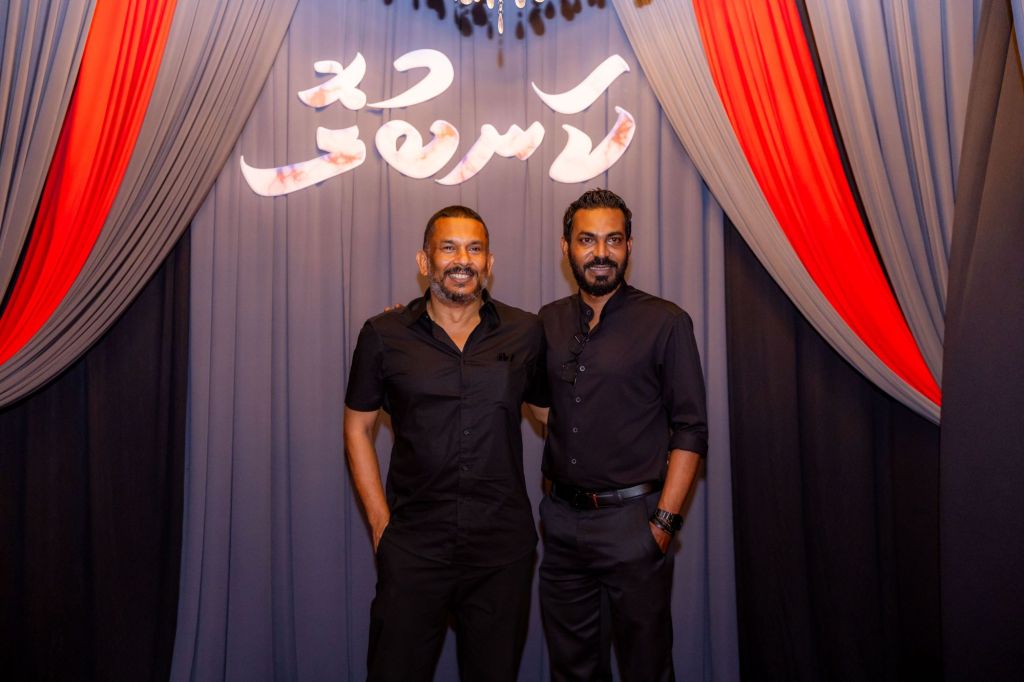
ALI SHANIZ: THE CAPTAIN WHO DIDN’T FLINCH

It takes a certain kind of producer to make a blockbuster. But it takes a braver one to follow it up with something as raw, unsettling, and emotionally demanding as Kan’bulo.

Ali Shaniz, the producer behind Kamanaa—the biggest Dhivehi blockbuster of 2024—could have played it safe. He had every reason to. After delivering one of the most commercially successful films in recent memory, most would steer toward lighter waters. But Shaniz chose the storm. He chose Kan’bulo.

This isn’t just a film. It’s a cinematic reckoning. A story laced with silence, trauma, and emotional violence—territory most producers would instinctively avoid. But not Shaniz. When director Hussain Munavvaru handed him the screenplay, Shaniz didn’t hesitate. He understood what the story was asking of him—not just financially, but morally. And he said yes.

Producing a film like Kan’bulo is not just about funding—it’s about backing the emotional and social weight of the story. Shaniz never once tried to soften the edges. He never once asked, “Can this be toned down?” Instead, he leaned in. He created the space for this film to be what it needed to be: unflinching and honest.

It’s also worth noting that this was the very same team that made Kamanaa what it was. From post-production to performances, Shaniz believed in bringing everyone back—not for familiarity’s sake, but because he understood that a story this delicate needed people who could hold it with care.

As a writer, it’s rare to find a producer who not only respects the page but also protects it. Shaniz is that kind of producer. He doesn’t just produce movies—he shoulders them. With grit. With grace. And most of all, with guts.

Producer Ali Shaniz is once again at the helm, this time navigating far rougher waters with Kan’bulo. But steady as ever, he’s steering this ship straight through the storm. And if there’s anyone I’d trust to sail a story this heavy into harbor—it’s him. Aye, Captain.

Kan’bulo is currently enjoying a successful run at Olympus.

KAN’BULO: THE SHELL MOTIF

One of the most rewarding experiences as a screenwriter is when a simple motif quietly transforms into the heartbeat of a story. In Kan’bulo, that motif was the shell.

The shell begins its journey as a tender gesture — Ariz gifting half of it to Kan’bulo. On the surface, it feels like a token of affection, but beneath that lies a symbol of incompleteness, of two halves belonging together. It’s fragile, ordinary even, yet it carries the weight of connection and hope.

The true resonance of the shell revealed itself in the crucial scene where Kan’bulo, utterly broken and stripped of all hope, decides to throw away her half into the sea — as if to surrender everything she has left. On paper, this was the perfect place for dialogue, the kind of moment where one could write pages of desperate exchanges. But instead, I chose silence.

From a screenwriting perspective, this was an intentional technical decision. I let the motif do the storytelling. In screenwriting, dialogue often competes with action, but when a motif is planted and nurtured throughout the narrative, it earns the right to replace words. The act of Ariz stopping her hand and placing his half-shell over hers became a complete scene arc: setup (the decision to throw), conflict (his intervention), and resolution (the joining of the halves). No words needed.

The result was powerful. In the theatre that night, silence extended beyond the screen — the audience, too, fell into complete stillness. You could feel them breathing with Kan’bulo, watching two halves become whole. That shared silence was not emptiness but resonance. It was cinema at its purest: visual storytelling carrying emotion more strongly than dialogue ever could.

For me, that moment alone made the journey of writing Kan’bulo worthwhile. The shell was no longer just a prop — it became the soul of the film, binding the characters and the audience in one collective heartbeat. Sometimes, it is in the absence of words that cinema finds its truest voice.

Kan’bulo is currently enjoying a successful run at Olympus.

KAN’BULO – TRUTH TOLD WITH TENDER BRUTALITY

There are films that entertain, films that inspire, and then there are films like Kan’bulo — films that confront. Films that hold your gaze and refuse to blink first. Directed by Hussain Munawwaru, Kan’bulo is not a safe film. It’s a brave, emotionally volatile narrative that pulses with truth — sometimes uncomfortable, often heartbreaking, and always deeply human.

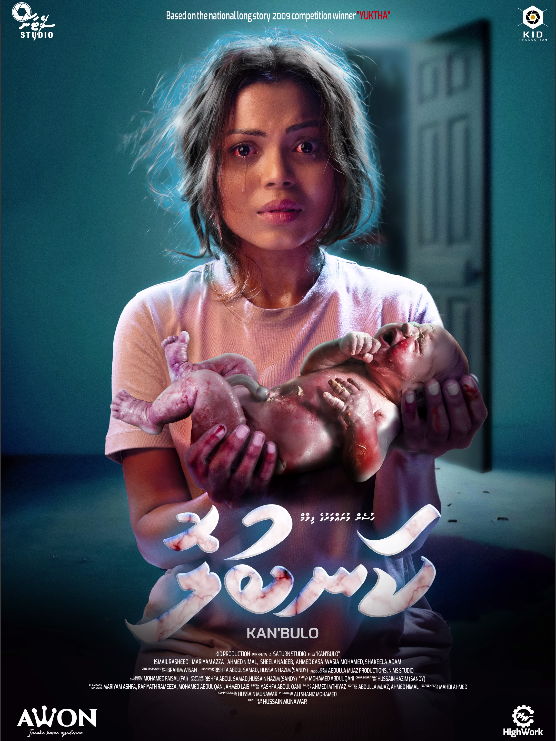
The story traces back to Yuktha, the award-winning long story by Yashfa Abdul Qani. Her delicate yet devastating writing carried the emotional weight that demanded adaptation. Reshaping it for the screen meant preserving its soul while finding a visual rhythm to match its intensity.

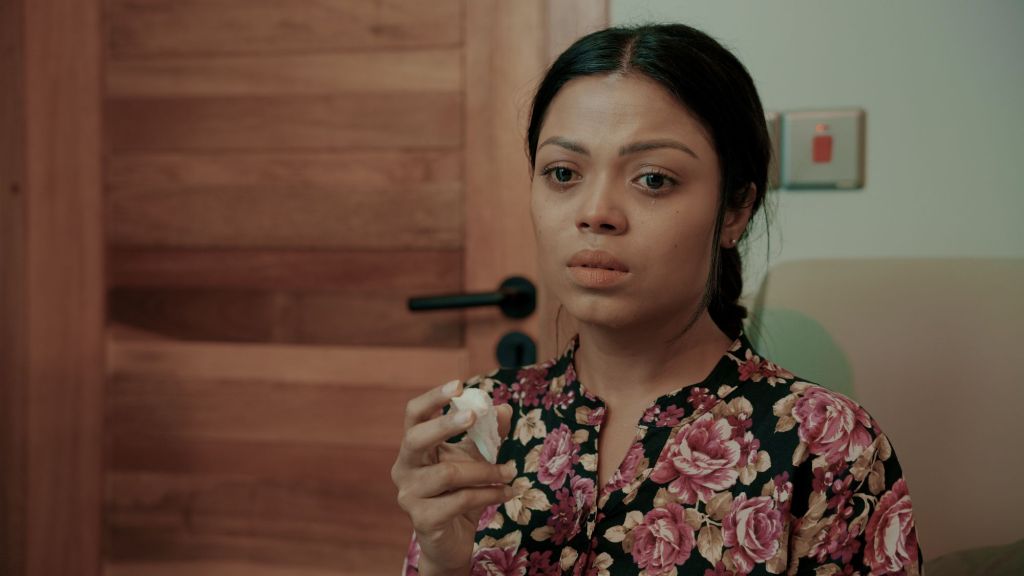
At the heart of the film is Mariyam Azza, delivering one of her strongest performances to date. Playing Kan’bulo demands range and endurance, and she handles every moment — from innocence to devastation to resilience — with precision. Even her silences carry meaning.

The ensemble brings depth and texture: Sheela Najeeb with quiet strength, Wasia Mohamed with loyal presence, Shakeela with protective resilience, Ahmed Easa with tenderness, Ahmed Nimal with chilling intensity, and Ismail Rasheed in a performance that feels like a powerful return. Together, they anchor the film’s emotional truth.

The makeup and costume work of Rishfa Abdul Samad and Hussain Hazim (Sandy) supports the characters with subtle authenticity, while Mohamed Faisal (Fai) shapes sound into an emotional undercurrent that lingers. Ahmed Imthiyaz (Inthi) adds music that mourns, observes, and uplifts without ever overwhelming.

Editor Abdulla Muaz, handling both edit and color grading, balances past and present with seamless precision, letting the story flow like fractured memory while keeping the emotions grounded. His work ensures the narrative is coherent yet haunting.

Producer Ali Shaniz deserves recognition for backing a film of such weight, reuniting the trusted team from Kamanaa and giving space for significance over safety.

And at the center, Munawwaru directs with restraint and conviction. He doesn’t exploit pain; he lets it speak. His choices give the film its raw honesty, making it less of a story told and more of an experience endured.

Kan’bulo is not an easy watch, nor was it an easy script to write. But it is necessary. It stares directly at what many would rather look away from — and by the end, neither can we.

Kan’bulo is currently running at Olympus.

AHMED LAIS: A VOICE THAT FOUND ITS MOMENT

Some voices don’t just sing — they remember, they ache, they belong. Ahmed Lais has one of those rare voices.

At just 27, Lais’s journey into the cinematic world is already a compelling story. Many still remember him as the bright-eyed 10-year-old who made his acting debut in one of 2009’s biggest blockbusters. His performance wasn’t just well received — it was extraordinary. He walked away with the Best Debutant (Male) and Best Child Artist awards at the 1st Maldives Film Awards, and earned a Best Supporting Actor nomination at the prestigious 6th National Film Awards — a rare feat for someone so young.

And yet, instead of riding that wave into a long-acting career, Lais chose a quieter, riskier road — music. While others may have questioned his decision to step away from the spotlight, Lais knew that his voice had its own path to follow. He submitted demos, quietly auditioned for high-profile projects, but his defining moment had yet to arrive.

Until Kan’bulo.

Director Hussain Munawwaru, always a keen observer of raw talent, heard something unmistakable in Lais’s voice — a kind of sorrowful warmth, a tender ache that couldn’t be faked. And when it came time to record the film’s most haunting romantic track, Munawwaru knew exactly who should sing it.

Lais didn’t just step up — he soared.

The result is a song that doesn’t merely accompany a scene; it inhabits it. Lais’s voice trembles with longing and loss, echoing the emotional core of Kan’bulo itself. It’s not showy. It’s not loud. It’s true. And that truth lingers long after the final note fades.

For a young man who once lit up the screen as a child, Ahmed Lais has now left a lasting impression as a vocalist. This isn’t just a song in a film — it’s a moment. And it belongs to him.

Here’s to finding your voice — and to finally being heard.

Kan’bulo is set to release on 31 August 2025.

RISHFA AND SANDY: COSTUME & MAKE-UP IN KAN’BULO

Behind every memorable character in cinema lies an invisible language — one stitched into fabric, shaded onto skin, and brushed into detail. It’s not always spoken, but it’s deeply felt. And in Kan’bulo, that language is crafted with precision and empathy by Rishfa Abdul Samad and Hussain Hazim (Sandy).

For those who watched Kamanaa, you already know the caliber of Rishfa’s work. Her costume and make-up design for that film didn’t just complement the narrative — it elevated it. She returned for Kan’bulo, not just with her signature subtlety, but with an evolved sensibility for the film’s rawer emotional terrain.

Joining her this time is Sandy — Hussain Hazim — whose meticulous attention to detail and bold visual instincts brought a vital layer of texture to the world of Kan’bulo. Where Rishfa’s approach grounds characters in emotional realism, Sandy’s contribution adds grit and authenticity to their external realities. Together, they’ve created a lookbook of broken innocence, inner scars, and quiet resilience — all without a word being spoken.

Make-up and costume are often the most overlooked departments when discussing the emotional impact of a scene. But in a story like Kan’bulo, where the transformation of a character is internal as much as it is external, Rishfa and Sandy’s work becomes more than aesthetic — it becomes storytelling. The bruises that don’t just mark pain but history. The wardrobe that doesn’t just clothe, but constricts or frees. Every choice they made helped define who these characters are, even before the first line of dialogue is spoken.

Their collaboration is not only visually cohesive but narratively sensitive. It speaks volumes in silence. And as a screenwriter, I can’t express how powerful it is to see your characters come to life not just in performance, but in appearance — in posture, in presence, in how they wear their world on their skin.

In Kan’bulo, the pain is visible, the transformation is visual, and thanks to Rishfa and Sandy, the truth is in the details.

Kan’bulo is set to be released on 31 August 2025.

YASHFA: ADAPTING HER AWARD-WINNING STORY INTO KAN’BULO

In 2009, a quiet storm passed through Maldivian literature. It came in the form of a long story titled Yuktha, penned with grace and conviction by Yashfa Abdul Qani. The piece went on to win first place at the National Long Story Competition — and rightfully so. It wasn’t just a work of fiction; it was a reflection of buried truths, crafted with emotional intelligence and a deep understanding of the unspoken.

When I was handed this story to adapt, I knew immediately that it demanded more than a simple retelling. It asked for care. It asked for bravery. And it asked for honesty.

Adapting a long story into a screenplay is never just about converting prose into scenes. It’s about translation — not of language, but of essence. What works powerfully on the page, nestled between narration and inner monologue, must now live and breathe through images, dialogue, silences, and performance. You’re not just recreating the story — you’re restructuring it so it thrives in a visual and temporal medium.

And with Kan’bulo, the weight of that responsibility was greater than usual. The story had resonance. It had urgency. But most of all, it had a protagonist who demanded her truth be told — not sensationalized, not softened — but told with authenticity.

I approached the adaptation process not as someone trying to rework a text, but as someone trying to protect it. To preserve the emotional heartbeat of Yashfa’s writing while allowing the film version to have its own rhythm. That meant hard choices — what to keep, what to let go, what to reimagine, and how to give characters a voice when the page had once carried their silence.

It was a delicate balance of loyalty and liberty. And I hope I’ve honored the spirit of what Yashfa created.

As Kan’bulo prepares to meet its audience, I want to take a moment to express my respect and gratitude to Yashfa Abdul Qani. Without her vision, there would be no story to adapt. Her courage in telling this story laid the foundation for everything that followed. I was just the one invited to build on it.

Kan’bulo is set to be released on 31 August 2025.

KAN’BULO: A TRAILER THAT LEAVES NO ROOM FOR ESCAPE

There’s a kind of silence in cinema that isn’t empty. It lingers. It presses down. It forces the audience to confront things they would rather not. With the release of the official trailer for Kan’bulo, that silence now belongs to us.

Watching this trailer unfold, even though I know the story inside out, I found myself holding my breath — not because of what it shows, but because of what it dares to suggest. This is not a film that chases spectacle. It chases truth. And it doesn’t ask for permission.

What strikes me most from a technical and structural perspective is how deliberately the trailer mirrors the film’s emotional architecture. It begins with tenderness, shifts into unease, and descends — not with melodrama, but with precision — into something far more suffocating. Director Hussain Munawwaru’s vision is clear: this is a story about the quiet destruction that happens behind closed doors, the kind of suffering that society often overlooks until it’s too late. The trailer reflects that ethos with restraint, leaving just enough unsaid to force the audience into those uncomfortable gaps.

From the trailer alone, the performances speak volumes, even in fragments. Mariyam Azza, in the titular role of Kan’bulo, carries a haunting vulnerability that’s impossible to look away from. In just a few glimpses, her embodiment of pain, fear, and defiance cuts deep. Sheela Najeeb’s restrained but devastating presence adds a maternal weight that lingers. Ismail Rasheed, with his trademark intensity, dominates his scenes with quiet menace and authority. Ahmed Easa, Wasia Mohamed, Shakeela, and Ahmed Nimal each bring a lived-in truth to their characters — even from these brief moments, you sense the years of pain, resilience, and buried secrets these roles demand. These are not performances built on spectacle; they are performances built on humanity, on raw emotional honesty, and on the quiet devastation of survival.

From a screenwriting standpoint, seeing this trailer gives me a sense of quiet satisfaction — it captures the essence of why I wrote it. Kan’bulo was never about shock value. It was about honesty. About confronting a truth that refuses to stay silent any longer.

And then there’s that ending — the harrowing wail of Kan’bulo’s newborn, piercing through the silence, rising with unbearable weight until it amplifies and collapses into the film’s haunting title. It’s a sound that stays with you, a cry that speaks not only for the newborn but for every unspeakable pain that has been buried beneath silence. The final post-title shot, with Kan’bulo weeping, her voice breaking as she cries out to her father in the background, “I would never sin,” leaves no doubt about the depths this story is prepared to explore. It’s a moment not designed for shock, but for reflection — and it lands with devastating clarity.

I believe this trailer has done exactly what it needed to do. It doesn’t offer easy answers. It invites questions. And it demands we listen — even when it’s uncomfortable. Because some stories don’t shout to be heard. Some stories whisper… and leave us haunted.

Kan’bulo is set to release on 31 August 2025

MARIYAM AZZA: BECOMING KAN’BULO

As a screenwriter, you live inside your characters long before anyone else does. You know their breath, their silences, their breaking points. You hear their words before they’re spoken — and sometimes, you wonder if any actor can truly become what you’ve imagined.

But then—fresh off two back-to-back blockbusters—superstar Mariyam Azza steps into the skin of Kan’bulo. The rest, as they say, is history.

Having just watched a rough cut of Kan’bulo, I’m still struggling to find words that match what I witnessed. Azza doesn’t just play Kan’bulo — she becomes her. Frame after frame, she dissolves into this underage girl confronting unthinkable suffering far beyond her years. It’s not just a performance — it’s a haunting possession of pain, fear, shame, defiance, and above all… truth.

From the first page of the script, I knew this character demanded an actor who could navigate delicate psychological territory with absolute control. There were moments with no dialogue, only silence and stillness — and Azza delivered them with quiet ferocity. Every micro-expression — a quiver in the jaw, a distant gaze, the way her shoulders drop when no one’s looking — landed exactly where I wrote it… and often, better than I wrote it.

She doesn’t overplay trauma. She doesn’t seek your sympathy. Instead, she does what great actors do — she makes you feel everything without asking for your permission.

What Azza achieves in Kan’bulo is an evolution from her phenomenal performance in Kamanaa. That film showed her range. Kan’bulo reveals her depth. She dives into raw emotional states and emerges with something painfully beautiful.

There’s a heartbreaking scene deep in the third act — one of the emotional pivots of the entire film — where the past comes crashing into the present, forcing Kan’bulo to confront something she had long buried. It’s a moment of reckoning, of raw realization, and watching Azza deliver it left me breathless. The way she processes that tidal wave of guilt, confusion, and heartbreak — without a single false note — was nothing short of extraordinary. A single glance, a stifled breath, the trembling silence between her words… she made that scene hurt. And in doing so, she elevated a page I had wrestled with for weeks into something that now feels unforgettable.

It’s rare for a screenwriter to feel seen — word for word, emotion for emotion. But Mariyam Azza saw Kan’bulo. And through her, I believe the world will too.

Kan’bulo is set to be released on 31 August 2025.

AHMED EASA: THE QUIET STORM BEHIND ARIZ

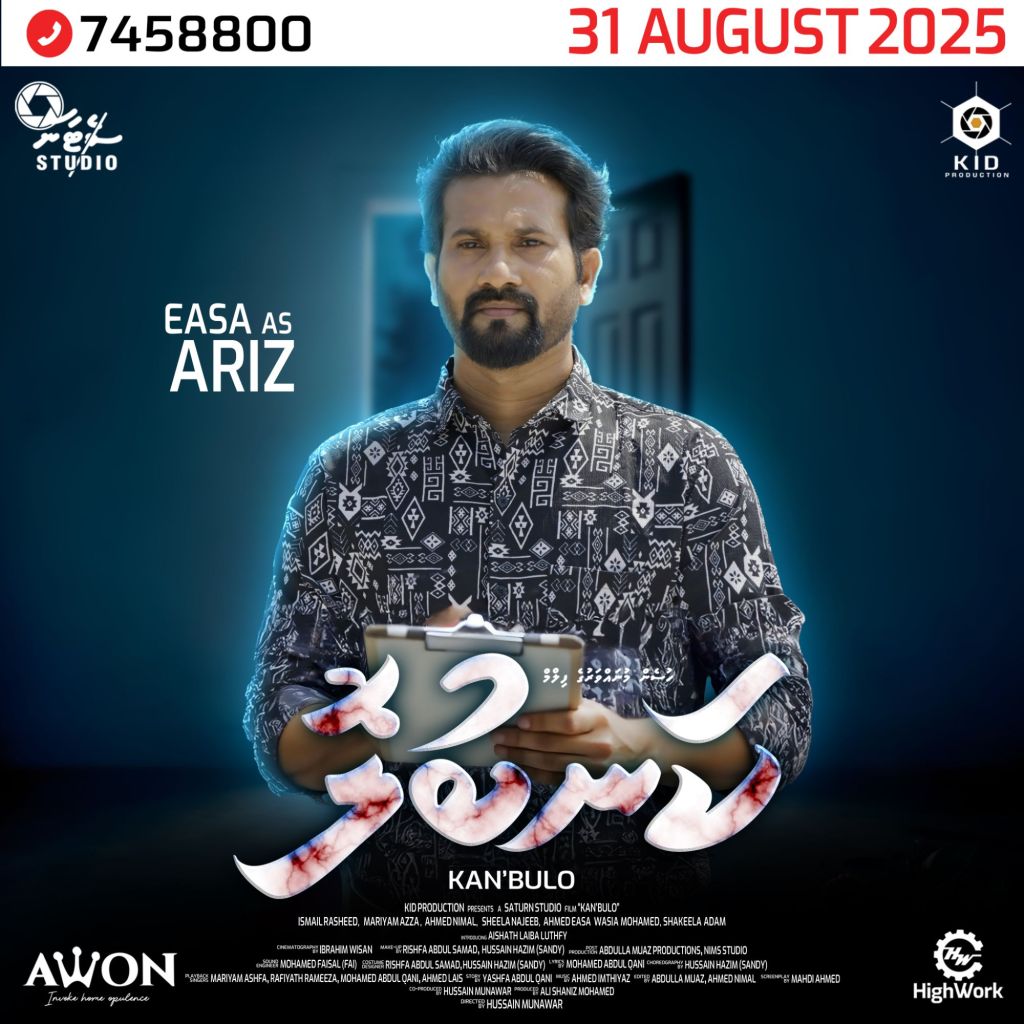
As a screenwriter, you sometimes write a character who speaks more through silence than words—whose weight lies not in dialogue, but in what’s left unsaid. Ariz was one of those characters. A man pieced together by betrayal and the cautious rediscovery of love, Ariz required not just performance, but restraint. And Ahmed Easa, in my view, is one of the few actors in this industry who could have walked that emotional tightrope without tipping into melodrama.

Easa is, without question, the most underrated actor working today. But that’s precisely because he never overreaches. He underplays. He listens. He breathes between lines. He reacts like a man carrying history—and that’s exactly what Ariz was written to be.

What moved me most was his complete commitment. For the flashback sequences, he physically transformed himself to portray a younger, more hopeful Ariz. It wasn’t for vanity or surface-level impact—it was to truthfully embody a man suspended between two timelines: one touched by innocence, the other haunted by betrayal.

When we watched the rough cut, there were moments where Easa didn’t move a muscle—yet he conveyed everything I had written in subtext. That’s rare. That’s craft.

I’ve written roles for many performers over the years. But with Ahmed Easa, I experienced what every screenwriter dreams of: the feeling that someone out there truly read between the lines.

If Kan’bulo manages to break hearts, much of it will be because of the man who stood quietly at the center of it all.

Kan’bulo is set to release on 31 August 2025.