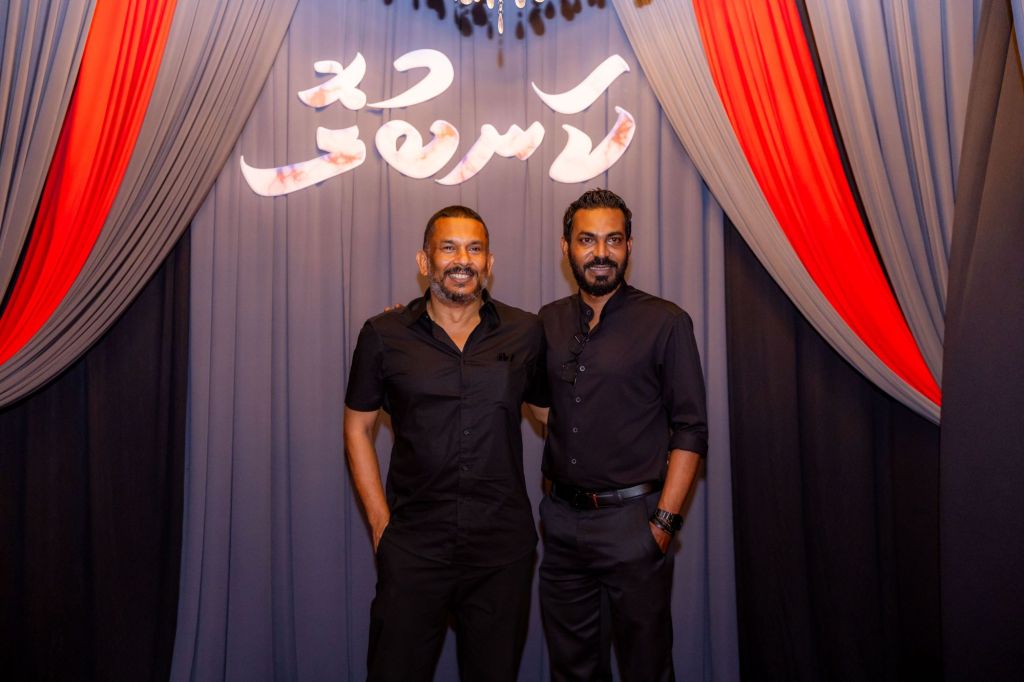
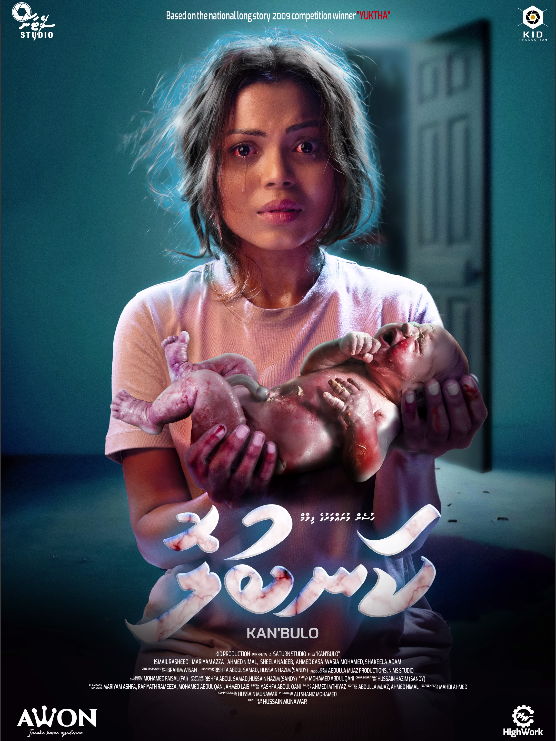
There are films that entertain, films that inspire, and then there are films like Kan’bulo — films that confront. Films that hold your gaze and refuse to blink first. Directed by Hussain Munawwaru, Kan’bulo is not a safe film. It’s a brave, emotionally volatile narrative that pulses with truth — sometimes uncomfortable, often heartbreaking, and always deeply human.
The story traces back to Yuktha, the award-winning long story by Yashfa Abdul Qani. Her delicate yet devastating writing carried the emotional weight that demanded adaptation. Reshaping it for the screen meant preserving its soul while finding a visual rhythm to match its intensity.
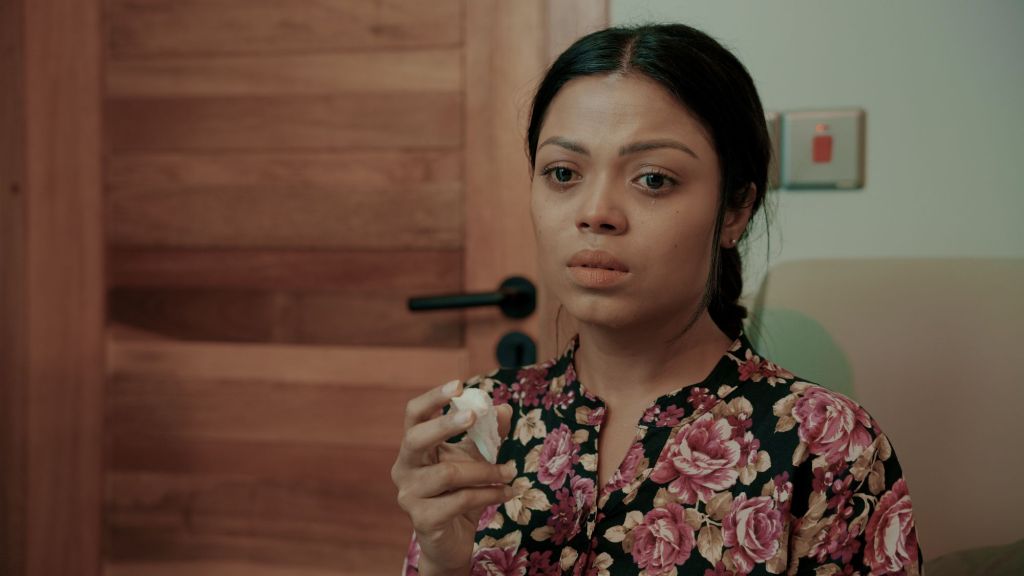
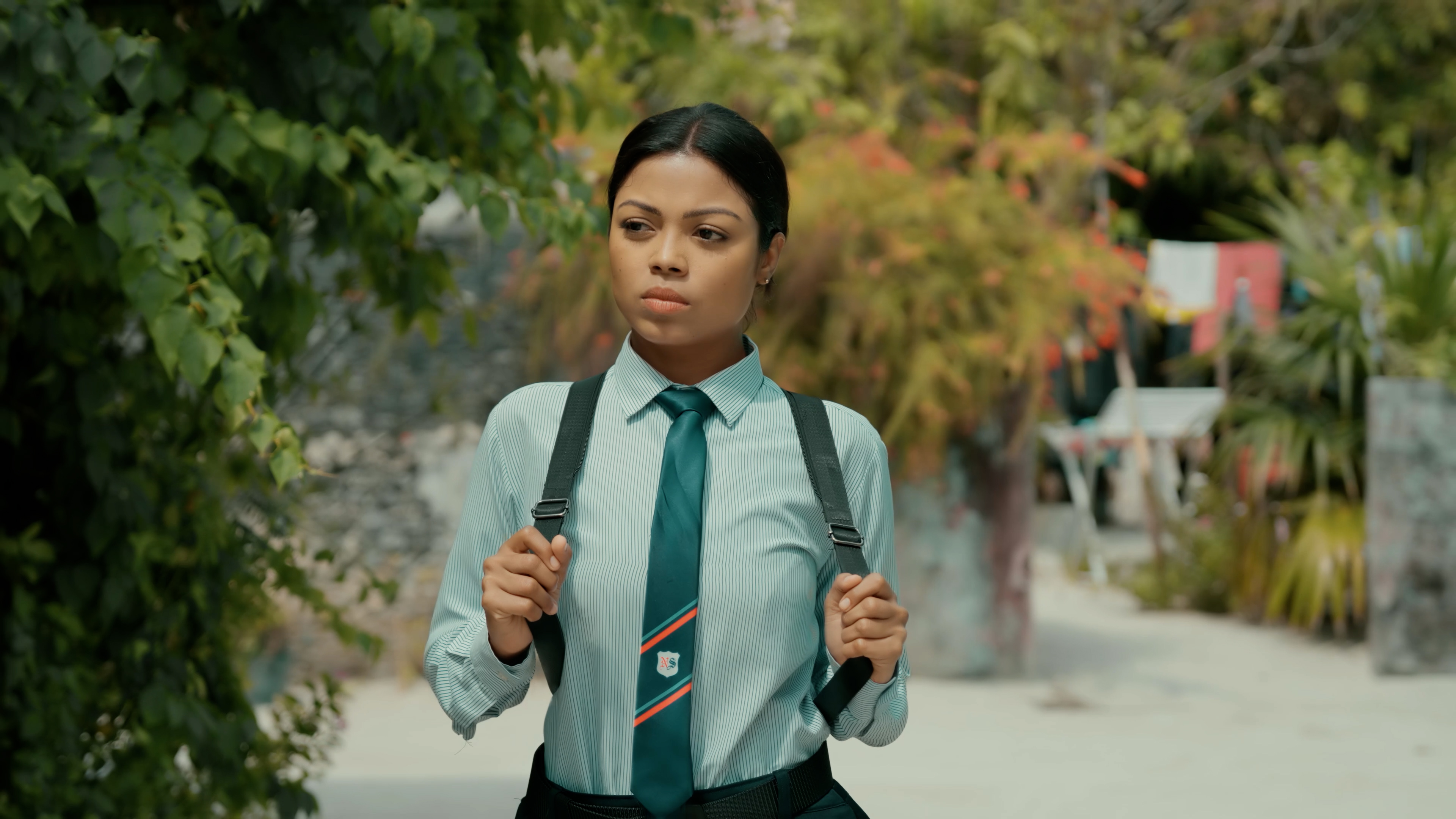
At the heart of the film is Mariyam Azza, delivering one of her strongest performances to date. Playing Kan’bulo demands range and endurance, and she handles every moment — from innocence to devastation to resilience — with precision. Even her silences carry meaning.
The ensemble brings depth and texture: Sheela Najeeb with quiet strength, Wasia Mohamed with loyal presence, Shakeela with protective resilience, Ahmed Easa with tenderness, Ahmed Nimal with chilling intensity, and Ismail Rasheed in a performance that feels like a powerful return. Together, they anchor the film’s emotional truth.
The makeup and costume work of Rishfa Abdul Samad and Hussain Hazim (Sandy) supports the characters with subtle authenticity, while Mohamed Faisal (Fai) shapes sound into an emotional undercurrent that lingers. Ahmed Imthiyaz (Inthi) adds music that mourns, observes, and uplifts without ever overwhelming.
Editor Abdulla Muaz, handling both edit and color grading, balances past and present with seamless precision, letting the story flow like fractured memory while keeping the emotions grounded. His work ensures the narrative is coherent yet haunting.
Producer Ali Shaniz deserves recognition for backing a film of such weight, reuniting the trusted team from Kamanaa and giving space for significance over safety.
And at the center, Munawwaru directs with restraint and conviction. He doesn’t exploit pain; he lets it speak. His choices give the film its raw honesty, making it less of a story told and more of an experience endured.
Kan’bulo is not an easy watch, nor was it an easy script to write. But it is necessary. It stares directly at what many would rather look away from — and by the end, neither can we.
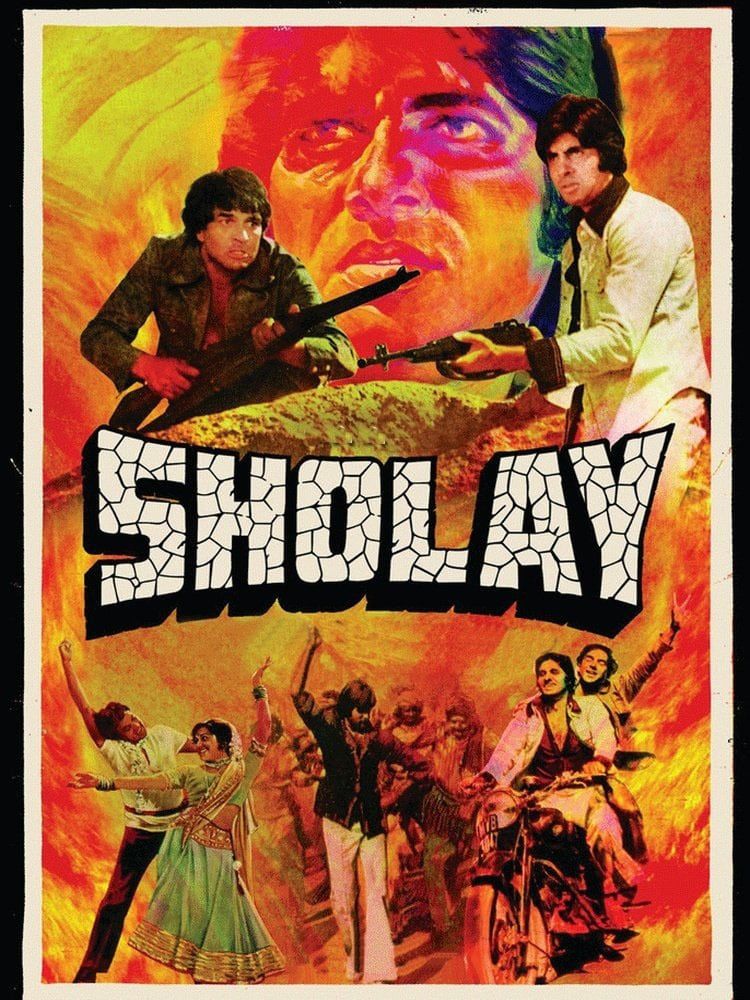
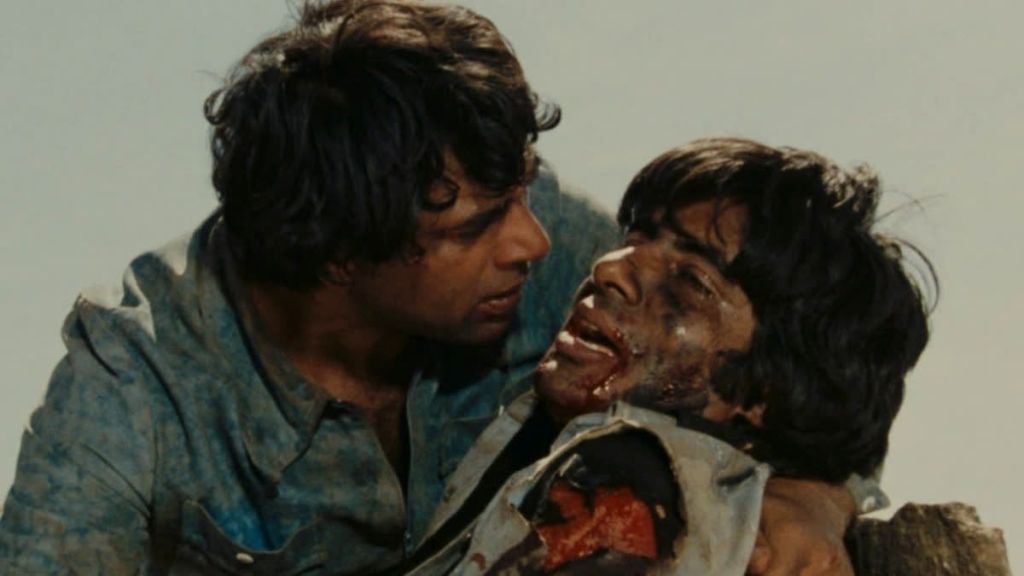
Sholay turned 50 on 15th August 2025, and I couldn’t resist revisiting this cinematic phenomenon that first burned into my memory when I was a boy of 10 or 12, sitting wide-eyed in Olympus Cinema. The screen was larger than life, and so were the men and women who strode across it. That memory is still with me.
Half a century later, Sholay is still fire.
A Story Told Like a Folk Ballad
At its heart, Sholay is a story of friendship, revenge, and courage. But the beauty lies in how Ramesh Sippy crafted it — not just as a narrative, but as a ballad. Every frame feels soaked in dust, sweat, and echoes of Ramgarh. Screenwriter duo Salim–Javed wrote with such force that lines still roll off tongues like folk proverbs.
“Kitne aadmi the?”
Not just a question — but a line that has lived in film buffs’ bloodstream for 50 years.
Performances Etched in Fire
Every actor gave us something unforgettable.
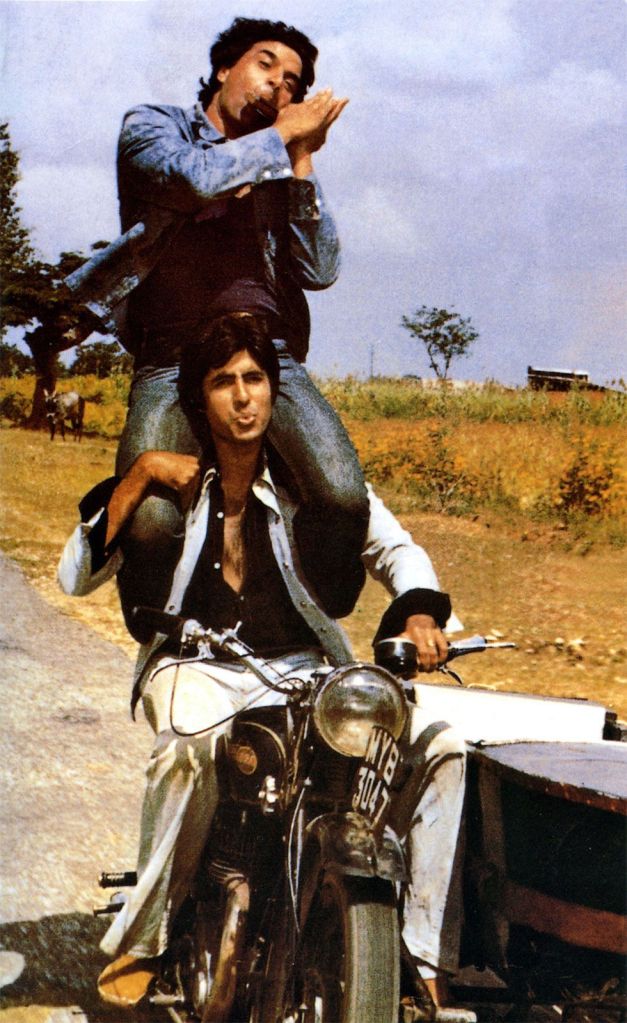
Amitabh Bachchan’s Jai — quiet, brooding, carrying melancholy in his harmonica.
Dharmendra’s Veeru — mischievous and loud but golden-hearted.
Sanjeev Kumar’s Thakur — dignity wrapped in grief.
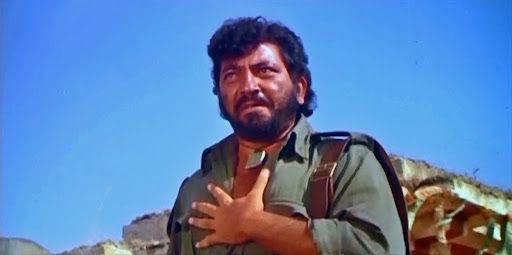
Amjad Khan’s Gabbar Singh — terror personified, redefining what a villain could be.
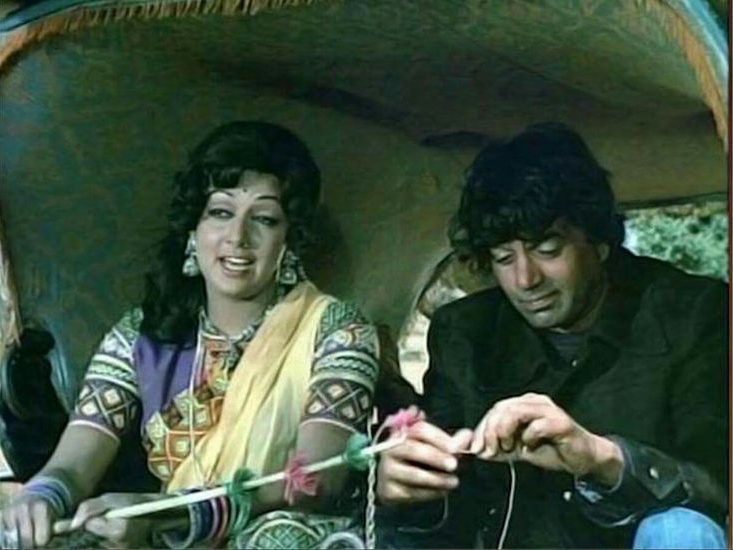
Hema Malini’s chatterbox Basanti added charm, and Jaya Bhaduri’s Radha reminded us that silence can sometimes be louder than words.
Scenes That Became Cinema Itself
Jai and Radha’s Silent Symphony
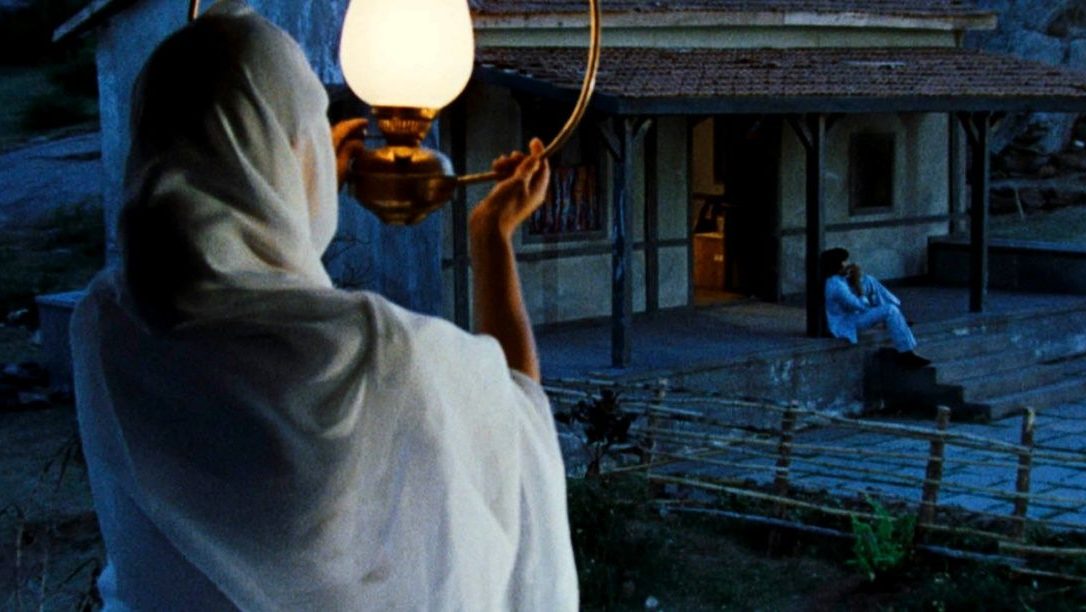
My personal favorite: Jai sits quietly on the veranda, playing his harmonica under the weight of night, while Radha moves through the opposite balcony, gently extinguishing the lanterns one by one. No words pass between them — none are needed. The sound of the harmonica and the dimming lights create a language of their own.
Each lantern Radha puts out is more than a simple act; it symbolizes the extinguishing of warmth and possibilities in her life. As a widow, bound by cultural expectations that deny her the chance of remarriage, those fading lights mirror the shadows she must live in — the quiet acceptance of a life dimmed by loss. In Jai’s music, there is empathy, perhaps even unspoken longing, but also the recognition of a love that cannot be voiced. The scene becomes both intimate and metaphoric — a communion of silence, where music and darkness carry the weight of connection, restraint, and yearning.
Veeru’s Drunken Proposal
On top of the water tank, Veeru — drunk as ever — threatening to end it all unless Basanti’s aunt agrees to their marriage. It’s comic, dramatic, and absurdly heartfelt — a reminder that Sholay knew how to balance intensity with levity.
The Final Showdown
The crippled Thakur taking on Gabbar — no hands, no guns. Just fury, pain, and justice. It’s one of the most cathartic climaxes ever staged in Indian cinema, where the hero isn’t Jai or Veeru anymore — it’s justice itself.
The Technical Brilliance
Sholay wasn’t just another film. It was a benchmark. Shot in 70mm with stereophonic sound — a first for Indian cinema — it was an event in itself. Dwarka Divecha’s cinematography turned Ramgarh into a mythic land, where dust, rock, and horizon became characters. R.D. Burman’s score — from the playful “Mehbooba” to the melancholic flute — didn’t just accompany the story, it told it.
MS Shinde’s editing kept the three-hour-plus film taut. And the action scenes? Bold, choreographed with raw energy, and still unmatched in their scale.
The Legacy of Friendship
If one thing outlives even Gabbar’s terror, it’s the bond of Jai and Veeru. The two of them, riding the motorbike with Basanti’s horse cart trailing behind, is an image of friendship so iconic that it practically became India’s shorthand for loyalty.
“Yeh dosti hum nahin todenge.”
It wasn’t just a song. It was a promise.
Why It Still Matters
For me, watching Sholay at 50 wasn’t nostalgia. It was recognition. That this film didn’t just entertain, it showed us that a film could be both masala and masterpiece. That dialogues could outlive generations. That silence could speak volumes.
A Personal Reflection
When I first watched Sholay, I didn’t understand the layers. The subtext, the motifs, the metaphors — they all flew past me.
But as I stepped into screenwriting, I began to see differently. I understood the way silence can carry a scene, how a lamp can symbolize love and status, how even a villain’s laugh can echo with meaning. Today, watching it again, I felt the film not just as a story, but as a revelation — timeless in every sense.
From the precision of Salim–Javed’s screenplay — where every scene builds character and tension without waste — to the balance of humor, tragedy, action, and romance, Sholay is a masterclass.
Its narrative arcs are clean yet layered, its use of silence is as deliberate as its dialogues, and its motifs flow seamlessly through character and story. The film doesn’t merely entertain; it demonstrates, frame by frame, what cinematic storytelling can achieve when all elements — writing, direction, performance, music, and craft — converge with purpose.
Sholay is not just a film we remember — it’s a film that continues to teach cinema how to be cinema.
“Jo darr gaya, samjho mar gaya.”
But Sholay never feared time. And that’s why it never died.
Seventeen years ago, today—on August 25, 2008, at around 8:45 pm—I wrapped up the final episode (Episode 52) of Hinithunvelaashey Kalaa, a series from TVM that went on to win the hearts of the nation. I was sitting inside, wearing only shorts, with rain tapping a busy Morse code on the windows. My heart and body were warmed—not just by the embrace of my ever-loving wife, who helped me kiss goodbye to some corny lines—but by the sheer joy of finishing the journey.
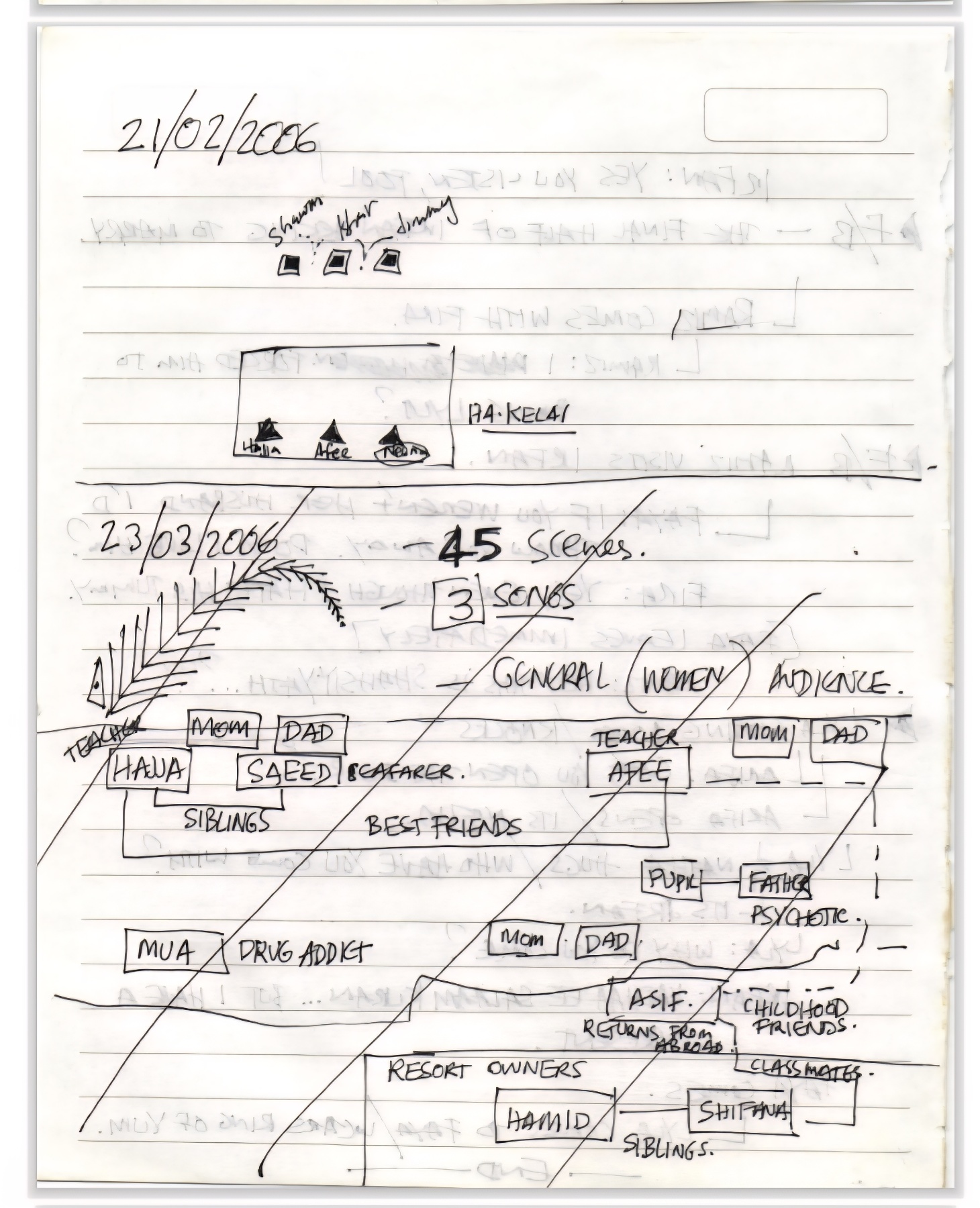
It all began on February 21, 2006, one late morning, under a breezy sky at West Park. I sat with director Abdul Faththaah by the sea, scribbling notes in my worn-out, flower-covered notebook, sipping papaya juice (plus a squeeze of lime), while he sipped a milk coffee. He had a seed of a concept—a 52-episode serial called Hinithunvelaashey Kalaa—about two childhood friends whose lives were wildly different yet bound by a shared past.
From that meeting, characters sprang to life. Ina, the tomboyish farmer girl in Kelai, cap on her head, sun on her shoulders. Fazu, the diligent teacher with a quiet soul. Around them, layers of family, history, and society emerged. The story wasn’t just a drama—it was a slice of the Maldives, its struggles and hopes stitched into every scene.
I scripted the first 32 episodes in just over a month—obsessed and restless, averaging almost an episode a day, since production had already begun in Ha. Kelai and the scripts had to keep flowing to match the shoot. My mind was on fire—literally waking at odd hours, skull burning, yet never able to stop typing. That first arc, set entirely in Kelai, poured out in one feverish burst.
Then something unexpected happened.
Once filming wrapped on the 32 episodes and editing began, the material didn’t quite fit the boxes I had built. Each episode overflowed into the next. Before long, the original 32 had ballooned into 40 episodes.
What could have been a headache turned out to be a gift. Suddenly, I had 12 more episodes to write—episodes that would bring the story to Malé. It was a creative second wind. Instead of dragging my feet, I leaned in. Those episodes gave space for new twists, deeper arcs, and an ending that felt more earned. To my surprise, even Faththaah sighed in relief—the story had room to breathe.
The series first went on air on July 26, 2006—Independence Day in the Maldives. A proud date to begin a journey. But like all long journeys, life had its way of testing us. Around Episode 33, one of our actors ran into real-life trouble, and TVM had no choice but to pull him off the screen. Policy was policy.
The series came to a sudden halt. Weeks stretched into months. And then, more than a year later, re-started again—from Episode 1. Frustration, yes. Suspense, absolutely. But looking back, it was also a strange kind of gift. The audience got to live the story twice, and I found the space to refine the series finale.
By late August 2008, writing Episodes 51 and 52 felt bittersweet. On that rainy evening, August 25th, I typed the final words of Episode 52, closed my laptop, and hugged my wife. That hug—warm, knowing, and peaceful—was my personal wrap party. The final episode later aired on November 11, 2008—Republic Day in the Maldives.
If I could send a postcard to that former me, I’d say:
You did it. You wrangled 52 episodes—that’s equivalent to thirteen feature films worth of storytelling.
You wrestled with long nights, reruns, rewrites, cast drama, and even a mid-series collapse. You turned chaos into creation. And you gave Maldivian audiences a story that made them laugh, cry, debate, and remember.
Hinithunvelaashey Kalaa wasn’t just a TV series. It was a chapter of my life. A love letter to storytelling. A memory stitched forever into the fabric of Maldivian television.
And more than that—it sharpened my craft. Writing this series allowed me to experiment with rhythm, dialogue, symbolism, cliffhangers, and emotional pacing in ways I never had before. I discovered the power of layering subplots, weaving historical flashbacks, planting narrative traps, and using pauses and silences as deliberately as dialogue itself. Many of the screenwriting “tricks” I still use today—those playful double meanings, those quiet beats before an explosion of emotion—were born in those 52 episodes. It was the project that turned me from a writer into a screenwriter. And I will always be indebted to director Fathaah for giving me this opportunity of a lifetime.
Seventeen years on, I look back and realize: every page, every scene, every sleepless night was part of a greater script—the story of my own becoming. That rainy evening in August 2008 was not an ending, but the beginning of everything that followed.
Because sometimes, the greatest journeys are written between two words—
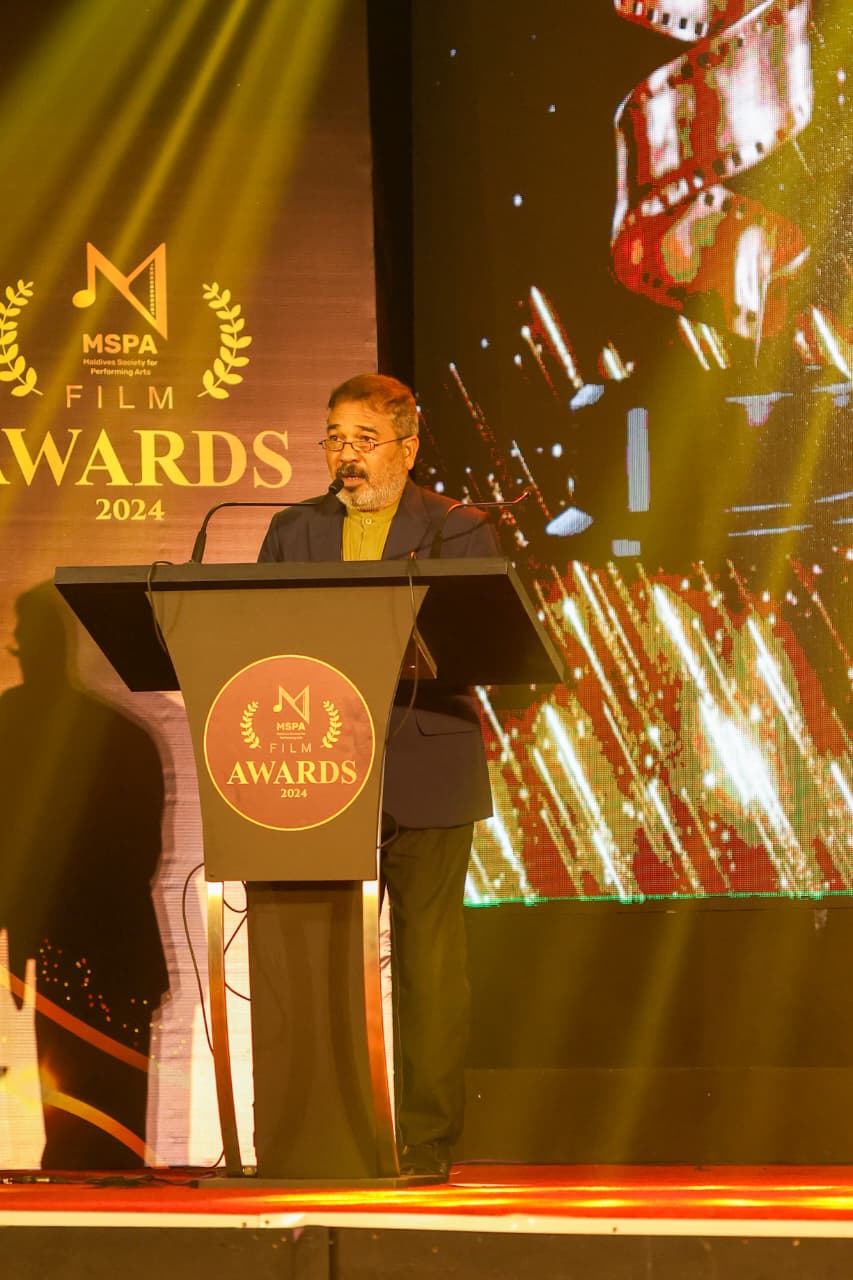
On the evening of 22 August 2025, the Giyaasuddin School hall came alive with an energy the Dhivehi film community has yearned for — the MSPA Film Awards 2024. This was more than an award ceremony; it was a celebration of the unshakable belief that art matters.
The Maldives Society for Performing Arts (MSPA), officially formed on 1 February 2021, is no ordinary association. It was born out of necessity — a direct response to decades of neglect faced by Maldivian artists from institutions mandated to uplift them. Institutions that, more often than not, remember the performing arts only when a political campaign needs color, music, and a crowd.
At the heart of this movement stands Mohamed Rasheed. His journey began 44 years ago, behind the camera at TVM. From cameraman to actor to household name, Rasheed has been a tireless advocate for the arts, even at a time when many dismissed it altogether.
He never wavered. Instead, he made a stand and built a foundation for generations to come. His vision and persistence gave birth to MSPA — an association devoted to empowering the performing arts through education, industry development, and recognition.
Last night’s awards ceremony was a powerful statement of that mission in action. Embraced warmly by the Dhivehi film industry and artists nationwide, the event carried more than festivity — it carried history.
In his heartfelt speech, Rasheed did not shy away from the struggles. He recalled how some mandated bodies initially pledged support to hold this event, only to vanish when it mattered most. Their absence was telling — proving once again that when politics isn’t on the ballot, performing arts isn’t on their agenda. But Rasheed and MSPA turned that rejection into a statement of independence.
The night proved something vital: performing arts in the Maldives are alive and thriving — not because of institutions that abandoned their duty, but because of the artists who keep creating, and platforms like MSPA that refuse to bow.
The MSPA Film Awards 2024 were not just about trophies and applause. They were about recognition. About dignity. About hope. They were a powerful statement to every Maldivian artist: You matter. Your art matters. And no institution, no politics, and no neglect will ever erase that. MSPA will make sure the world sees it — today, tomorrow, and long after the banners of campaigns have faded.
Congratulations to MSPA. The fight for our arts is only just beginning, and this time, it is fueled by spirit and strength.
I have already posted a piece about Mariyam Azza’s performance, but after watching the latter half of Kan’bulo with music fully laid in, I couldn’t stay without posting again. While I could easily speak volumes about what director Hussain Munavvaru and composer Ahmed Imthiyaz (Inthi) have achieved in terms of emotional tonality, I find myself compelled to pause and reflect on something else — Azza’s performance in the titular role.
As a screenwriter, you often imagine the rhythms of a scene, the dialogue beats, the unspoken pauses. You hope that when it finally reaches the actor, they will not just recite what’s written, but breathe truth into it. What Azza has accomplished here is beyond that hope — it’s craft turned into pure emotional experience.
Kan’bulo is not a role built on grand speeches. It’s a role constructed on emotional honesty. Azza moves through one devastating moment after another, not as someone acting grief, fear, or resilience, but as someone inhabiting it. Her range and depth are astonishing — she can shift from innocence to devastation to quiet resilience in the span of a breath.
What impressed me most, however, was what she accomplished in silence. A glance downward, a stillness of breath, the weight of unspoken words — these were not voids, they were meaningful silences that spoke louder than any dialogue I could have written. This is where great actors separate themselves: in the negative space, in what they choose not to say, they reveal entire universes.
Azza’s performance is one of those rare instances where the actor’s commitment elevates the screenplay. Watching her, I realized that much of the emotional truth of Kan’bulo was not in the lines I had written but in the way she decided to live between them.
This is not just a performance. It’s a revelation of what cinema can do when an actor completely trusts the material, the director, and, most importantly, her own instincts. Mariyam Azza has carried Kan’bulo on her shoulders, and she has done so with brilliance, courage, and grace.
It has been ten years since the passing of Late Hon. Uz. Abdulla Hameed — a man who forever changed the course of my life. Today, as I reflect, I realize just how much I owe him — not just as a writer, but as a person.
When I first set foot into the film industry, I had already given up. Disillusioned, frustrated, I thought my journey was over before it had even begun. And when I was later transferred to Ministry of Atolls Administration, where he served as minister, that sense of defeat still weighed heavily on me. But he wouldn’t allow it. He saw something in me that I couldn’t see in myself.
At the time, the TVM Office Drama Competition was one of the most celebrated events every Ramadan. Atolls had participated the year before I joined, but the reviews were harsh. Instead of stepping back, he entrusted me with producing the next drama. He gave me complete creative freedom, and more importantly, he told everyone around me to support me fully.
That year, Atolls won Best Drama and Best Actress. In the four years that followed, we went on to win 12 awards in total, including two more Best Drama titles. Through it all, he ensured my cast and crew were treated with dignity and care. Those years became the most formative of my career. I experimented, I grew, and I found my voice again. Most importantly, my faith in storytelling was restored.
One night, during a celebration, he said something that has stayed with me ever since: “He is a gem that Atolls has.” I carry those words like a torch. Whenever I stumble or doubt myself, they remind me to rise to the faith he placed in me.
Ten years on, I still feel his presence in the path I walk. I am forever indebted to him. His kindness, vision, and unwavering belief in people like me continue to live through the stories we tell.
Grief is a strange companion. It doesn’t knock politely before entering. It doesn’t leave when we ask it to. And it doesn’t speak when we beg for answers. Instead, it lingers — quietly and stubbornly — in the corners of our days. It shows up in the silence of mornings, in the middle of conversations, or in the way the light falls on an empty chair.
Today, I had a deeply emotional conversation with a good friend whose parent passed away recently. As he shared his sorrow, I felt his pain echo within me, pulling me back to my own loss — the day I said goodbye to my father three years ago. Different stories, different people, yet grief spoke in the same language. It made me realize that while no two losses are identical, the emptiness they leave behind often feels hauntingly familiar.
When we lose a parent, the world shifts beneath our feet. A piece of the foundation we have always relied on is suddenly gone. No matter how old we are, or how strong we believe ourselves to be, their absence leaves us feeling strangely small. Yet even in those moments, grief doesn’t feel like the end of something — it feels like a reminder of what continues to guide us, even in absence.
And here lies the deeper truth about grief: it is not something that truly heals. We often hear people say that time heals everything. But grief isn’t a wound that closes; it’s a scar that becomes part of us. It doesn’t shrink with time — instead, we grow around it. We learn to carry it.
Within that truth is something almost comforting: grief exists only because love existed. If the pain feels endless, it is because the love was vast. To grieve deeply is to have loved deeply. And so, grief becomes both our burden and our proof.
What I’ve come to realize is that grieving is not about staying in sorrow. It’s about remembering. It’s about keeping alive the laughter, the lessons, the stubbornness, the kindness, the everyday things that made them who they were. When we live by what they gave us, they remain here — woven into the fabric of our days.
So maybe grief is not a thief after all. Maybe it is a guardian. It guards the love we had, reminding us that though time moves forward, bonds are eternal.
To my friend — and to anyone walking through this shadow — I say: let grief sit with you. Don’t rush it away. Let it teach you, shape you, and even soften you. One day, it will stop feeling like a storm and start feeling like a quiet sea. The waves will still come, but you’ll learn to float.
And perhaps, with time, grief transforms. It begins as sorrow, sharp and unbearable. But slowly, it becomes gratitude — gratitude for having had someone to miss so deeply. Gratitude that their love was strong enough to outlast even their presence.
Because grief is not the end of love. It is love’s echo — and if we listen closely, that echo can guide us forward, gently, into the light.
Some scripts you wrestle into shape. Others… they quietly unravel you while you’re trying to write them.
This one was different from the very beginning.
It arrived as a spec script from a brilliant writer/director, with a strong central idea — but instead of tracing the original lines, I found myself slowly dismantling it, piece by piece, and rebuilding it into something far more internal. Far more unsettling. And far more… me.
The journey wasn’t straightforward. In fact, I don’t think I’ve ever rewritten the third act of a screenplay so many times in my life — not because it didn’t work, but because I kept uncovering deeper truths the characters were hiding. Especially the protagonist. He wasn’t just grieving. He was living in the ghost of what he lost.
What began as a psychological drama soon evolved into something deeper — a layered family story about what holds people together even when they drift apart. At its heart, this became a film about how much a family needs each other to stay afloat — even when one of them has emotionally disappeared.
This is a story about presence, absence, memory, and guilt — but not in the ways we usually tell them. Every character carries a wound. Some show it. Some bury it. Some don’t even know it’s there until it explodes into the room. The screenplay flirts with silence, leans into hallucination, and plays with emotional withholding in ways that made me both uncomfortable and strangely fulfilled.
At its core, it’s an exploration of how grief, when unprocessed, can become a kind of architecture — building rooms we live in, long after we should have left. I was fascinated by the idea of a man who hasn’t just lost his mother… but one who hasn’t let her go. That subtle difference shaped everything.
And let’s not forget the child in the story — quietly drawing her emotions in her art book. That subplot, in particular, shook me. Sometimes children say more in silence than adults ever do in monologues.
Now that it’s wrapped — and I mean really wrapped — I feel both emptied and enriched. Like I’ve said goodbye to someone I never really met… but somehow knew intimately.
This script didn’t come easy. But it came honestly. And I think that’s what makes this one special.
The title is still under wraps for now — but the screenplay is ready. And when it finds its audience, I hope it sits with them quietly… the same way it sat with me.
Three years since that early morning of August 5th, 2022, when the world seemed to hold its breath… and never let it out again.
I was there beside you in that cold, sterile ER. The hum of machines. The smell of antiseptic. When your vitals began to fade, they wheeled you into the resuscitation room—right in front of me. The door was left slightly open, as if it didn’t dare close.
I could see your feet on the bed. Every time they pressed the paddles to your chest, your body fought back in violent jolts, your feet lifting from the bed with each surge of electricity. I wanted to run in. I wanted to scream. But I stood there, trapped inside my own skin, my hands trembling, my heart begging the clock to turn back.
Forty-five minutes. That’s how long they tried to bring you back. Forty-five minutes of hope and horror, braided so tightly I couldn’t breathe. And then at 07:33 AM—it stopped. One moment they were fighting for you, the next… silence. An ending so abrupt it felt like a blade.
Three years. People say time heals. But it doesn’t. Not really. Time only teaches you how to walk with the wound. The emptiness doesn’t shrink—it just learns to hide in the folds of your days. Until a smell, a sound, a memory slices you open again. Some memories of you sit quietly in corners, like the cane you left behind. Like the flip-flops you wore the last time we rushed you to the ER. And through it all, what remains untouched—what never fades—is a love that stays forever, quietly holding everything you left behind.
Your dreams still live here. The big ones, the stubborn ones, the ones you never got to chase. Some fulfilled. Others, sadly, taking far longer to fulfill than we first dreamed.
I wish you had laughed more. I wish you had seen more. I wish I had said the words I thought I had time to say.
Three years, Bappa.
And I still miss you in ways words cannot carry.
I love you, Bappa.
May Allah grant you the highest place in Jannat al-Firdaus, where there is no pain, only peace and light. May Allah bless your soul for the love, prayers, and dreams you carried.
Some voices don’t just sing — they remember, they ache, they belong. Ahmed Lais has one of those rare voices.
At just 27, Lais’s journey into the cinematic world is already a compelling story. Many still remember him as the bright-eyed 10-year-old who made his acting debut in one of 2009’s biggest blockbusters. His performance wasn’t just well received — it was extraordinary. He walked away with the Best Debutant (Male) and Best Child Artist awards at the 1st Maldives Film Awards, and earned a Best Supporting Actor nomination at the prestigious 6th National Film Awards — a rare feat for someone so young.
And yet, instead of riding that wave into a long-acting career, Lais chose a quieter, riskier road — music. While others may have questioned his decision to step away from the spotlight, Lais knew that his voice had its own path to follow. He submitted demos, quietly auditioned for high-profile projects, but his defining moment had yet to arrive.
Until Kan’bulo.
Director Hussain Munawwaru, always a keen observer of raw talent, heard something unmistakable in Lais’s voice — a kind of sorrowful warmth, a tender ache that couldn’t be faked. And when it came time to record the film’s most haunting romantic track, Munawwaru knew exactly who should sing it.
Lais didn’t just step up — he soared.
The result is a song that doesn’t merely accompany a scene; it inhabits it. Lais’s voice trembles with longing and loss, echoing the emotional core of Kan’bulo itself. It’s not showy. It’s not loud. It’s true. And that truth lingers long after the final note fades.
For a young man who once lit up the screen as a child, Ahmed Lais has now left a lasting impression as a vocalist. This isn’t just a song in a film — it’s a moment. And it belongs to him.
Here’s to finding your voice — and to finally being heard.