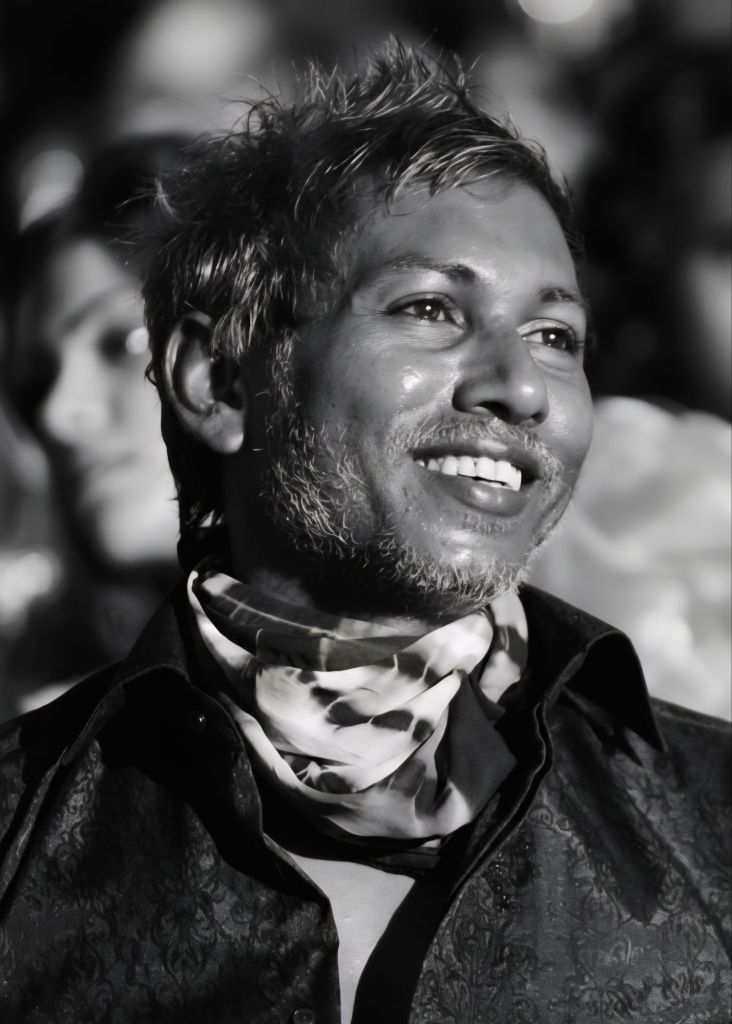
Mahdi Ahmed

Scripting waves of imagination from the sunny side of the Maldives.

THE REEL OF US

My Dearest Love,

Today, when I think of us, it feels as though a series of soft, glowing flashes drift before my eyes — not a long rewind, not a dramatic montage — just the moments that shaped us, one after another, like tiny sparks in the dark.

FLASHES OF OUR BEGINNING

Flash.

Two souls in the same neighborhood, exchanging shy smiles and eyebrow greetings.

You mistaking my voice for my brother — the moment destiny gently nudged us forward.

ICQ usernames.

MSN chats.

Scrabble duels.

Karaoke nights — and the song where your voice wrapped itself around my heart and never let go.

Walking side by side from office to home, your hand slipping into mine like it had always belonged there.

Flash.

FLASHES THAT MOLDED US

Flash.

A Qazi, an orange dress, a quivering dupatta, your teary smile, our vows — the moment we officially began our forever.

Patong, Phuket.

A monstrous wave.

Your instinct.

A fish truck.

High ground.

A miracle.

A beginning forged in survival.

Samitivej, Bangkok.

A tiny upside-down Kokko screaming like a newborn warrior.

Our home overflowing with laughter, school runs, countless ferry rides, homemade meals, and you whispering to your bougainvillea like they’re your botanical babies.

These flashes… they define us.

THIS YEAR — THE STRENGTH OF YOU

This year tested you in ways that would have broken many.

But you stood firm — fierce, steady, unshakable.

Your business hurdles.

Your long days.

Your headaches.

Your battles.

Where I would’ve collapsed — you held on.

Where I would’ve panicked — you powered through.

Where I would’ve fallen — you rose higher.

You hold this family together with a strength that is quiet, graceful, and unstoppable.

And if anyone doubts that?

Let them hear the full truth.

Flash.

Ramadan, you cut the tip of your pinkie, screamed in pain, yet lay on ER bed like a warrior.

I sat beside you, chest puffed, ready to be your rock…

Flash.

When I opened my eyes,

I was lying on your bed,

And you were sitting calmly on my chair.

That’s us in one scene:

You — power.

Me — unconscious comic relief.

THE BOY WHO TESTS ME DAILY

And then there’s our son — your perfect clone.

He has officially chosen me as his archnemesis.

Every day feels like a miniature war.

He throws shade.

I counter.

You mediate like a UN peacekeeping force.

Peace lasts four minutes.

Then we begin again.

And the Breaking Bad incident?

Unforgettable.

We suggested a cartoon.

He demanded Breaking Bad.

We explained.

He insisted.

We surrendered.

Ten minutes later, he hid behind a cushion like it was riot gear.

We didn’t laugh aloud —

But inside, we were in pieces.

THE LITTLE RITUALS THAT ARE EVERYTHING

We still do our tiny dance in the kitchen:

You cook.

I scrub.

You stir.

I clean the stove, the shelves, the walls, the ceiling…

I’m basically the vacuum robot — A happily programmed one.

Walking beside you on any red carpet makes me feel like I’m escorting royalty.

And when you give feedback on my films,

My heart doesn’t beat —

It drums, like Travis Barker warming up backstage.

And now you play Co2 on loop,

smiling at Prateek Kuhad’s soft whispery voice.

I’m not jealous… I just think I could whisper better if given a fair audition.

And Alhamdulillaah…

Life is shifting beautifully for us.

Especially for you.

Seeing you content feels like watching dawn replace darkness.

It fills me with a peace I can’t put into words.

AND STILL…

You are my strength and softness.

My laughter and calm.

My compass and my comfort.

My joy and my journey.

My Jessica — and now, my SV.

You hold this family steady with courage, wit, and boundless heart.

And I am endlessly grateful that after all these flashes, storms, joys, and years…

It is still you I walk beside.

Thank you for being everything you are.

Thank you for giving everything you give.

Thank you for holding this family together with your strength, your humor, and your heart.

Thank you for loving me in ways I never deserved but always needed.

Here’s to us —

To the story still being written,

To the adventures waiting ahead.

Happy 21st Anniversary, My Love

Cut to black.

Roll credits.

Soundtrack fades.

Forever yours,

Mahdi

MY MOTHER: THE SILENT ARCHITECT OF MY DREAMS

Every story I write began with her quiet strength.

My mother’s life is a quiet epic — full of grace, grit, sacrifice, and silent suffering wrapped in a love that speaks softly but endures fiercely. She bore life’s weight with unshakable patience, trading her own dreams for ours, never once asking for recognition.

She is — without even realizing it — the reason I became a filmmaker.

The Quiet Force

My late father served in the national defense force, and most days, my siblings and I grew up with his absence. It was my mother who filled that void — not with words, but with strength. She worked at the national radio station, juggling duty and motherhood at a time when “women empowerment” wasn’t even a phrase. Yet, she embodied it — quiet, determined, unstoppable.

She worked long hours, often coming home exhausted — but never empty-handed. Sometimes she’d bring me a Noddy book, sometimes a Tintin comic borrowed from a friend. One at a time. I’d read them with wonder, and when I was done, she’d bring the next. Those stories became my escape, my adventure, my first classroom of imagination.

The First Tool of My Craft

One day, she bought me a small drawing book — ten sheets, a deer printed on its back cover.
It wasn’t expensive, but for our family back then, it was the price of a meal. Still, she never hesitated. Every time my book filled up, she’d find a way to get me another. I knew how much that meant, so I drew carefully — tiny figures packed into every corner of a page to make it last.

That little book was the beginning of everything.

From Tintin to Asterix to Phantom, I started drawing my own comic panels. Without knowing it, I was storyboarding — shaping narratives, building worlds. My mother had given me the first tool of my craft. She had unknowingly set me on the path that would define my life.

The Source of My Protagonists

Now that I have a son, I finally see the magnitude of her strength. Raising one child is a journey. She raised eight — and raised us well.

We grew up disciplined, grounded, and kind — because she somehow managed to hold chaos together with grace.

Even today, she’s the heart of our family. The quiet force behind every one of us.

And no wonder — almost every screenplay I’ve ever written carries her shadow. My female protagonists, whether fierce or fragile, carry her spirit. They stand tall because she stood tall.
They endure because she endured.

Lizards and Crows

Of course, even heroes have weaknesses — and my mother’s only weakness, as far as I know, is lizards. One tiny lizard can turn this strong, fearless woman into a sprinter. I’ve seen her clear a room faster than any action sequence I’ve written.

And lately, she’s had a visitor — a crow that lands on her terrace railing every evening. She feeds it regularly, talking to it as if it understands every word. I joke that it’s Dad dropping by, keeping an eye on her and all of us.

Maybe it is.

Maybe love finds its way back — in the most unexpected wings.

The Story Behind Every Story

Today, as my siblings and I surround her, I realize — she didn’t just raise us; she built us.
Every dream I chase, every story I write, began with her small sacrifices and silent strength.

She is the story behind every story I have ever told.

And when I pause between those stories — in the stillness after the words, in the quiet corners of my thoughts — I often find her.

Sitting on her terrace as the day unwinds, sunlight brushing her silver hair. The crow perched nearby waiting for its share of rice.

And I feel time folding gently, the past and present meeting in quiet gratitude.

Maybe Dad really does visit her through that crow — to see the woman who once carried everything without complaint, who raised survivors disguised as children, who turned scarcity into strength and love into legacy.

Some stories are written on paper. Others are written on hearts. Hers is written on mine.

For my mother — my first story, my forever inspiration.

Happy 80th.

LOKAH CHAPTER 1: A NEON DREAM, A MYTH REBORN

If you’re reading this, you already know — I only write about films I love. And oh, boy, did I love Lokah Chapter 1: Chandra.

Let’s start with this: Lokah is ambitious. The kind of ambition that makes a producer both terrified and deeply impressed. It’s one of those “historic, colossal, echoing commercial flop” risks that somehow didn’t flop — because every rupee of that ambition is right there on screen. Hats off to producer Dulquer Salmaan and director Dominic Arun. They didn’t just swing for the fences; they built an entirely new stadium out of folklore, neon, and sheer audacity.

For a Malayalam film, the technical brilliance isn’t just “good.” It’s jaw-dropping. Nimish Ravi’s cinematography turns Bengaluru into a rain-slicked cyberpunk fever dream. The VFX? Seamless. Jakes Bejoy’s score? An electrifying, myth-soaked pulse that doesn’t just accompany scenes — it devours them. It looks and sounds like a 100-crore film, and it feels like a benchmark for what Malayalam cinema can be.

Now, I’ve seen the hot takes. “It’s all setup.” “The plot’s thin.” “It’s just a Chapter One.”

As a screenwriter, I say: Exactly. That’s the brilliance.

We’ve been spoon-fed tidy, three-act comfort-food stories for so long that we’ve forgotten the thrill of a real saga beginning to unfold. Lokah isn’t incomplete; it’s deliberately patient. It’s the cinematic equivalent of the first hundred pages of a dense fantasy epic — a world-building overture that trusts the audience to lean in and connect the dots.

The organ-trafficking plot? That’s not the story — that’s the ignition. The simple thread that drags us into a dense, mythic world. It gives Chandra (Kalyani Priyadarshan) something to punch — and she does, with elegance and raw ferocity.

And speaking of her — what a performance. Kalyani’s quiet, internal portrayal is the definition of “less is more.” She’s not emotionless; she’s anciently tired. You can see the centuries in her silence. That’s a hard thing to play — and a harder thing to appreciate if you’re scrolling your phone between scenes. But for those of us who watch, it’s a treat.

As a filmmaker, I wasn’t just impressed by Lokah — I was envious. It’s bold, beautiful, and unapologetically itself.

Lokah Chapter 1 doesn’t just raise the bar — it redraws it with fire and neon. This is the kind of cinema that reminds me why I fell in love with movies in the first place.

A must-see.

PS. Turning those narrative moments into living comic panels, that wasn’t just style. That was storytelling evolution — smart, gutsy, and perfectly executed. More of that, please.

3 NOVEMBER — A PERSONAL RETELLING

A personal recollection of the 1988 coup — and how it became a story I had to tell.

It started with a bang.

I was still half asleep in Colombo when my Sri Lankan landlady burst into my room and shouted,

“Maldives has been attacked!”

For a moment, I thought I was dreaming. But her voice had that tremor people get when the world suddenly tilts.

Back then, social media wasn’t even a dream, and the internet was just a rumor from another planet. Communication was fragile and expensive — one cut cable, one dead line, and a nation could vanish into silence.

That morning, the telephone lines to the Maldives went dead. Every few minutes, I twisted the dial on my FM radio, trying to catch Voice of Maldives — the station where my mother was an anchor.

Normally, even through weak signals, I could recognize the rhythm of home: the calm, familiar tone of the announcers — especially hers — and a song fading gently in and out.

But that day, there was only static. A haunting, endless static.

It felt like the country itself had been swallowed by it. That feeling — helplessness mixed with fear — stayed with me.

Fourteen years later, in 2002, I turned that memory into a story.

Representing the Ministry of Atolls Administration, I wrote and directed a TV drama for the TVM Office Teledrama Competition.

But I didn’t want to tell the story from the frontlines of Malé. I wanted to tell it from the edges — from a remote island where the only connection to the world was rumor and radio.

The story followed Arif (Ali Waheed), a banished drug addict from Malé, serving his term in that island. Beneath his rebellion and defiance lay a lifetime of unresolved pain — an unhealed wound from his father, Sattar (Mohamed Asif).

When the coup unfolds, and communication with Malé is cut off, Arif’s fear for his estranged father becomes the story’s emotional heartbeat. The thought that something might have happened to the man he both hated and missed forces him to confront what he’s been running from all along.

The drama opened the same way that morning had begun for me — Jameel (the late Mohamed Saleem), Arif’s caretaker, twisting the radio dial, searching for a voice in the static.

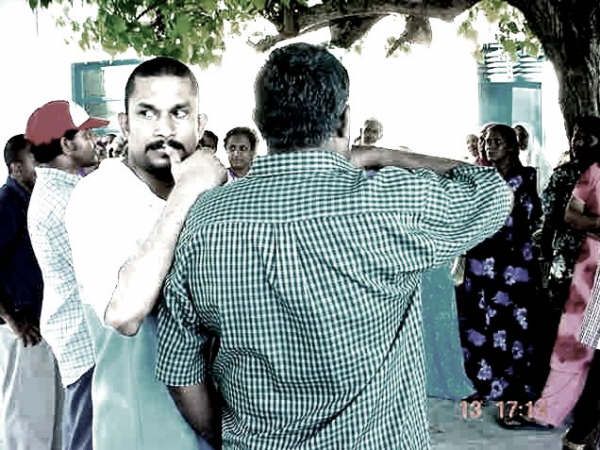
As Jameel, Arif, and their co-workers debated over the silent radio, someone ran through the forest shouting,

“Malé has been taken over!”

The island erupted in fear.

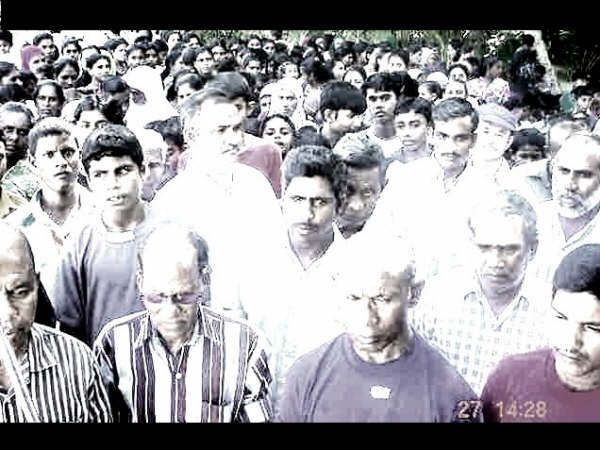
That scene was the most logistically challenging I’ve ever shot. My cinematographer, Abdul Latheef, and I spent a week planning every frame — the crane shots, crowd movements, and pure, unfiltered chaos.

We shot on a Friday, when most islanders were home. We started wide and ended close, knowing our extras’ patience would fade before our energy did. By the time we wrapped, half the crowd had gone home — but the emotion stayed raw and real.

It remains one of my favorite sequences I’ve ever directed.

And I didn’t create it alone.

The late Mohamed Saleem was my compass. He wasn’t just an actor — he was part of that history. On the day of the coup, he was serving in the NSS (now MNDF) and had been taken captive by the mercenaries.

His firsthand memories shaped the script. He helped me understand the fear, the sound, the silence.

When Saleem looked at that radio, he wasn’t acting — he was remembering.

Before filming, I studied every account I could find. But what truly shaped the drama was a three-hour home video my brother-in-law had filmed in Malé during the coup.

He recorded everything — crowds, panic, prayers, and the pulse of a nation on edge. That tape became my time machine.

Later in the story, Arif rushes to a group of islanders gathered around a radio. He tunes until he catches a faint Voice of America broadcast. The crowd leans in as he translates:

“The capital is under attack. The President and his cabinet have been captured.”

That moment wasn’t fiction — it used real audio from that same tape. Every crackle of static, every tremble in the voice, untouched.

From that tape, I also recreated scenes of panic — islanders queuing at shops, buying rice and tinned food, preparing for an uncertain tomorrow.

The next morning, in real life, I was still in Colombo when the radio came alive again.

And then I heard it.

My mother’s voice.

Through that fragile frequency, she announced that the mercenaries had fled — that the country was safe. Her voice trembled with exhaustion and relief.

I’ll never forget that sound.

In the drama, Arif wakes to the same moment. The radio hums softly with a Qur’an recitation, the same surah that played before my mother’s real-life announcement. Then — the words of salvation.

What followed was a montage of joy — children running, flags raised, laughter through tears. My small tribute to the kind of humanity Michael Bay often captures after chaos.

But one voice was still missing.

I wanted to include the President’s full post-victory speech — the one broadcast right after calm returned. Finding it became a mission.

I searched archives, old offices, and friends — until my brother-in-law’s brother found a copy.

At first, I planned to use only a few seconds. But during post-production, I realized it wasn’t just a speech. It was the sound of a nation breathing again.

I used the entire address, layering it over visuals of people listening on radios — at communal spots, verandahs, and corners. Faces in awe. Faces in prayer. Faces in gratitude.

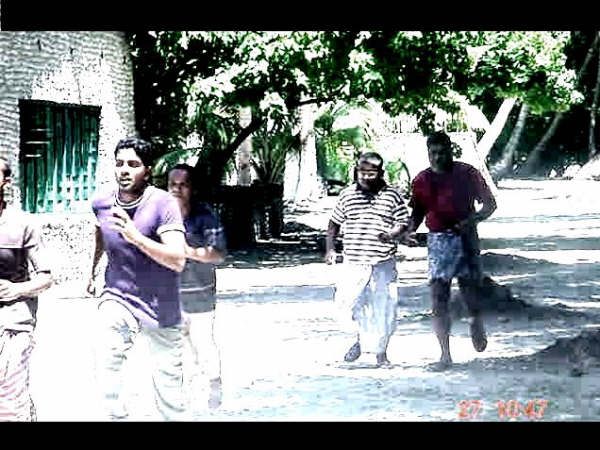
In the final scene, a worried Arif, unable to contact his family, watches locals playing football. Jameel calls out to him.

“Arif!”

Arif turns.

Jameel and his friends step aside.

And there — in the center of the frame — stands Sattar, his father.

No dialogue. No explanation.
Just two men — broken, and finally whole.

It remains one of the most honest endings I’ve ever filmed.

The drama went on to win Best Director, and on most 3rd Novembers, TVM re-runs it.

For me, 3rd November is not just a celebration of triumph. It’s the sound of static turning into a heartbeat. It’s Saleem’s trembling hands on a radio dial. It’s the voice of a mother breaking through fear. It’s the moment a nation — terrified, disconnected, but unbroken — found its voice again.

Because sometimes, history doesn’t begin with silence. It begins with a bang.

KAN’BULO: WHEN SILENCE BECAME THE LOUDEST VOICE

Last night, Kan’bulo completed its historic run at Olympus — 52 housefull shows. The first Dhivehi film ever to achieve such a milestone. Sitting with that number, I don’t just feel pride, I feel a deep sense of gratitude. For me, this journey has never been about breaking records. It has always been about reaching hearts. And knowing that so many people stepped into Kan’bulo’s world, carried her pain, and walked out changed — that’s the real triumph.

When I began writing Kan’bulo, I told myself this couldn’t simply be another screenplay. It had to be a lived experience. I wanted every silence, every breath, every hesitation on the page to pull the audience into Kan’bulo’s skin. I didn’t want them to merely watch her story unfold. I wanted them to breathe with her, to ache with her, to hold her fear as if it were their own.

This demanded restraint. It is easy for a writer to fall into the trap of overexplaining, to wrap emotion in too many words. But Kan’bulo taught me the power of what remains unsaid. The silences became my dialogue. And in those silences, the audience leaned closer, feeling more than words could ever spell out.

The shell motif will always remain the heart of my writing journey in this film. In that moment where Kan’bulo tries to cast her half of the shell into the sea, all hope gone — Ariz stops her, placing his half upon hers. That single gesture carried the weight of volumes of dialogue I could have written. But instead, silence filled the hall. A silence so profound that it became shared, collective, almost sacred. I remember sitting in the cinema, watching the audience hold their breath with me, and I knew then — the silence had spoken.

Structurally, the screenplay was written with a clear emotional trajectory: the simmer, the boil, and then the eruption. The pacing isn’t accidental. Every scene builds incrementally, creating pressure just beneath the surface until it inevitably breaks. That breaking point — the climax — is where craft and emotion converge. It’s not spectacle for the sake of shock, but catharsis in the truest Aristotelian sense: the purging of emotion, not only for Kan’bulo, but for the audience who has carried her burdens alongside her.

But none of this would have been possible if the words had stayed on paper. My deepest gratitude goes to Hussain Munavvar, who entrusted me with the chance to write this screenplay and then carried it to the screen with vision and courage. To every single member of the cast and crew — you gave my pages flesh, blood, and heartbeat. You transformed silence into cinema, and for that, I am forever thankful.

As I look back now, what stays with me isn’t just the record of 52 housefull shows. It’s the hope that every Kan’bulo out there — every girl who suffers in silence, every soul who feels unseen — will be given the protection, dignity, and safety they deserve. Stories can open eyes, but it is our duty as a society to open our arms.

To me, Kan’bulo will never just be a film. It will always be a promise — that no girl should ever have to carry such burdens alone.

THODDOO, 26 YEARS LATER

I arrived in Thoddoo this evening for a very different reason than my first visit here. My son’s academy is playing in a football tournament, and I came as a parent in the stands, cheering for him. But my mind can’t help but travel back 26 years to 1999, when I first set foot on this island.

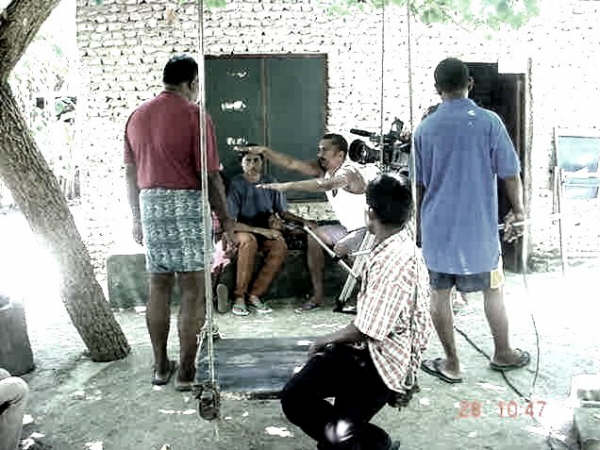
Back then, I wasn’t here for sports. I had just been transferred to the Ministry of Atolls Administration, and that year the Ministry decided to take part in TVM’s Office Teledrama competition—a Ramadan tradition that was quite popular. The previous year’s entry from the Atolls didn’t land well, so the responsibility fell on me to write and direct the new one. That’s how Thauba (Atonement) was born.

It was the story of a simple island girl whose one mistake spirals her life into chaos, drowning her in shame and straining her bond with her father. A straightforward tale, but with enough emotional weight to test TVM’s broadcasting codes. Thankfully, it aired the way I envisioned, though years later I saw a re-run that had been chopped mercilessly.

Since the drama was set on an island, choosing a location was easy—after all, the Ministry oversaw them all. But fate pointed me toward Thoddoo. One of my colleagues was from here, and he became my guide, suggesting locations as I wrote and later serving as project manager. That was how I first arrived in Thoddoo.

I don’t recall all the exact places we filmed, but certain images stay vivid. A rainy-night scene where the girl wakes from a nightmare, stepping out into the downpour as if to cleanse her sins—it was shot in the backyard of a local house.

Another unforgettable shoot was the nightmare sequence surrounded by fire. We staged it in a wide open ground, taking every safety precaution. Even so, the smoke was too much—the actress, who suffered from asthma, fainted and had to be rushed to the health center. I sometimes wonder if that ground was the football field I now walk past.

Despite these challenges, Thauba went on to win Best Drama that year. The late Hajja Mohamed, who played the girl, won Best Actress runner-up. Many of the cast and crew who made that teledrama possible are no longer with us—Hajja, Mohamed Saleem (Umbe), Ahmed Saeed. They were the backbone of the Atolls dramas. May they all rest in peace.

So yes, being here again feels oddly comforting. I may not remember every street or backyard, but I do remember that a story we shot here once carried weight, stirred emotions, and even made history in its own little way. Today, I return as a father, with different emotions but the same sense of gratitude to Thoddoo.

SAIYAARA (2025) – A LYRICAL REFLECTION ON LOVE, MEMORY AND TIME

Some films don’t rush to dazzle you; they quietly earn your trust, then break your heart—gently. Saiyaara is that kind of romance. Structurally, it’s a clean three-act glide, anchored by an early motif—a diary—that threads private feeling into shared experience. Without giving anything away, the film treats time and memory like tides: always moving, sometimes generous, sometimes unforgiving. You sense it more than you “spot” it.

What gives the film its beating heart is not perfection, but fracture. Vaani enters the story carrying the sting of betrayal—her trust shattered at the very moment she expected stability. Krish, on the other hand, is marked by angst and distance, shaped by an uneasy relationship with his father. They meet carrying these quiet wounds, and the romance doesn’t erase them; it begins with healing. Their brokenness is the foundation, their small acts of mending the mortar. That’s why their love feels earned rather than scripted.

Casting fresh faces in a big-hearted romance is a risk that pays off. Ahaan Panday as Krish and Aneet Padda as Vaani bring unvarnished innocence, chemistry that feels observed rather than engineered. Their performances turn first love into something lived-in rather than lab-grown. This feels like the true launchpad of their careers, and you can see why.

Director Mohit Suri shoots the film with an ear for music and an eye for youth. His grammar has always been songs as story, not interruptions, and Saiyaara leans into this conviction. You don’t wait for the music here—you ride it. The lyrics often function as dialogue, filling spaces that words alone can’t.

From a writer’s chair, what impresses most is the use of plot devices with quiet precision. A personal belonging becomes an emotional compass. A chance encounter propels the story without feeling contrived. Minor misplacements and slips are gentle foreshadowing, never telegraphed. And a parallel family subplot mirrors the central romance, echoing bigger questions of love, silence, and expression. These devices never draw attention to themselves; they act as invisible scaffolding, holding up the emotional architecture.

Last night, I watched Saiyaara on Netflix with my wife—my muse, my first reader, my fiercest critic. And here’s the thing: we didn’t just tear up at the end. No, we cried almost through the entire duration of the movie. We turned into two people locked in a tear-wiping competition. If a tissue box had been nearby, dozens wouldn’t have been enough—we’d have needed wholesale cartons. It’s not our usual style, but then again, it’s very us. That’s this film’s trick: it makes crying together feel less like defeat and more like a strange, soggy victory lap.

As a title, Saiyaara belongs exactly where it points—up there with the brightest of stars. Yes, among the Bollywood, Hollywood, or any-wood constellations. And it gets there the honest way: with feeling, craft, and faces you’ll believe in.

A must-see.

P.S. The editing by Rohit Makwana and Devendra Murdeshwar is crisp and potent, never indulgent, with many sequences that had me grinning ear to ear, even when I was crying.

THE EVE I WAIT FOR EVERY YEAR

My Dearest Love,

Every year, on the eve of your birthday, I find myself here again—fingers on keys, heart refusing to sit still. It’s my favorite ritual, the one thing I never want to outgrow. You often ask me what I really want to do in life. Well, here’s the shocking truth: this. Writing you these letters. Everything else—screenplays, awards, even Everest—can politely wait their turn. Because all of them shrink next to you—you, the most beautiful contradiction I know.

You can silence a room with a single glance, then melt into tears over a stray cat licking a fish bone. Steel wrapped in silk—that’s you. And that mix—strength and softness—has a way of spilling into everything, even laughter, which you’ve turned into the rarest currency of our home.

Your dance moves, your one-liners, the way you make even silence ridiculous—if trophies were given for making me laugh, we’d have to rent a storage unit. Even Tuffin and his wife Hirafus would protest the unfairness. But if laughter is your gift, patience is your superpower—you’ve carried more than your share.

You put up with Kokko’s teenage thunderstorms, my YouTube binges, and my gold-medal snoring during the very movies you lovingly picked. But beyond the funny stuff lie the heavier flaws—the times I wasn’t present, the moments I should have listened, the lapses I wish I could take back. And still, you meet it all with a grace that doesn’t just humble me—it reminds me every day how deeply grateful I am to have you.

And that same quiet grace doesn’t just stay at home—it follows you into your CC days. Nerves before, brilliance after. The world sees strength; I see the heart it takes to show up, again and again.

And when you bring that same strength home, it turns into something else entirely—as a mother, you’re a force. Kokko is basically your twin with a teenage remix. Terrifying? Yes. A blessing? Absolutely. And somehow, on top of that, you still find space for your artistry—it’s magic.

You make your iPhone photography look like fine art and you even charm bougainvillea into blooming just by talking to them. If plants could vote, you’d be president by now. And your creativity doesn’t stop there—it spills into the kitchen too.

Your cooking? If nations wanted peace, they’d serve your chicken rice. Honestly, sometimes I wish I could have surprised you with it, especially last month when you lost your taste. But perhaps it’s better I didn’t—my version would’ve been memorable for all the wrong reasons—one spoon of that would’ve started a war.

But beyond the kitchen, there’s something even more powerful—your presence. People admire you not just for what you say but for the way you make them believe. Not by force, but simply by being you. That’s rare. And it’s exactly why you’ve been my muse from the very beginning.

The whole reason I returned to screenwriting was secretly trying to impress you. Even now, one remark from you can rewrite an entire film. At premieres, I walk proud—not because of the applause, but because you are beside me. And yes, you always steal the red carpet. I wouldn’t trade that theft for anything.

Through storms and sunshine, you’ve been my anchor, my muse, my Jessica, my SV, my gossip partner, my joy, my love. You’re not just the love of my life—you’re the life in my love.

So today, laugh, dance, and if a tear slips through, let it remind you of how completely, foolishly, and hopelessly I have always belonged to you.

Happy Birthday, my love. May your glow forever outshine every candle, every star, every dream I could never quite reach—but always wished I could place in your hands.

Your hopelessly devoted and sometimes hopelessly foolish husband.

ALI SHANIZ: THE CAPTAIN WHO DIDN’T FLINCH

It takes a certain kind of producer to make a blockbuster. But it takes a braver one to follow it up with something as raw, unsettling, and emotionally demanding as Kan’bulo.

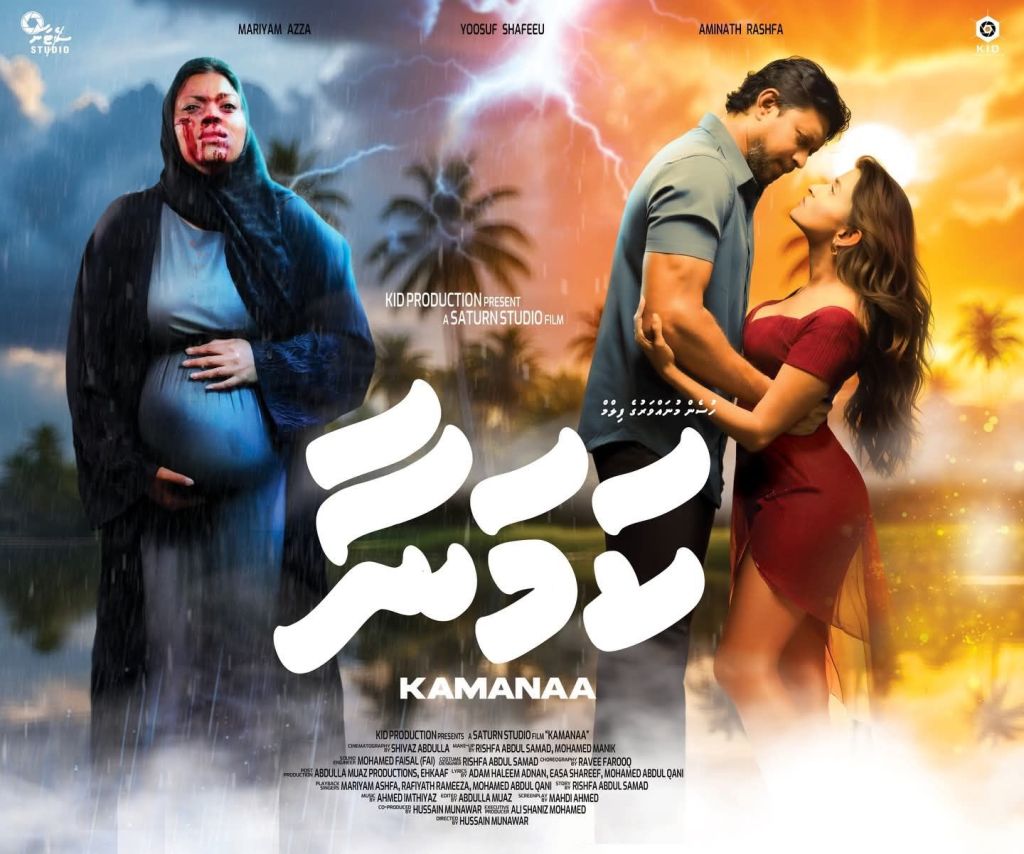
Ali Shaniz, the producer behind Kamanaa—the biggest Dhivehi blockbuster of 2024—could have played it safe. He had every reason to. After delivering one of the most commercially successful films in recent memory, most would steer toward lighter waters. But Shaniz chose the storm. He chose Kan’bulo.

This isn’t just a film. It’s a cinematic reckoning. A story laced with silence, trauma, and emotional violence—territory most producers would instinctively avoid. But not Shaniz. When director Hussain Munavvaru handed him the screenplay, Shaniz didn’t hesitate. He understood what the story was asking of him—not just financially, but morally. And he said yes.

Producing a film like Kan’bulo is not just about funding—it’s about backing the emotional and social weight of the story. Shaniz never once tried to soften the edges. He never once asked, “Can this be toned down?” Instead, he leaned in. He created the space for this film to be what it needed to be: unflinching and honest.

It’s also worth noting that this was the very same team that made Kamanaa what it was. From post-production to performances, Shaniz believed in bringing everyone back—not for familiarity’s sake, but because he understood that a story this delicate needed people who could hold it with care.

As a writer, it’s rare to find a producer who not only respects the page but also protects it. Shaniz is that kind of producer. He doesn’t just produce movies—he shoulders them. With grit. With grace. And most of all, with guts.

Producer Ali Shaniz is once again at the helm, this time navigating far rougher waters with Kan’bulo. But steady as ever, he’s steering this ship straight through the storm. And if there’s anyone I’d trust to sail a story this heavy into harbor—it’s him. Aye, Captain.

Kan’bulo is currently enjoying a successful run at Olympus.

KAN’BULO: THE SHELL MOTIF

One of the most rewarding experiences as a screenwriter is when a simple motif quietly transforms into the heartbeat of a story. In Kan’bulo, that motif was the shell.

The shell begins its journey as a tender gesture — Ariz gifting half of it to Kan’bulo. On the surface, it feels like a token of affection, but beneath that lies a symbol of incompleteness, of two halves belonging together. It’s fragile, ordinary even, yet it carries the weight of connection and hope.

The true resonance of the shell revealed itself in the crucial scene where Kan’bulo, utterly broken and stripped of all hope, decides to throw away her half into the sea — as if to surrender everything she has left. On paper, this was the perfect place for dialogue, the kind of moment where one could write pages of desperate exchanges. But instead, I chose silence.

From a screenwriting perspective, this was an intentional technical decision. I let the motif do the storytelling. In screenwriting, dialogue often competes with action, but when a motif is planted and nurtured throughout the narrative, it earns the right to replace words. The act of Ariz stopping her hand and placing his half-shell over hers became a complete scene arc: setup (the decision to throw), conflict (his intervention), and resolution (the joining of the halves). No words needed.

The result was powerful. In the theatre that night, silence extended beyond the screen — the audience, too, fell into complete stillness. You could feel them breathing with Kan’bulo, watching two halves become whole. That shared silence was not emptiness but resonance. It was cinema at its purest: visual storytelling carrying emotion more strongly than dialogue ever could.

For me, that moment alone made the journey of writing Kan’bulo worthwhile. The shell was no longer just a prop — it became the soul of the film, binding the characters and the audience in one collective heartbeat. Sometimes, it is in the absence of words that cinema finds its truest voice.

Kan’bulo is currently enjoying a successful run at Olympus.