Mahdi Ahmed

Scripting waves of imagination from the sunny side of the Maldives.

Posts from the ‘Movies’ category

KAMANAA: PRODUCING SHANIZ

If my memory serves me right, producer Ali Shaniz and I have been friends for over a decade now, despite not knowing each other too personally. He knows me as a screenwriter, and I know him as a producer with six films under his belt. Yet, somehow, we’ve always felt like we’ve known each other well.

Shaniz is one of those rare individuals with a personality that’s both friendly and outgoing, yet refreshingly direct. He doesn’t leave anything to assumption—he’s clear, concise, and gets straight to the point.

When he decided to produce Kamanaa, it was after reading the screenplay I wrote. Director Hussain Munavvar passed it on to him, and in one sitting, Shaniz devoured the screenplay and felt he was holding something truly special. That’s exactly what he told me, in his own words. And the best part? Never in my writing career had my payment been settled the same day after delivering the final screenplay. That’s the kind of producer Shaniz is—efficient, straightforward, and committed.

After the pre-production kicked off, the cast and crew flew to the island of HDh. Molhadhoo for filming. Normally, once my screenplay is sold, I don’t stay involved in the production process, unless I am requested. But Shaniz made sure I felt like I was part of the team. He’d call me up for coffee, update me on how things were progressing, and during our chats, he’d even call the director to get the latest on what was happening on set. It was as if he were a dad checking in on his kids while they were away on a trip. Nothing was left unattended because Shaniz’s philosophy is clear: less talk, more action.

He’s available for discussions at any hour, day or night. Just a day ago, I had to rewrite the post-credit scene. The production team initially felt it wasn’t necessary, but they eventually decided to include it. The scene needed a rewrite because an important actor cast for a cameo was unavailable, and the location had to be changed to accommodate the tight production schedule. That night, after discussing the changes with Munavvar, I quickly wrote the new scene and sent it to both Munavvar and Shaniz. Shaniz, true to form, read it immediately, discussed it with Munavvar, and called me to finalize it as soon as they were done.

Producer Shaniz Ali is the true captain of this ship, steering Kamanaa smoothly toward its release on 27 August 2024. If there’s anyone I’d say “Aye, Captain!” to, it’s him.

KAMANAA: RISHFA, THE BRAINCHILD

In the Dhivehi film industry, many know Rishfa Abdul Samad as the hardworking mother, a professional beautician, and a creative seamstress, as well as the loving wife of director Hussain Munavvaru. But what some may not realize is that she is the brainchild behind the upcoming film Kamanaa.

It was during her second trimester of pregnancy when Munavvar called me up for coffee to narrate a true-life account of a victim of domestic violence—a story that Rishfa had shared with him. The victim was a close friend of hers, and the raw, emotional weight of the story resonated deeply to become the spiritual sequel to the 2011 release Sazaa, my first collaboration with Munavvar and his directorial debut.

Although I never had the opportunity to hear the story directly from Rishfa, her influence on the screenplay was profound. She provided incredibly constructive feedback on my draft, and her insights made the final version of the screenplay more polished and emotionally resonant. Rishfa’s keen understanding of the nuances of the story ensured that Kamanaa would not only be a powerful film but also a truthful one.

I have immense respect for Rishfa for convincing Munavvar to bring this story to the Dhivehi audience. Domestic violence is a pervasive issue in our society, and Kamanaa doesn’t shy away from showing the horrifying extent to which it can go—even if it means a husband brutally beating the woman he once vowed to love and protect. As filmmakers, it is our duty to shine a light on these dark corners of society, and I’m grateful to Rishfa for her unwavering commitment to doing just that.

Thank you, Rishfa, for your courage and vision in bringing this important story to life. Kamanaa is not just a film; it is a call to action, and it’s all thanks to you.

Kamanaa is set to release on 27 August 2024.

KAMANAA: INTHI SCORED GOLD

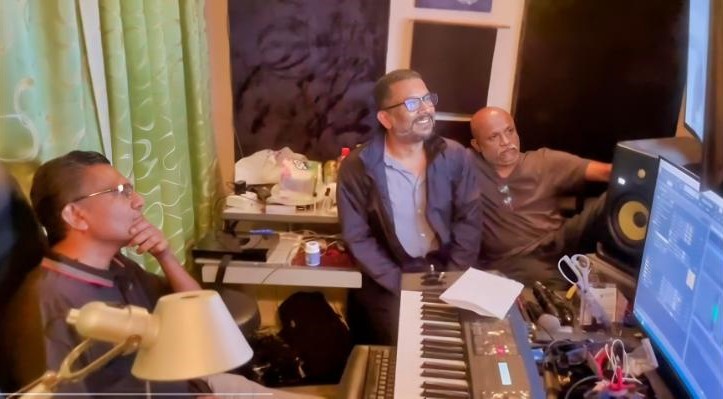
Yesterday, when director Hussain Munawwar invited me to watch the music score for Kamanaa, I was curious, yet a bit skeptical. Having never seen any of its music composer, Ahmed Imthiyaz or Inthi’s previous work, the score was the most doubtful area of the film for me.

As the scenes played out, especially the climax and the moments leading up to it, I was utterly captivated. Inthi’s music didn’t just complement the scenes; it breathed life into them. The emotion, the tension, the pain—all were amplified to a level that I hadn’t anticipated. I found myself completely absorbed, so much so that I realized I was holding my breath until the final frame.

The music seemed to interweave with the narrative, enhancing the intricacies of each character’s inner turmoil and elevating the impact of every pivotal moment. It was as if the melodies became an essential character in the story, shaping the atmosphere and guiding the viewer’s emotional journey with remarkable finesse. The synergy between the visuals and the music created a profound sensory experience, leaving a lasting impression that lingered long after the film concluded.

After the scenes ended, there was a moment of silence. It wasn’t just in the room; it was within me. I felt every ounce of what the protagonist endured, as if I had lived those moments myself. When Munawwar suggested we watch a few more scenes from the start, I simply shook my head—I didn’t need to see more to be convinced.

I turned to Inthi and shook his hand, acknowledging the tremendous job he had done. His score is a masterpiece, adding a depth to “Kamanaa” that will leave audiences as breathless as I was.

“Kamanaa” is set to release on 27th August 2024, and with a score like this, it promises to be an unforgettable cinematic experience.

KAMANAA: THE MASTERFUL TOUCH OF BHAAI

When it comes to post-production, every element counts, and multi-talented editor Abdulla Muaz aka Bhaai has truly outdone himself with Kamanaa. Not only has he delivered a well-paced and crisp edit, but he has also set a new standard for Dhivehi films with his meticulous craftsmanship. The editing in Kamanaa is sharp and precise, keeping the narrative flowing smoothly, and building up to the rousing climax with perfect pacing.

But Bhaai’s talent doesn’t stop at editing. He’s also a master of color grading and CGI, transforming ordinary scenes into visually breathtaking moments. The official trailer, for instance, features a scene where Nora played by Asha runs along a boardwalk—a scene so stunning that many thought the location was as scenic as was seen. In reality, it was Bhaai’s imagination and skill in post-production that brought this scene to life, making it a complete visual feast.

Bhaai has struck a perfect balance between fast-paced action and moments of quiet intensity, ensuring that the film’s emotional beats hit just as hard as its visual spectacles. His work has truly brought Kamanaa to life, making it an immersive and captivating experience from start to finish.

As we approach the release of Kamanaa on 27th August 2024, I can’t help but admire the remarkable job Bhaai has done. His contributions have elevated the film to new heights, and I’m confident audiences will be just as captivated by his work as I have been.

KAMANAA: Unveiling the Haunting Reality of Domestic Violence

It all began one early morning on 04th June 2023 at Olympus Cafe. As usual, I sat with director Hussain Munawar, affectionately known as Kudafoolhu in the film fraternity, for our morning coffee. With his characteristic enthusiasm, he told me he had a story to share—a true one narrated by his wife, Rish, who got it from the source.

When he finished recounting the series of incidents, my coffee had gone cold, untouched except for one sip. Like the coffee, I felt a chill. Lately, stories with violence have been hard to stomach, and this one, about domestic violence, hit particularly hard. Munawar wanted it to be a spiritual sequel to his debut film “Sazaa,” which also dealt with violence against women and was our first collaboration in 2011. He promised to get an audio recording of the interview with the victim, and I agreed to start the detailed outlining once I received it. Little did I know this story would haunt me for the rest of the day.

The dramatic weight of the story put my brain into overdrive. That evening, on my way to Vilimale’ from Male’, I began crafting the screenplay on the ferry using my trusty Samsung S22 Ultra. By the time I reached Vilimale’, I had a rough outline. Later that evening, sprawled on the sitting room floor, I built up the backstory for all the separate acts of violence inflicted by a husband on his mild-mannered wife. I developed the characters, including the minor ones, and outlined the violent incidents leading up to the climax, staying true to the real story while reimagining it for the screen.

Days turned into weeks and weeks into months. I kept reminding Hussain about the interviews, but due to the subject’s sensitivity, Rish was still unable to record them. Meanwhile, casting had begun. Hussain locked down Mariyam Azza, the most sought-after actress, for the victimized wife and was negotiating with Yoosuf Shafeeu, the most decorated actor, for the violent husband role. He also scouted for an equally renowned actress to play the other woman. Despite some casting setbacks, he eventually onboarded the most up and coming actress, Aminath Rashfa, for the latter role. Veteran actor Mohamed Rasheed and promising actress Natasha Jaleel, along with Mohamed Manik, were assembled for the cast. I tweaked the characters and scenes to better fit the actors’ strengths, making my outline even more engaging.

Still waiting for the interviews, Hussain eventually informed me that he had set a date to begin production. He urged me to start writing. Luckily, I had the rough outline ready. I revised the outline in a day, removing repetitive violence and adding fresh, brutal scenes. Voila, the outline was complete and looked good.

With three weeks to write the screenplay, I divided my time, spending two hours in the morning and two in the evening. By the end of the final week, I had a draft ready and immediately sent it to Hussain for feedback. He shared it with the cast, and I received valuable input, particularly from Rish, who suggested additional scenes leading up to critical violent incidents and some character name changes.

The meeting with Yoosuf Shafeeu was a pivotal moment. When he approved the unrestricted interaction with the other woman, I couldn’t help but grin, my heart racing like a bullet train. I finished the final draft that night, adding intense violence and refining the interactions.

After a journey that began with a chilling tale over coffee, Hussain finally gave me the final title of the screenplay: ‘Kamanaa,’ a loving term in Dhivehi used to address a wife. What started as a daunting task had transformed into a powerful screenplay, getting ready to be brought to life on the big screen.

Kamanaa is set to release on 27th August 2024.

MAHARAJA: A Masterclass in Suspense and Emotions

Tamil film “Maharaja” (2024), masterfully penned and directed by Nithilan Saminathan, has mesmerized both audiences and critics. The film’s clever screenplay and multifaceted elements contribute significantly to its impact.

The narrative begins with a simple burglary, but the plot takes an intriguing turn when the protagonist, a mild mannered barber named Maharaja, portrayed brilliantly by Vijay Sethupathi, claims that his stolen “Lakshmi” is missing. This ambiguity hooks viewers instantly, leaving the audience to ponder whether Maharaja speaks of a literal valuable object or something more profound. Saminathan masterfully sustains this mystery, engaging viewers actively with the storyline.

The film’s non-linear narrative structure oscillates between the present, where Maharaja is on his quest to find his beloved “Lakshmi” and flashbacks that unveil his past. This dual approach not only builds suspense by leaving questions unanswered but also provides a deeper insight into Maharaja’s motivations. As his past unfolds, the audience witnesses the events that molded him and the emotional core driving his actions. This non-linear storytelling, though challenging at first, ultimately is rewarding as all narrative threads converge seamlessly.

While “Maharaja” fits within the thriller genre, Saminathan skillfully avoids a purely dark and gritty tone. The script injects humor through Maharaja’s interactions with a quirky police officer and several other oddball characters, providing comic relief without undermining the film’s seriousness. Additionally, the script explores Maharaja’s vulnerability, his love for his family, and the devastation wrought by the loss of his “Lakshmi.” This emotional depth adds weight to his actions, rendering him a more relatable protagonist.

The screenplay maintains suspense with well-placed twists and turns. Just as the audience thinks they have the plot figured out, the film surprises with a new revelation. These twists are not mere shocks; they naturally arise from the plot and character development. The climax, in particular, is lauded for its emotional resonance and the way it ties together all narrative elements.

Saminathan excels in using the power of suggestion and incorporating motifs and symbols throughout the film. Maharaja’s grief and rage are often conveyed through subtle expressions and actions rather than overt exposition. This technique allows viewers to connect with the character emotionally and engage actively with the story. This approach not only strengthens the film’s emotional impact but also fosters audience participation.

Initially, the missing “Lakshmi” serves as a McGuffin, a plot-driving object with no intrinsic value to the story. However, as the narrative progresses, “Lakshmi” evolves into a critical element tied to Maharaja’s past and motivation. It rises above the role of a simple McGuffin and becomes a Chekhov’s Gun. Similarly, other seemingly minor details introduced early in the film pay off later, foreshadowing future plot developments and solidifying the film’s tightly woven script.

The film features powerful performances by the lead cast, particularly Vijay Sethupathi, Anurag Kashyap as Selvam, the main antagonist, and the supporting actors. Sethupathi delivers a career-best performance, balancing vulnerability and intensity with finesse.

In summary, “Maharaja” (2024) stands as a masterclass in clever and engaging storytelling. It takes a familiar plot and elevates it through its unique structure, well-developed characters, and masterful use of suspense, humor, and emotional depth. The film exemplifies how filmmakers can employ various narrative techniques to craft a truly gripping cinematic experience.

Highly recommended.

P.S. The scene where Nallasivan re-enacts the robbery in Maharaja’s presence, along with the investigating police, and demonstrates how he strangled Maharaja reminded me of a powerful composition style Steven Spielberg used in his classic, The Color Purple, when Albert, engrossed in his newspaper, sees Cecile for the first time. Pure cinema magic.

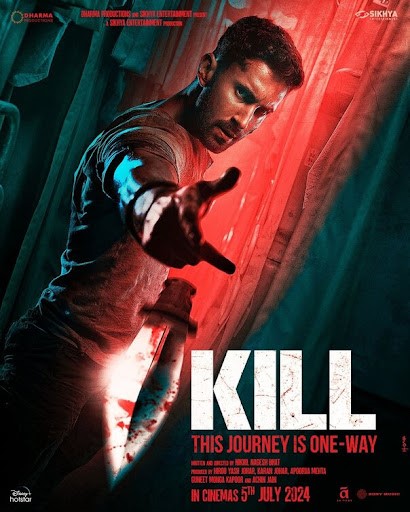
KILL: A Gripping, Brutal Ride on the Rails

“Kill,” the latest Hindi action thriller from writer-director Nikhil Nagesh Bhat, captivates critics and audiences worldwide with its intense action sequences and daring departure from traditional Bollywood formulas. Set entirely on a train, the film eschews song-and-dance numbers and larger-than-life heroes, opting instead for a raw and unrelenting portrayal of violence.

The plot follows Amrit, a stoic army commando portrayed with impressive intensity by Lakshya, who boards a train to New Delhi to prevent his love, Tulika (Tanya Maniktala), from entering an unwanted arranged marriage. His mission gets derailed violently when a ruthless gang of dacoits, led by the merciless Fani (Raghav Juyal), hijacks the train. Driven by love and a strong sense of justice, Amrit becomes a one-man army, taking down the dacoits in a series of bone-crunching, jaw-dropping, and blood-gushing fight sequences that intensify with each frame.

The true highlight of “Kill” is its unapologetic and astonishing action. The fight scenes, a mix of martial arts and raw street brawling, are expertly devised by action directors Se-yeong Oh and Parvez Sheikh. Their creativity, supported by Rafey Mehmood’s brilliant cinematography, leaves viewers claustrophobic and on the edge of their seats as Amrit navigates the confined train compartments, creating a relentless atmosphere of tension.

Bhat’s concept, surprisingly inspired by James Cameron’s “Aliens,” focuses on a protagonist protecting someone vulnerable. Howerver, Bhat shifts the narrative’s perspective back and forth from protagonist to antagonist, elevating “Kill” beyond a typical action film by making it grittier, more relatable, and unexpectedly dramatic.

Lakshya, as Amrit, embodies the quiet rage of a soldier pushed to his limits. His steely gaze and determined body language convey more than words could. Meanwhile, Raghav Juyal, more popular as a dancer and choreographer, transforms into the chillingly charismatic villain, Fani. His menacing demeanor and razor-sharp delivery make him a formidable adversary in the vein of Hans Gruber.

The supporting cast also delivers strong performances, especially the dacoits. Cleverly, Bhat makes the narrative compelling by making all of them family, and their familial ties add an explosive emotional depth. Each bloody confrontation and brutal death realistically intensifies their horror and thirst for vengeance. Bhat also keeps the tension escalating amongst them by adding a conflict between their patriarch, Beni (Ashish Vidyarthi), and his son as Fani.

Kudos to editor Shivkumar V. Panicker for the film’s impeccably calibrated pace. Bhat, who never sits in the first edit, found Panicker ruthlessly cutting 12 minutes from the opening of his original vision and placing the main title card at an unexpected moment, which served as a great shock to everyone.

Production designer Mayur Sharma also deserves praise for constructing the train on a soundstage with movable walls to accommodate the fast-paced and intricate fight scenes Bhat envisioned.

In “Kill,” Bhat highlights the importance of art in portraying graphic violence and blood. The explicit violence serves to emphasize the stakes, desperation, and raw human emotions at play, making the film not just a visual experience but an immersive, visceral journey.

“Kill” is a bold experiment in Hindi cinema. Its raw energy, stellar performances, and innovative fight choreography make it a must-watch for fans of action thrillers seeking something fresh from Bollywood. The film’s relentless intensity evokes a profound response, leaving the audience either shaken or mesmerized.

P.S. For some strange reason, I burst into tears once the end credits started rolling. I’m not sure if I was overwhelmed by the brutal violence or the arduous journey Amrit had to endure.

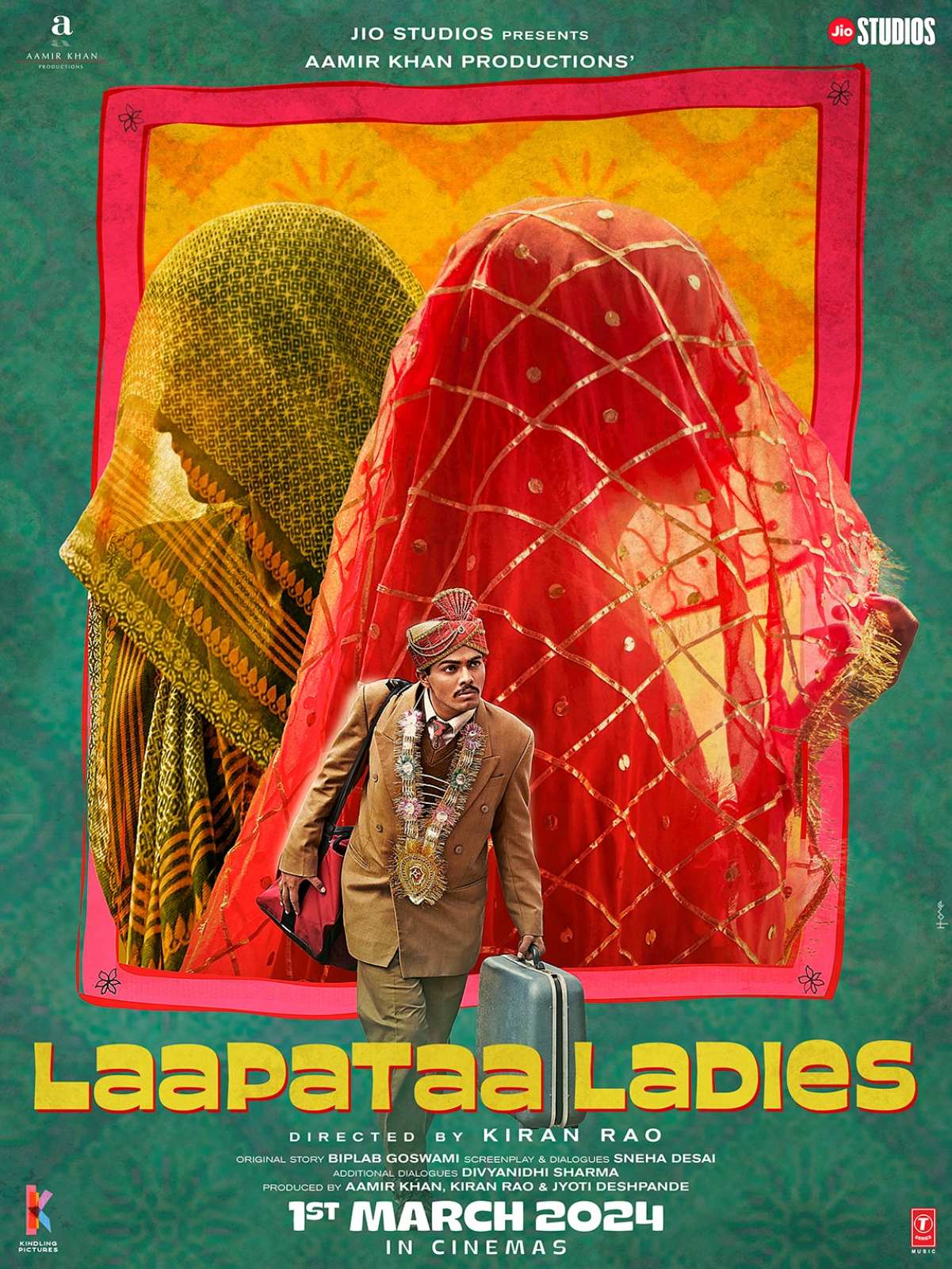
LAAPATAA LADIES (2024)

“Lapataa Ladies” (2024), directed by Kiran Rao, is a funny, witty, quirky, and inspiring dramedy that unfolds in the fictional Indian state of Nirmal Pradesh in central India. The story revolves around two brides-to-be, Phool Kumari and Pushpa Rani, who come from different backgrounds. In this state, a deeply entrenched tradition requires newlywed brides to conceal their faces with veils. However, their lives are comically disrupted when they are accidentally swapped on a train journey, thanks to their identical veils.

Brilliantly penned by Biplab Goswami, Divyanidhi Sharma, and Sneha Desai, the film weaves a compelling tale of mistaken identities, subtly embedding a powerful message of female autonomy. Initially portrayed as a timid bride groomed to be subservient, Phool stands in stark contrast to Pushpa Rani, a suspicious woman with a hidden agenda of her own. However, their unexpected exchange becomes a turning point, unearthing their hidden potential and empowering them to break free from societal shackles. This accidental swap becomes a catalyst, compelling them to challenge societal norms and pursue their dreams while inspiring those around them.

The performances are a standout, with Nitanshi Goel as Phool and Pratibha Ranta as Pushpa Rani, delivering exceptional portrayals. Chhaya Kadam’s performance as Majnu Maai, a tea stall owner whose stern demeanor is gradually softened by Phool’s resilience and gentle nature, is particularly commendable.

The strength of this film lies in its ability to empower without resorting to preachiness. Rao’s directorial finesse is evident as she deftly blends humor with poignant moments, celebrating the unbeatable spirit of women. The film succeeds by organically conveying its message of empowerment through the personal growth and humorous yet courageous exploits of its protagonists. It invites the audience to deeply connect with the characters’ journeys of self-discovery and courage to rewrite one’s destiny, making them feel a part of the narrative.

Highly recommended.

P.S. Ravi Kishan as Inspector Shyam Manohar adds a delightful twist to the narrative and enriches the film’s dynamic range. He is an absolute hoot and almost steals the show.

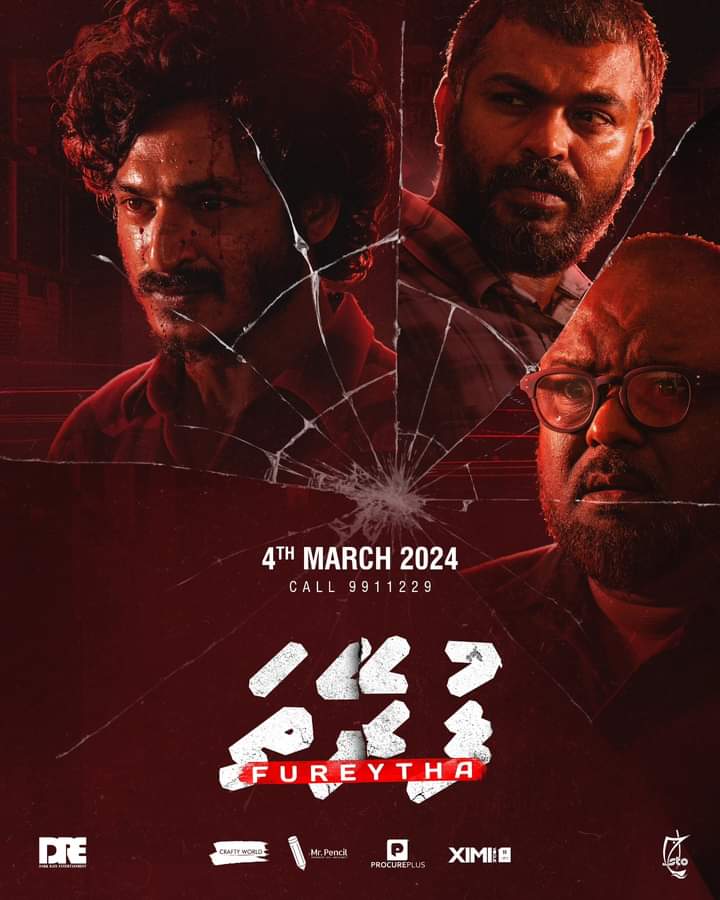
FUREYTHA: From Man to Beast

“Fureytha” presents a bold and unsettling portrayal of societal decay and the individual unraveling of its characters. Set in the crime-ridden streets of Malé City, the movie immerses viewers in the life of an ordinary man who becomes inadvertently embroiled in a gang-related murder. As the protagonist descends into a maelstrom of violence, the film paints a bleak and harrowing picture of a society trapped in its own web of injustice and brutality. Through its unflinching exploration of the darker aspects of human nature and the dire consequences of societal neglect, “Fureytha” confronts viewers with an uncompromising reflection of the precarious state of our society. The raw and daring portrayal of the protagonist’s journey serves as a poignant reminder of the fragile line between order and chaos, challenging audiences to contemplate the fragility of civilization and the consequences of forsaking societal well-being.

Ahmed Tholal, the screenwriter, has demonstrated exceptional finesse in his handling of the intricate narrative landscape in his inaugural solo endeavor. With compelling and incisive prose, Tholal intricately illuminates the pressing and convoluted issue of lawlessness and the prevailing influence of gang culture within our societal fabric. The movie deftly intertwines themes of power, impunity, and the unwavering quest for justice into its tapestry, skillfully prompting audiences to introspect upon the profound and weighty challenges that afflict our collective existence.

Sharaf Abdulla delivers a truly mesmerizing performance as the tortured protagonist, Hussain. He flawlessly portrays a man at war with himself, caught in a storm of violence. The layers of his character unfold through tender interactions with his son and ex-wife, adding a profound emotional depth to the film’s narrative. Sharaf’s ability to express the internal conflicts and external struggles of Hussain is simply exceptional. His portrayal captivates the audience, drawing them into the complexities of Hussain’s world. From subtle nuances to powerful moments, Sharaf’s performance leaves a lasting impression, making him a standout in the film and a talent to watch in the industry.

The portrayal of Ravee Farooq as Zulal, the antagonist, is truly a masterpiece. His performance delves deep into the complexities of the character, presenting a chilling and multi-dimensional depiction that challenges viewers to contemplate the nature of evil. Through Ravee’s masterful portrayal, the audience is compelled to consider whether Zulal’s actions are a product of his environment rather than an inherent evil within him. This adds a thought-provoking layer to the character, sparking conversations about the factors that shape individuals’ behaviors and choices.

Moreover, Ravee’s nuanced portrayal seamlessly weaves into the broader canvas of the film, complementing the skilled strokes of the cinematographer, Ahmed Zifaaf and the director, Ali Shifau. The synergy between Ravee’s performance and the visual storytelling elevates the overall impact of the film, creating an immersive experience for the audience. As the character of Zulal unfolds within the narrative, it becomes evident that Ravee’s dedication to portraying the complexity of the antagonist has contributed significantly to the depth and richness of the storytelling.

Shifau’s directorial prowess is on full display throughout the entire film, demonstrating a keen ability to capture the raw turmoil and underbelly of Malé City in equal measure through the lens of Zifaaf. Each frame is meticulously crafted to convey the complex emotions and depth of the characters, truly bringing the narrative to life. The visual storytelling is as compelling as the gripping plot, immersing audiences in a world that is as fractured as it is frightening. With a masterful blend of visual and narrative elements, the movie ensures a captivating and unforgettable cinematic experience.

Since “Fureytha” received an 18+R rating, it’s important to understand that the inclusion of violence and profanity in this film serves a specific purpose within the narrative. By fearlessly embracing these elements, the film creates a raw and unfiltered portrayal of the realities it seeks to explore. This bold artistic choice not only underscores the authenticity of the storytelling, but also serves as a powerful tool for emphasizing the film’s core message. Nevertheless, it’s crucial to recognize that such explicit content may potentially alienate more sensitive viewers, given its unapologetic nature. This juxtaposition of boldness and potential alienation exemplifies the complex balance that filmmakers often navigate when choosing to incorporate controversial elements in their work.

In conclusion, “Fureytha” is a magnificent piece of cinematic artistry that intricately weaves together a compelling narrative with profound themes. It delves into the heart of societal issues with a delicate touch, compelling viewers to engage in thoughtful reflection. “Fureytha” is an eloquent example of how cinema can serve as a medium for both entertainment and enlightenment, challenging its audience while leaving a lasting impression. Its nuanced exploration of complex topics is a testament to the potency of storytelling in sparking meaningful conversations and fostering a deeper understanding of the world around us.

P.S. While the fight sequences are thrilling, the dance between Sharaf and his son is heartwarming and adds a touch of tenderness to the film.

GOODBYE GIRLFRIENDS

I found myself caught in a bittersweet whirlwind of emotions as I typed the words “END OF SEASON 2” on the last page of the twelfth episode of the hit series, Girlfriends. A wave of feelings swept over me, the result of two months of immersing myself in the lives of Zila, Shamla, and Firushan.

Their flat became like a second home to me, their joys and struggles etched in my mind. Season 2, a year and a half after the first, explored the intricate webs of their fates.

Zila’s ascent in the architecture world was haunted by the ghosts of her past, a tribute to her unbreakable resilience in the face of old scars. Shamla, now a sound engineer for a Dhivehi film, faced her own labyrinth of difficulties, including the unresolved hurt and a new relationship fraught with its own challenges.

Firushan became the key that linked their stories, adding richness and nuance to the plot. His battle with a dark secret and his involvement in Zila and Shamla’s lives added a touch of intrigue and mystery.

Each episode unraveled against the colorful scenery of Male’, exposing secrets, pain, love, and finally, healing. It was a story about the human spirit’s amazing ability to bounce back, the bravery to face inner demons, and the lasting power of friendship.

Writing Season 2 was a deeply personal journey, filled with moments so moving that they brought tears to my eyes. As I reflect, my heart is filled with gratitude for Munko, the series creator, and Saaji, the producer, for giving me this captivating story. Their unshakable faith in my writing has been a fountain of constant inspiration and support.

As I say goodbye to Season 2, my eyes look forward to the dawn of Season 3, if destiny permits it to be. Until then, I send my best wishes to the cast and crew who are working hard to make it a reality.