Some stories… you don’t just write. You survive them.
I just wrapped the final scene of a screenplay I’ve been living with for over a month. And I say living with because this wasn’t one of those breezy weekend scripts where characters flirt and plots resolve with a kiss in the rain. No. This one had sharp edges. And it knew where to cut.
It took me to dark, silent places—places where grief doesn’t shout, it watches. Where every character’s arc is forged in silence and pain. I found myself pacing my room at midnight, questioning not just the characters’ motives, but my own. I felt like I was walking barefoot on broken glass—knowing I had to cross, but dreading every step.
At one point, I had to pause and study the intricacies of a specific chess move. I thought I’d just Google a cool play and move on. But no. The scene demanded more. The stakes were higher. So I ended up neck-deep in Sicilian Defense, Zugzwang, and the beautiful cruelty of the Smothered Mate. That moment became a quiet war. No weapons. Just minds trying to outlive each other on a checkered battlefield.
What began as a simple idea—a flicker—turned into something heavier. Something real. This script tested me. And strangely, I’m grateful for that.
I’m not going to reveal the title just yet. Not the plot either. Let’s just say… some sparks don’t just light up a room. They burn through your soul.
“Dragon” (2025) is a Tamil cinematic gem that takes you on an emotional rollercoaster, blending humor, drama, and romance into a narrative that’s both engaging and thought-provoking. Written and directed by Ashwath Marimuthu, this film showcases the journey of D. Raghavan, affectionately known as ‘Dragon,’ portrayed with remarkable depth by Pradeep Ranganathan.
Pradeep masterfully captures the essence of Raghavan, a rebellious college student burdened with 48 arrears, making his journey from academic underachiever to a man confronting his past both believable and deeply engaging. Pradeep’s performance is a harmonious blend of humor and emotional depth, allowing audiences to connect with Raghavan’s struggles and triumphs on a personal level. His nuanced acting ensures that Raghavan’s transformation is not just seen but felt, making this film a truly immersive cinematic experience.
Anupama Parameswaran shines as Keerthi, bringing a nuanced performance that adds layers to the storyline. Kayadu Lohar, as Pallavi, delivers a compelling portrayal that complements the ensemble cast, including notable performances by Mysskin, Gautham Vasudev Menon, and K. S. Ravikumar.
Leon James’ musical score is the soul of the film, perfectly capturing the essence of each scene and elevating the overall experience. The cinematography by Niketh Bommireddy paints each frame with a vibrancy that mirrors the protagonist’s tumultuous journey.
The editing by Pradeep E. Ragav crafts a rhythm that effortlessly shifts from college mischief to heartfelt drama. Each scene flows smoothly, ensuring that even the predictable beats hit just right. It’s as if the cuts know exactly when to hit the gas or slam on the brakes, keeping the film crisp and engaging—solid editing that gives Dragon its cool, modern pulse.
However, what sets “Dragon” apart is the adept screenplay by Marimuthu, blending conventional narrative structures with inventive storytelling techniques. His screenplay seamlessly integrates humor and drama, ensuring that each scene propels the story forward while deepening character development. The strategic placement of comedic elements provides relief without undermining the narrative’s emotional weight. Additionally, the screenplay’s pacing maintains audience engagement, balancing moments of levity with poignant sequences that resonate on a human level.
This film seamlessly weaves a tale of redemption without being preachy. It holds a mirror to society’s pressures and the lengths one might go to overcome personal failures. The film doesn’t shy away from showcasing the protagonist’s flaws, making his redemption arc all the more satisfying.
In essence, “Dragon” is more than just a film; it’s an experience that resonates deeply, reminding us of the power of second chances and the human spirit’s resilience. A must-watch that leaves you reflecting long after the credits roll.
P.S. The poignant scene at the end between Dragon and his father, Dhanapal, portrayed with heartfelt sincerity by George Maryan, is one of the film’s most emotionally charged moments. If that scene doesn’t open your floodgates, then maybe nothing will.
Watching Adolescence as a parent feels like having your heart ripped out, examined under a harsh light, and then handed back with a quiet reminder of how fragile youth really is. The series throws us into the nightmare of the Miller family, whose 13-year-old son, Jamie, is arrested for the unthinkable—murdering a classmate. From the moment the police arrive, there’s no escape. It’s raw, relentless, and terrifying in its realism, a reminder that no family is immune to tragedy.
The choice to shoot each episode in a single continuous take is nothing short of brilliant. It pulls us deep into the chaos, refusing to let us look away. Every moment feels unfiltered, immediate, and painfully real. Stephen Graham delivers a devastating performance as Eddie Miller, a father drowning in confusion, rage, and unbearable grief.
But the real revelation here is Owen Cooper. In his first-ever role, the young actor carries the weight of the entire series on his small shoulders—and he does it masterfully. His Jamie is unsettlingly complex: one moment just a scared boy, the next an unreadable enigma. There are scenes where he barely speaks, yet his silence is deafening. His blank stares, sudden shifts in emotion, and the terrifying emptiness in his eyes make it impossible to look away. It’s a performance that feels so natural, so lived-in, that it’s hard to believe this is his debut. Cooper doesn’t just act—he inhabits Jamie in a way that makes the story feel disturbingly real.
And then there’s Episode Three. The moment Jamie meets his clinical psychologist, Briony Aniston. I was completely frozen. It’s the kind of scene that burrows into your chest and refuses to leave. Briony, played with unsettling brilliance by Erin Doherty, an actress whose name I immediately had to look up, is not what I expected. She’s not afraid of Jamie. She doesn’t treat him like a monster. Instead, there’s an eerie, almost hypnotic connection between them—one that feels dangerous and inevitable. Their conversation is quiet, measured, yet charged with an intensity that makes every second unbearable. It’s in this moment that I realized Adolescence isn’t just a story about crime or guilt—it’s about the terrifying unpredictability of young minds, the way connections can form in the most unexpected places, and how sometimes, the scariest thing isn’t the crime itself, but what lingers in its aftermath.
But Adolescence isn’t just about one family’s nightmare—it’s a wake-up call. Jamie’s slow descent into online radicalization is a stark reminder that the dangers we fear for our children aren’t just in the streets or at school. They lurk behind screens, in algorithms, in the quiet corners of the internet where kids seek meaning and end up lost. It forces parents to face a brutal truth: our protection can’t stop at the front door—we have to be present in the digital world too.
This series isn’t entertainment. It’s a gut punch. A plea. A brutal but necessary confrontation with the reality of modern parenting. It makes you question everything—how well you really know your child, whether you’re asking the right questions, whether you’re paying enough attention. And the scariest part? Even when you do everything right, it might not be enough.
Adolescence is the kind of show that lingers long after the credits roll. It breaks you, but it also forces you to see what’s at stake. And as parents, that’s something we can’t afford to ignore.
Adolescence is an unflinching, gut-wrenching experience that every parent must watch.
P.S. Actor Stephen Graham’s personal investment in the project stemmed from a deep concern about the hidden struggles of modern teenagers, making the series not just a performance but a passion project driven by real-life fears and experiences.
In Rekhachithram, director Jofin T. Chacko invites us on a journey that goes beyond time, blending mystery with a deep-seated love for Malayalam cinema’s illustrious past. The film intricately weaves a narrative that not only keeps the audience on the edge of their seats but also tugs at the nostalgic strings of those who cherish the golden age of Malayalam films.
The story centers around Vivek Gopinath, portrayed by Asif Ali, a police officer seeking redemption after a suspension. His assignment to investigate a 40-year-old murder case leads him to the enigmatic Rekha, played by Anaswara Rajan, an aspiring actress from the 1980s. The plot masterfully intertwines the investigation with the production of the real-life 1985 film Kathodu Kathoram, directed by Bharathan and starring Mammootty. This clever narrative choice creates an alternate history that feels both authentic and mesmerizing.
Chacko’s direction shines as he seamlessly transitions between the past and present, capturing the essence of the 1980s Malayalam film industry. The meticulous recreation of film sets, the depiction of industry stalwarts, and the subtle nods to iconic moments evoke a profound sense of nostalgia. The film doesn’t merely rely on these elements for sentimental value; they are integral to the storyline, enriching the viewing experience.
Asif Ali delivers a nuanced performance as Vivek, embodying the character’s determination and vulnerability. Anaswara Rajan’s portrayal of Rekha is both poignant and compelling, capturing the aspirations and challenges of an actress in that era. The supporting cast, including Manoj K. Jayan as Vincent and Zarin Shihab as young Pushpa, contribute significantly to the film’s depth and authenticity.
The film’s technical aspects are commendable. Appu Prabhakar’s cinematography beautifully captures the contrasting eras, while Mujeeb Majeed’s music subtly enhances the narrative without overshadowing it.
Rekhachithram is more than just a murder mystery; it’s a heartfelt tribute to Malayalam cinema’s rich heritage. It celebrates the art form, the artists, and the timeless stories that have shaped the industry. For cinephiles and casual viewers alike, this film offers a captivating blend of suspense and nostalgia, reminding us of the enduring magic of cinema.
Highly recommended.
P.S. The use of AI technology to recreate Mammootty’s appearance from the 1985 film is both innovative and respectful, adding a layer of realism that fans will appreciate.
I’m thrilled to announce that I’ve just wrapped up my latest screenplay, my first project of 2025—a journey that has been as emotionally taxing as it has been creatively liberating. This new film is a follow-up to Kamanaa, last year’s mega blockbuster, and I’m excited to be pairing once again with producer/ director, Hussain Munawwaru—our fourth collaboration together. Production is set to kick off in early April, and I can hardly wait to see our shared vision come to life on screen.
This screenplay is loosely based on a National Award-winning Dhivehi novel inspired by true events. Without giving away any spoilers, I can share that this film follows the remarkable journey of a resilient protagonist—a tale of survival, redemption, and finding hope amid life’s deepest sorrows.
In writing this screenplay, I dove into the raw, unfiltered depths of human emotion. I explored the painful echoes of a troubled past, the agony of loss, and the slow, often painful road toward healing. Every page challenged me to confront the complexities of the human spirit and its capacity to endure, even when burdened by unbearable weight. There were moments when the emotional toll felt almost overwhelming, yet every tear shed in the creative process became a tribute to the strength that emerges when vulnerability is embraced.
I hope this screenplay jolts audiences awake, exposing the raw, horrifying truths of our society that too many have tried to bury.
Stay tuned for more updates as we approach the start of production in April.
Somewhere in the depths of my curious mind (which, according to some, runs on expired Wi-Fi signals), I decided to put AI to the ultimate test: directing a Dhivehi music video. Because why not?
First, a huge Shukuriyyaa! to singer Theyravaa for selecting this song for my experiment. His trust in my AI-driven madness is truly appreciated.
And an even bigger, heartfelt thank you to Baiskoafu for giving me the official approval to use this song, which is under their copyright. Without their support, this experiment wouldn’t have been possible.
Now, let’s be clear—I never had a screenplay. No shot list, no scene breakdowns, nothing. I just listened to the song and rendered the shots as I went, trusting my instincts (and Sora’s AI magic) to make something out of thin air. Basically, I directed this like a rogue filmmaker who forgot to hire a crew.
Since I’m running ChatGPT Plus (and not some elite, unlimited AI overlord version), I quickly realized that my credits had the lifespan of a plate of short eats at a Maldivian tea shop— gone before I could blink. This meant I had to wait, sip some tea, contemplate life, and then wait some more while Sora took its sweet time rendering the videos.
Despite these delays, I must admit—I was thoroughly impressed with the results. The AI-generated visuals matched the mood of the song quite well, and the whole thing had a certain vibe. But (and it’s a big but, like those seen in oddly-proportioned AI renders), keeping consistency in characters was nearly impossible. One second, my main character had wavy hair, and the next, she looked like she had just returned from a wind tunnel. If Sora could introduce a character consistency feature, it would be an absolute game-changer.
Since this was a test, I rushed through it with the urgency of me sprinting to catch the last ferry to Vilimale’. Naturally, there were some odd occurrences here and there (like characters suddenly morphing into entirely new people), but overall, I’m thrilled with how it turned out, my first-ever AI-directed Dhivehi music video.
So, thank you, Sora, for the AI wizardry. Thank you, Theyrvaa, for the music. And thank you, Baiskoafu, for allowing me to bring this experiment to life. Now, dear Sora, please—for the love of continuity—fix the character consistency issue before I start directing a full-length AI film. Because I just might.
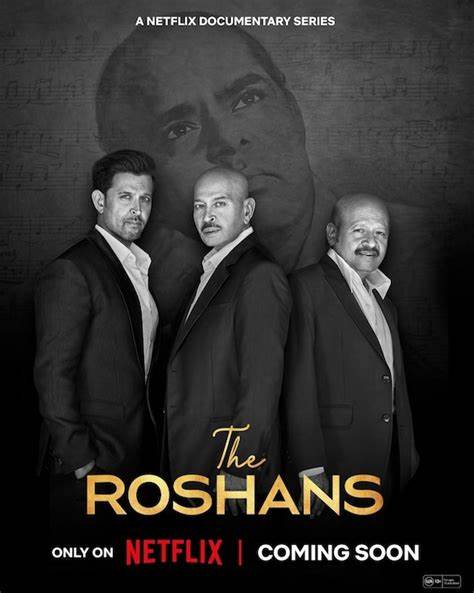
Netflix’s new 4-part docuseries, The Roshans, is a treasure trove for anyone passionate about Indian cinema. This isn’t just a family portrait; it’s a deep dive into the evolution of Bollywood, told through the lens of one of its most influential families.
The series beautifully chronicles the journey of the Roshans, starting with the legendary music composer, Roshan Lal Nagrath. We see how his sons, Rakesh and Rajesh, carried the torch, each making their own indelible mark in directing and music composition. And then there’s Hrithik, the charismatic superstar who continues to captivate audiences worldwide.
What makes The Roshans so compelling is its intimate and honest approach. The series features candid interviews with family members, interspersed with insightful commentary from industry veterans like Javed Akhtar, Shatrughan Singha, Honey Irani, Sanjay Leela Bhansali, Madhuri Dixit and Shah Rukh Khan. We get a glimpse into their personal struggles, triumphs, and the unwavering bond that has kept them together through thick and thin.
The series is a visual treat, with rare archival footage and stunning visuals that bring the Roshan’s story to life. It’s like flipping through a history textbook on Indian cinema, filled with iconic moments and unforgettable anecdotes.
Whether you’re a die-hard Bollywood fan or simply curious about the industry’s rich history, The Roshans is a must-watch. It’s a captivating tribute to a family that has shaped Indian cinema for generations and a reminder of the power of dreams, perseverance, and the magic of storytelling. It’s very inspiring as well.
P.S. That opening shot of a cassette tape sliding into a vintage National player with those classic two-way speakers? Pure nostalgia! It instantly transported me to the era of Roshan Lal and his iconic music. What a fantastic way to set the stage for this incredible journey!
If 2024 were a screenplay, it would be a genre-defying blockbuster—a mix of heartfelt drama, laugh-out-loud comedy, and plot twists worthy of Tarantino himself. It had highs, lows, and moments so surreal they felt scripted. And let’s not forget the standout cast of characters who made it unforgettable.
First up, my family—my homegrown, award-winning ensemble cast. My wife, the muse of all muses and queen of feedback (and my heart), hit a milestone birthday this year. I won’t reveal her age—lest I end up sleeping on the balcony with her bougainvilleas. We also celebrated 20 years of marriage—two decades of travel, love, and spirited debates over soft-shell versus cut crab. (Pro tip: always double-check the shopping list.) She’s the mastermind behind her bougainvillea-parenting initiative, tolerates my hair experiments with Batana oil (still no miracles), and joins me in face-mask selfie sessions.
Then there’s Kokko, our 13-year-old whirlwind of energy. Alhamdulillahi, this kid had an incredible year! He juggled school, basketball, and soccer like a pro while I balanced ferry rides, script deadlines, and debated whether to charge him for taxi services. Watching him clatter away on Instagram with my phone during commutes has become a quiet joy—a moment of calm amidst the chaos. And when he solves the crossword faster than I can, I wonder if he’s auditioning to be the lead in my life’s next chapter. Fist bump!
The real showstopper? Kokko brought home not one but two golds this year. His team clinched the Plate Championship in the International Junior Soccer Tournament U14 held in KL, Malaysia, and his school triumphed in the U13 Inter-School Basketball Tournament. Watching him play felt like the climax of a sports movie—sweat, grit, victory, and me in the stands, trying not to ugly cry.
Professionally, 2024 was a whirlwind. Kamanaa, my latest blockbuster, proved that a well-told story can captivate audiences. Behind the scenes, a difference in perspectives over the worth of “words on screen” served as a quiet reminder of the nuances in creative partnerships. Lessons learned, dignity preserved, and the audience’s cheers were far louder than any quiet undervaluation.
And then came Roboman: The Movie—my personal redemption arc. A clean, family-friendly flick, it proved I could leave behind my infamous double entendres and still deliver a hit. Watching it with Kokko and seeing him predict the ending before the climax? Pure gold—as a writer and a dad.
Another standout moment of 2024 was winning Best Screenplay for the MNU drama Manaal at the NCA Officer Teledrama Competition. It was humbling to see my work recognized after a long hiatus. Manaal, a story about familial bonding and women’s empowerment, explored themes close to my heart. The award was a reminder that storytelling, when done with sincerity, resonates deeply—and moments like this make the countless late nights at the keyboard worth it.
Creatively, I dove into a new story in late December, carrying me into the New Year with fresh energy and ambition. This project feels raw, emotional, and layered, pushing me to explore uncharted storytelling territory. Outlining will be both challenging and cathartic, and I’m hoping this script sets the tone for a year of creativity and growth in 2025.
2024 wasn’t just about writing stories; it was about living them. From Kokko’s victories to celebrating two decades of marriage, this year reminded me that life’s best plots aren’t planned—they’re the unexpected twists that shape us.
Oh, and a special shoutout to February 2024—the month my jaw got rearranged. Yes, ouch—it still hurts. Life, as always, leaves its marks in the most unexpected ways.
As the curtain falls on 2024, I’m reminded that life, like a good script, thrives on twists, growth, and moments of brilliance—planned or otherwise. If 2024 taught me anything, it’s that the best stories are written not just with ink, but with courage, resilience, and a sprinkle of chaos.
So here’s to 2025: a fresh page, a new act, and countless opportunities to turn life’s plot twists into masterpieces. And remember, if life hands you a messy first draft, don’t be afraid to rewrite—or stretch a little, especially if screenwriting has you flirting with tennis elbow.
As a screenwriter with a reputation (okay, infamous might be more accurate) for sneaking in those double-meaning dialogues, I’ve heard more than my fair share of whispers. Some loud. Mostly about how my work flirts a little too much with cheekiness, especially for an 18+ audience. Guilty as charged!
But hey, I’ve always been about delivering something extra. If the scene called for a wink and a nudge, the dialogue was more than happy to comply. But it wasn’t gratuitous. Every smirk-inducing word had a purpose, serving the story, the characters, and—let’s be honest—keeping the audience entertained, even if it made them blush a bit.
But yesterday evening? Yesterday evening was different. Yesterday evening was a turning point. It was the premiere of Roboman: The Movie, and this time, the audience I wrote for wasn’t the 18+ crowd ready to catch every innuendo. This was for families—kids, parents, everyone looking for a wholesome ride. It was my shot at redemption, to prove that I could write something family-friendly that was just as engaging without leaning on the suggestive. And let me tell you, it felt good.
What made the evening even better? My usual premiere buddy, my wife, was there as always. She’s my muse, my most honest critic, and when it comes to feedback, let’s just say no one tells me the truth quite like she does. But this time, there was a new guest—our 13-year-old son, at his first-ever movie premiere. And not just any movie, but one I wrote. I hadn’t felt this nervous in years. Not because of the critics or the audience’s reaction, but because my toughest reviewer would be sitting right beside me, popcorn in hand, ready to whisper his thoughts in real-time.
And whisper he did.
About halfway through into the movie, my son leans over and says, “I know how this is going to end.” I glance at him, eyebrow raised, because, well, I wrote the thing. I know a twist when I see one. But I humor him and whisper back, “Oh yeah? How?”
The movie carried on, filled with dance, heartwarming moments, and plenty of Roboman heroics. The climax hit, and there it was—the big reveal. And guess what? My son nailed it. He had the ending figured out long before the final scenes played out, and you know what? I was proud. Not because the ending was predictable (okay, maybe a little predictable—it’s a family film, after all), but because he got it. He connected with the story in a way I didn’t see coming.
He absolutely loved the movie, and for me, that was the real win. Seeing him wide-eyed, and fully immersed—that’s the kind of review you can’t buy.
So yeah, yesterday evening was a reminder that I can write family-friendly. And guess what? It can be just as fun, heartfelt, and memorable as anything I’ve written for a more… mature crowd. Roboman: The Movie wasn’t just a film—it was my redemption arc. Proof that I don’t need to lean on double meanings to create a story that sticks.
And my wife? She walked out of that theater with a smile and a few tears. The emotional scenes got to her, and as we left, she turned to me and asked, “Is my makeup smeared?” That, my friends, is when you know you’ve done something right.
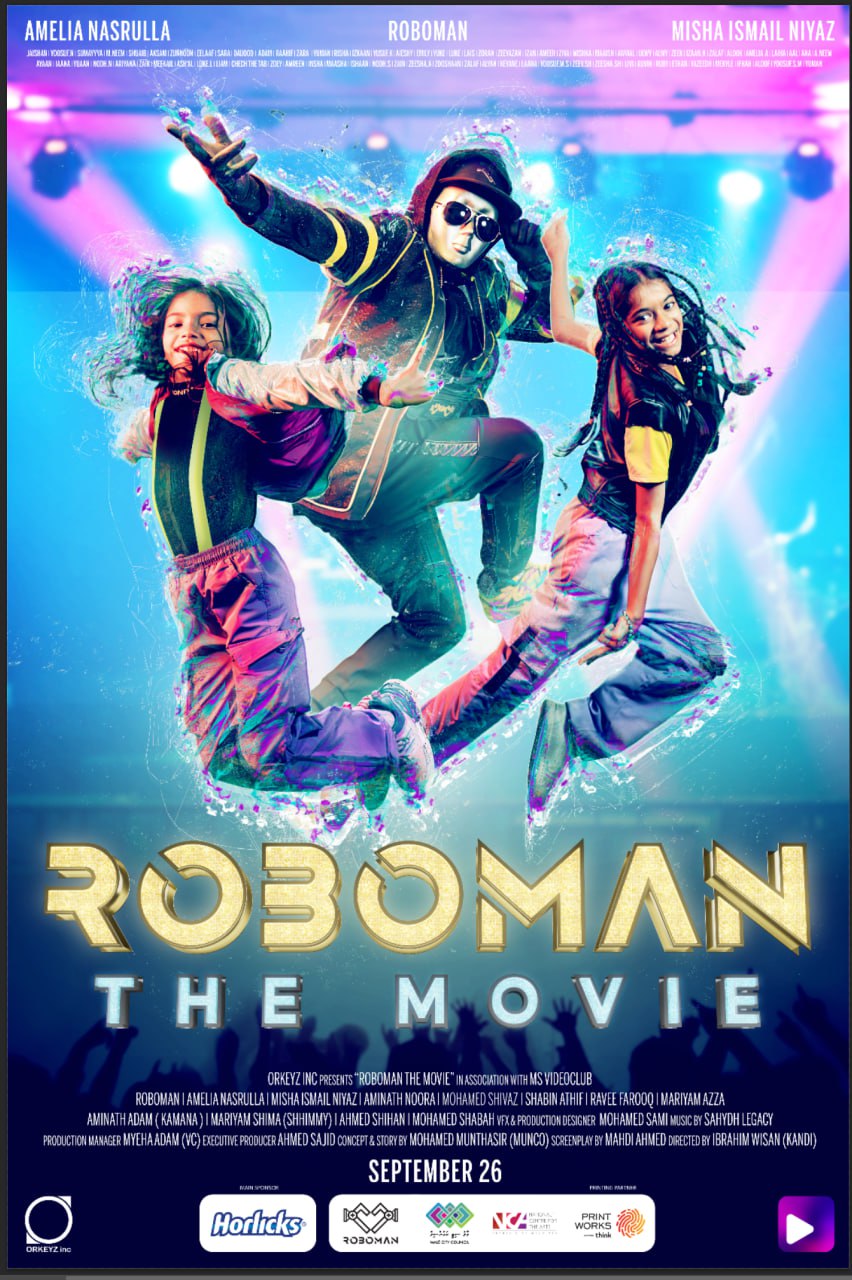
Roboman: The Movie is a family-oriented musical that beautifully blends heartwarming moments, dance, and stunning visual effects with an engaging time-travel narrative. Directed by Ibrahim Wisan and produced by Mohamed Munthasir and Ahmed Saji of Orkeyz Inc., the film is a bold, fresh entry into Dhivehi cinema. With standout performances from newcomers Amelia Nasrulla Shakeeb and Misha Ismail Niyaz, along with breathtaking cinematography and CGI by Mohamed Saami, this film is a cinematic treat for audiences of all ages.
The film begins in 2040, where Roboman, a beloved masked hero and national icon, is living peacefully—until he discovers that his timeline has been drastically altered. His arch-nemesis, Umar, has tampered with the past, specifically the events of 2024 during the finale of the Robo Junior Challenge. Due to this interference, Roboman finds himself labeled a convicted criminal, hunted by the authorities for crimes he didn’t commit. As the police close in, Roboman is forced to use time-travel technology to return to 2024 and stop Umar from rewriting history.
In 2024, the focus shifts to Ahu (played by Amelia) and Asee (played by Misha), two young cousins competing in the Robo Junior Challenge, a prestigious dance competition. Despite being the younger of the two, Ahu is more confident and self-assured. However, as an orphan living with her aunt, she feels the weight of being treated differently by the family. Although Ahu can sense the subtle discrimination, Asee’s unwavering support makes her feel truly part of the family. Ahu, in turn, becomes Asee’s source of strength, giving her the confidence to perform and pursue her dreams.
Unknown to both, their competition is at the center of Umar’s plan to discredit Roboman and shift the narrative of history in his favor.
As the competition unfolds, Roboman races against time to prevent Umar from permanently tarnishing his legacy. Along the way, Ahu and Asee’s journey intersects with Roboman’s, leading to a thrilling climax where friendship, family bonds, and the fate of the future are at stake.
Amelia brings depth and charisma to the role of Ahu, portraying her as a strong, confident young girl who faces discrimination but never lets it break her spirit. Despite being younger than Asee, Ahu is the more assured one, and it’s her quiet strength that inspires her cousin. Amelia’s portrayal of Ahu’s resilience and determination is captivating, particularly in moments where she has to balance her personal struggles with her role as Asee’s emotional anchor. Her dance performances are dynamic, reflecting not just her skill but her internal drive.
Misha excels as Asee, the cousin who struggles with the pressures of competition. While Asee initially lacks the confidence to perform at her best, it’s Ahu who bolsters her and gives her the courage to shine. Misha beautifully captures Asee’s vulnerability and her deep love for Ahu, making their bond one of the emotional highlights of the film.
Roboman (played by the real-life showman) delivers a performance filled with seriousness and mystery. As both the masked hero and the judge of the Robo Junior Challenge, Roboman’s silent yet expressive presence raises the stakes of the story. His dual role in both the present day and 2040 adds urgency and drama to the narrative.
Shabin portrays Umar (both in 2024 and 2040), bringing complexity to the antagonist. His depiction of the younger, bitter Umar highlights his jealousy and ambition, while his portrayal of the older Umar exudes menace and cunning. Shabin’s performances add depth to the film’s villain, making him a worthy adversary to Roboman.
Fathimath Noora and Mohamed Shivaz give strong performances as Asee’s loving parents, grounding the film in relatable family dynamics. However, subtle hints of favoritism toward Asee, despite their love for Ahu, provide an emotional undercurrent to Ahu’s story. Their support of Asee, along with their gradual realization of Ahu’s strength, adds an important layer to the narrative. Sobah and Gobbe, as Akbar and Aton, play Umar’s friends who eventually discover his nefarious plot and decide to help Roboman, adding complexity to their characters.
The film also features a fun cameo by superstars Mariyam Azza and Ravi Farooq as themselves, playing the cool judges of the Robo Junior Challenge, adding an exciting celebrity twist.
Mohamed Saami’s cinematography and visual effects are nothing short of spectacular. His portrayal of a futuristic Malé in 2040 is visually breathtaking. The futuristic scenes, particularly Roboman’s music show and his high-tech apartment with an AI bot, blend seamlessly with the live-action elements. Saami’s dynamic camera angles and fluid motion in the dance sequences add energy and excitement, while the time-travel sequences are handled with precision, making them visually captivating.
The music by Shahyd Legacy perfectly complements the story, enhancing both the emotional and action-packed moments. The soundtrack balances pulsating beats for the dance competition scenes with more poignant melodies for the quieter, introspective moments. Shahyd Legacy’s music drives the film’s energy while also underscoring its emotional depth, particularly during Ahu’s and Asee’s character development arcs.
Production Manager Fathimath Myeha plays a pivotal role in keeping the film on track, from coordinating auditions to managing the complex shooting schedules. Her work behind the scenes ensured that the film’s ambitious goals were met without sacrificing quality.
The production, led by Mohamed Munthasir and Ahmed Saji, demonstrates a clear vision and dedication to pushing the boundaries of Dhivehi cinema. Munthasir’s concept, inspired by the real-life showman Roboman, adds an authentic touch to the film, while Saji’s role in assembling a top-notch technical team ensures that every aspect—from CGI to choreography—meets the highest standards.
Director Ibrahim Wisan expertly handles the ambitious time-travel narrative while keeping the heart of the story grounded in its emotional core. His direction ensures a smooth transition between the futuristic 2040 and the more grounded 2024, maintaining tension and excitement throughout. Wisan’s balance between dance, humor, and heartfelt moments makes Roboman: The Movie an engaging watch for families and young audiences alike.
Roboman: The Movie is a landmark achievement in Dhivehi cinema, offering a unique blend of family-friendly storytelling, visually stunning effects, and emotional depth. With its innovative time-travel plot, strong performances, and heartfelt messages about perseverance, friendship, and family, the film sets a new standard for the Maldivian film industry. It’s a family entertainer you won’t want to miss!




 Mahdi Ahmed