Mahdi Ahmed

Scripting waves of imagination from the sunny side of the Maldives.

Posts from the ‘Movies’ category

IBRAHIM WISAN (KANDI): PAINTING KAN’BULO IN LIGHT AND SHADOW

Fresh off directing last year’s family blockbuster Roboman, Kandi returns to his roots behind the camera — not as a director this time, but as the cinematographer of Kan’bulo. His deep understanding of visual storytelling and how cinematography can shape emotional resonance is on full display here. Kan’bulo is a far cry from the lighter, broader appeal of Roboman. It’s a film rooted in silence, restraint, and emotional nuance. It demands sensitivity over spectacle, and Kandi delivers exactly that.

What makes this collaboration even more meaningful is the history Kandi shares with Hussain Munavvaru, the director of Kan’bulo. Few may know this, but Kandi isn’t just Munavvaru’s close relative — he’s also the one who introduced Munavvaru to the world of cinema. It was Kandi who first handed a teenage Munavvaru a camera, sparking the journey that would eventually lead to Munavvaru’s acclaimed directorial career. Before he helmed his breakout debut Sazaa, Munavvaru began his path through cinematography — a path illuminated by Kandi’s guidance.

For Munavvaru, having Kandi serve as cinematographer on Kan’bulo wasn’t just a professional choice; it was the fulfillment of a long-held creative dream. This collaboration feels like a full-circle moment — mentor and mentee reunited, now as equals, crafting a story that demands precision, empathy, and technical restraint.

Kan’bulo isn’t driven by spectacle. It breathes in small spaces, long silences, and fragile emotional landscapes. Kandi’s cinematography reflects that reality. His camera work is defined by discipline and clarity. There’s no unnecessary flourish — only carefully composed frames that serve the emotional architecture of the film. His use of muted palettes, purposeful lighting, and visual contrast to delineate memory from present tense demonstrates his deep understanding of the psychological demands embedded in the story.

As a screenwriter, my responsibility ends with the words on the page. It’s artists like Kandi who elevate those words into visual poetry — translating silence into space, subtext into shadow, and emotion into light. In Kan’bulo, his lens doesn’t demand attention; it simply exists where it needs to, holding every frame with quiet, deliberate weight. I have no doubt the audience will feel the presence of Kandi’s craft in every frame.

Kan’bulo is set to be released on 31 August 2025.
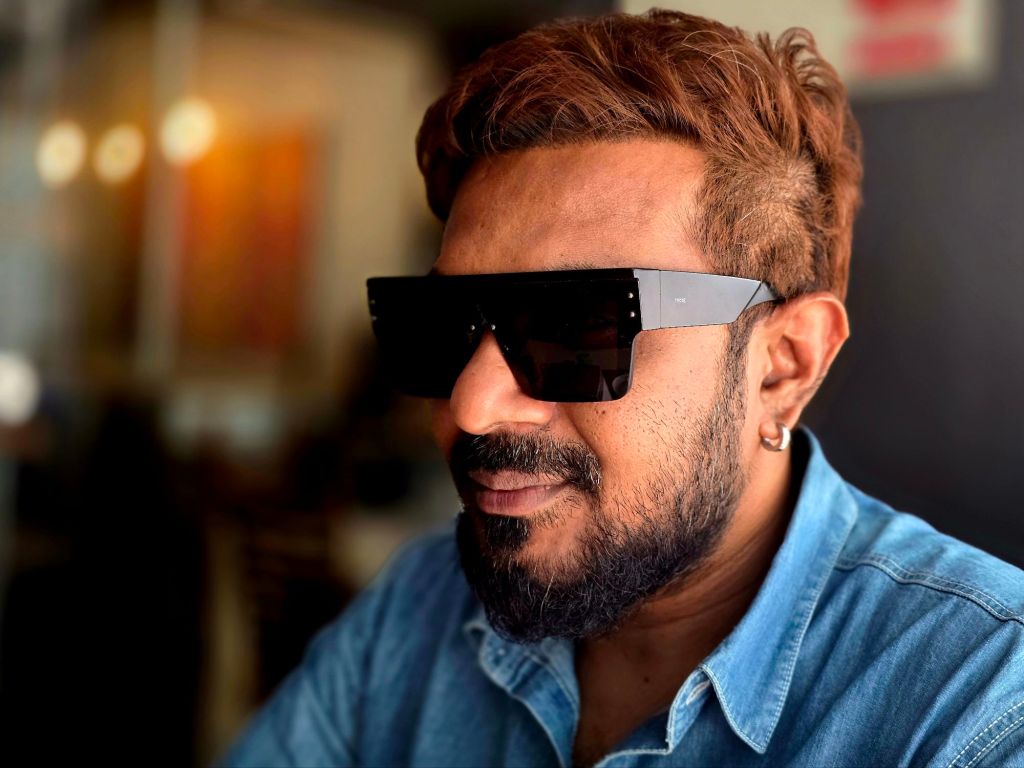
ABDULLA MUAZ (BHAAI): THE ARCHITECT OF KAN’BULO’S FRAGILE NARRATIVE

Post-production isn’t simply where a film comes together — it’s where a film finds its rhythm, its heartbeat, and in the case of Kan’bulo, its delicate sense of emotional balance. Once again, my dear Bhaai, Abdulla Muaz, has proven why he remains a cornerstone of these creative collaborations. His work here is nothing short of masterful.

Having helmed the post-production on last year’s blockbuster Kamanaa, Bhaai was already well-versed in shaping narratives with precision. But Kan’bulo presented a different challenge altogether. This wasn’t about adrenaline or momentum. This was about restraint. This was about holding the audience gently through a narrative that moves between timelines, memory and reality, often with only the subtlest of cues to guide them.

Equally vital to shaping the fractured emotional rhythm of Kan’bulo is Bhaai’s meticulous craftsmanship. His editing serves as the narrative’s silent architect, ensuring that every shift — whether past to present, memory to reality — is not only seamless but emotionally coherent. The audience never feels lost, even as the characters themselves unravel. That clarity isn’t accidental. It’s built, frame by frame, with an editor’s understanding of not just story structure but emotional continuity.

What sets Bhaai apart, as always, is his ability to see beyond the edit. His color grading is subtle yet deliberate, drawing a clear psychological distinction between timelines, anchoring the audience visually even as the narrative blurs. His restrained but effective visual effects work — often invisible by design — provides the transitions the story demands without ever feeling indulgent. Every decision serves the emotional truth of the film.

It’s also worth mentioning that before Bhaai took the reins fully, Ahmed Nimal provided the first rough edit. His early work laid a strong foundation for Bhaai to build upon, ensuring that the heart of the story remained intact as it moved through the complexities of post-production.

Where Kamanaa was about precision in pacing and visual impact, Kan’bulo is about nuance, about finding beauty in silence, about allowing the audience to breathe within the story’s spaces. Bhaai understood this instinctively. His touch is everywhere in this film — not loud, not obvious, but essential. His work has given Kan’bulo its rhythm, its clarity, and above all, its emotional resonance.

As we approach Kan’bulo’s release, I can confidently say that Bhaai’s artistry has once again elevated the material far beyond the page. His dedication, patience, and precision remain an integral part of why this film works as it does.

Kan’bulo is set to be released on 31 August 2025.

KAN’BULO TRAILER CROSSES 1 MILLION VIEWS ON INSTAGRAM IN 15 HOURS!

We just made history.

In just 15 hours, the official trailer of Kan’bulo has reached 1 million views on Instagram — an unprecedented feat for a Maldivian film.

Let that sink in. One million eyes. One million hearts. One million souls who paused, watched, and felt something. That’s not just a number — that’s a wave of belief in our team.

As the screenwriter, I’m overwhelmed with gratitude — to the audience who embraced the trailer with such passion, and to the incredible team behind Kan’bulo who poured their hearts into every beat, every frame, every emotion. From the cast who embodied pain and resilience, to the director, cinematographer, editor, composer, sound designer — everyone showed up with fire.

This moment belongs to all of you. The ones who shared it, commented on it, talked about it, and believed in it. Thank you for proving that Maldivian stories told with honesty and care can connect on this scale.

We see you. We feel your love. And we carry it with us as we move forward.

From our hearts to yours — thank you.

Kan’bulo is set to be released on 31 August 2025

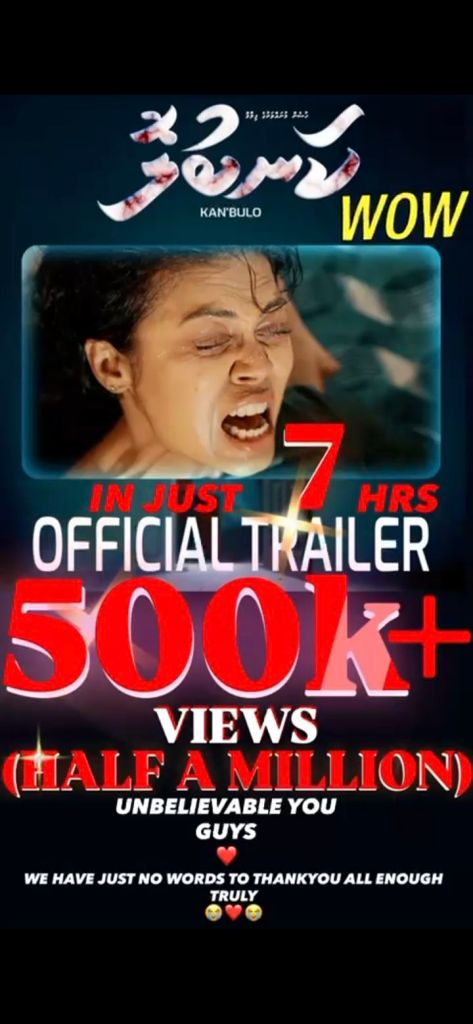
KAN’BULO TRAILER HITS 500K+ VIEWS IN UNDER 7 HOURS

What just happened is something I don’t think any of us expected—at least not this soon.

In less than 7 hours after its release, the official trailer of Kan’bulo has surpassed 500,000 views on Instagram. Let that sink in for a moment. Half a million views. On a Maldivian film trailer.

This isn’t just a number. It’s a milestone. A cultural shift. A reminder that when you tell stories with honesty, when you pour your soul into the writing, the direction, the performances, the design, the edit, the sound, the score—people feel it. And they show up for it.

On behalf of our entire Kan’bulo team, I want to extend my deepest gratitude to every single person who watched, shared, commented, cried, and connected. You’ve amplified our voices beyond anything we imagined. You’ve reminded us why we do what we do.

To be part of this movement—to tell stories that matter, to collaborate with artists who care fiercely about the craft, to witness this kind of response—it’s humbling, and deeply moving.

From the bottom of my heart: thank you. Let’s keep the conversation going.

Kan’bulo is set to be released on 31 August 2025

AHMED IMTHIYAZ (INTHI): THE QUIET POWER OF MUSIC IN KAN’BULO

Music in film isn’t always about melody. Sometimes, it’s about breath. Sometimes, it’s about silence stretched between notes. Sometimes, it’s about the invisible — that emotional frequency humming beneath a scene, pulling the audience deeper without them ever realizing why.

For Kan’bulo, I already knew where we were heading emotionally as we built this film. But knowing and hearing are two very different things. And once again, Ahmed Imthiyaz (Inthi) reminded me why music is one of cinema’s most powerful storytellers.

Having worked with last year’s blockbuster Kamanaa, I expected craftsmanship from Inthi. What I wasn’t prepared for was how intimately he would understand the emotional architecture of Kan’bulo. This isn’t a score designed to be noticed. It’s a score designed to be felt — deeply, quietly, with precision. It knows when to linger. It knows when to disappear.

Where Kamanaa was about desire and longing, Kan’bulo walks a far more fragile emotional terrain. Inthi’s compositions are built with restraint, never intruding on the performances, but carefully stitching themselves into the fabric of the film’s atmosphere. His music doesn’t dramatize pain; it respects it. It doesn’t soften the story; it carries it.

As I listened to the score unfold against the rough cut, I realized how often his music felt like a second heartbeat beneath the protagonist’s silence. These aren’t just tracks layered for effect. They are carefully constructed emotional cues — leading, supporting, reflecting. The synergy between the images and Inthi’s compositions creates a haunting resonance that lingers long after the scenes have passed.

Inthi has proven once again that his talent isn’t in composing music alone; it’s in understanding narrative, pacing, and silence as deeply as any screenwriter or director. His work on Kan’bulo brings an invisible depth to the film, shaping moments without stealing focus.

While audiences will see the faces, hear the words, and follow the story, I know they’ll also carry something quieter with them when they leave — the echo of Inthi’s music, still resonating somewhere beneath their skin.

Kan’bulo is set to be released on 31 August 2025.
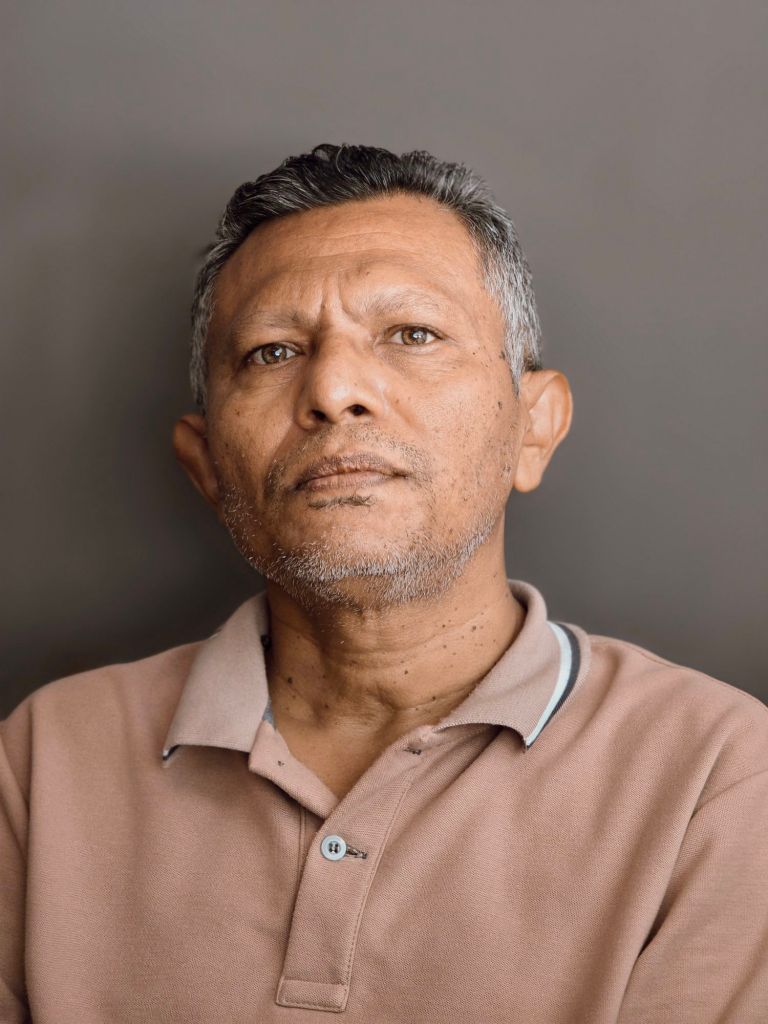
HUSSAIN MUNAWWARU: CRAFTING THE UNSEEN SILENCE OF KAN’BULO

My creative journey with Hussain Munawwaru spans well over a decade. From the brutal realism of Sazaa to the devastating truths of Dhilakani, and more recently the uncomfortable introspection of Kamanaa, our collaborations have always been rooted in a shared commitment to confronting uncomfortable realities through cinema. With Kan’bulo, our fourth project together, Munawwaru’s direction once again proves why he remains one of the most fearless filmmakers working in Dhivehi cinema today.

Kan’bulo began in the wake of Kamanaa’s success — fresh after its theatrical run. Munawwaru handed me a digital copy of Yuktha, the 2009 National Award-winning long story, itself inspired by true events. I finished reading it in a single breathless sitting.

At its core, it was a harrowing account of suffering through the eyes of a 9-year-old. But Munawwaru, in his wisdom and restraint as a responsible storyteller, proposed a crucial shift: the protagonist’s age should be increased to 16 or 17. His reasoning was both artistic and ethical. While Kan’bulo still demands courage from its audience, asking them to endure the discomfort of confronting realities often left unspoken, portraying such trauma through the innocence of a 9-year-old would veer too close to the unbearable for our already conservative audience.

That decision speaks volumes about Munawwaru’s maturity as a filmmaker. He doesn’t flinch from darkness, but he understands the weight of responsibility — knowing when to push, and when to protect. He understands that cinema isn’t just about shock; it’s about resonance. It’s about asking the audience to walk the line with you without turning away in numbness.

What Munawwaru achieves with Kan’bulo is perhaps his most restrained, yet most quietly brutal work to date. Where Kamanaa confronted violence with raw, graphic immediacy, Kan’bulo lingers in the silences. His direction here is defined not by how loudly a scene can speak, but by how deeply it can wound without words. This film doesn’t move on dramatic cues or conventional pacing — it breathes in long pauses, in glances, in the weight of what’s left unsaid. Munawwaru lets the camera observe, unblinking, without interference. In doing so, he allows the audience no escape. They must sit with the discomfort. They must feel the slow erosion of the human spirit unfold.

Technically, Munawwaru continues to refine his visual language — muted palettes, claustrophobic framing, and stillness used as both tension and release. His collaboration with Fai on sound and Inthi on music furthers this precision. But equally vital to shaping the fractured emotional rhythm of Kan’bulo is the meticulous work of Abdulla Muaz, whose editing serves as the narrative’s silent architect. Nothing is there by accident. Every moment feels curated to serve the psychological architecture of the film.

As a screenwriter, I trust few directors to carry the weight of my scripts with the same reverence for subtext and emotional integrity as Munawwaru. He reads beyond dialogue. He listens for what isn’t spoken. He understands that trauma doesn’t always scream; sometimes, it barely whispers. And it’s in that silence where Munawwaru does his most harrowing work.

Kan’bulo is not Kamanaa. It’s a different film with a different pulse. But like every film we’ve created together, it is guided by Munawwaru’s unwavering belief that the stories we tell matter only if they remain true — no matter how difficult they are to watch.

Kan’bulo is set to be released on 31 August 2025.
KAN’BULO: A TRAILER THAT LEAVES NO ROOM FOR ESCAPE

There’s a kind of silence in cinema that isn’t empty. It lingers. It presses down. It forces the audience to confront things they would rather not. With the release of the official trailer for Kan’bulo, that silence now belongs to us.

Watching this trailer unfold, even though I know the story inside out, I found myself holding my breath — not because of what it shows, but because of what it dares to suggest. This is not a film that chases spectacle. It chases truth. And it doesn’t ask for permission.

What strikes me most from a technical and structural perspective is how deliberately the trailer mirrors the film’s emotional architecture. It begins with tenderness, shifts into unease, and descends — not with melodrama, but with precision — into something far more suffocating. Director Hussain Munawwaru’s vision is clear: this is a story about the quiet destruction that happens behind closed doors, the kind of suffering that society often overlooks until it’s too late. The trailer reflects that ethos with restraint, leaving just enough unsaid to force the audience into those uncomfortable gaps.

From the trailer alone, the performances speak volumes, even in fragments. Mariyam Azza, in the titular role of Kan’bulo, carries a haunting vulnerability that’s impossible to look away from. In just a few glimpses, her embodiment of pain, fear, and defiance cuts deep. Sheela Najeeb’s restrained but devastating presence adds a maternal weight that lingers. Ismail Rasheed, with his trademark intensity, dominates his scenes with quiet menace and authority. Ahmed Easa, Wasia Mohamed, Shakeela, and Ahmed Nimal each bring a lived-in truth to their characters — even from these brief moments, you sense the years of pain, resilience, and buried secrets these roles demand. These are not performances built on spectacle; they are performances built on humanity, on raw emotional honesty, and on the quiet devastation of survival.

From a screenwriting standpoint, seeing this trailer gives me a sense of quiet satisfaction — it captures the essence of why I wrote it. Kan’bulo was never about shock value. It was about honesty. About confronting a truth that refuses to stay silent any longer.

And then there’s that ending — the harrowing wail of Kan’bulo’s newborn, piercing through the silence, rising with unbearable weight until it amplifies and collapses into the film’s haunting title. It’s a sound that stays with you, a cry that speaks not only for the newborn but for every unspeakable pain that has been buried beneath silence. The final post-title shot, with Kan’bulo weeping, her voice breaking as she cries out to her father in the background, “I would never sin,” leaves no doubt about the depths this story is prepared to explore. It’s a moment not designed for shock, but for reflection — and it lands with devastating clarity.

I believe this trailer has done exactly what it needed to do. It doesn’t offer easy answers. It invites questions. And it demands we listen — even when it’s uncomfortable. Because some stories don’t shout to be heard. Some stories whisper… and leave us haunted.

Kan’bulo is set to release on 31 August 2025

MOHAMED FAISAL (FAI): THE SOUND BENEATH THE SILENCE OF KAN’BULO

In cinema, sound isn’t simply heard — it’s felt. It guides the audience’s breath, sharpens their senses, and often tells the story in ways no image can. Once again, I’m privileged to witness the genius of Mohamed Faisal (Fai), the sound designer behind last year’s blockbuster Kamanaa, as he returns to craft the soundscape for Kan’bulo.

Kan’bulo demands a very different kind of auditory world than Kamanaa. Where Kamanaa was driven by tension and unspoken desire, Kan’bulo is a story that breathes through silence, restraint, and emotional undercurrent. It’s not about noise — it’s about what remains when noise falls away. And this is where Fai excels. He understands that in a film like this, sound is not decoration — it’s atmosphere, it’s memory, it’s trauma.

Fai approaches sound design like a screenwriter approaches subtext. It’s about what’s beneath the surface. His work on Kan’bulo is precise, intentional, and deeply connected to the emotional landscape of the characters. From ambient textures that create unease to the softest moments of isolation and tenderness, his choices enhance the narrative without overshadowing it. His sound is a companion to the story’s silence — sometimes filling it, sometimes deepening it.

What sets Fai apart, once again, is his commitment to ensuring that sound doesn’t merely accompany the film but interacts with it. He designs with emotion in mind, sculpting spaces where the audience is pulled deeper into the psychological states of the characters without even realizing it. This isn’t sound that demands attention; this is sound that shapes experience.

Working again with the advanced surround sound system at Olympus Theatre, Fai continues to push the boundaries of what’s possible in Dhivehi cinema. His dedication to elevating the technical craft of our industry is matched only by his instinct for storytelling. He understands that sound, at its best, is invisible but unforgettable.

As we prepare for Kan’bulo’s release, I am once again reminded that a story’s impact isn’t just what’s seen on screen — it’s also what lingers in the silence after the credits roll. With Fai behind the sound, I have no doubt the audience will feel every moment, even long after they’ve left the theatre.

Kan’bulo is set to be released on 31 August 2025.

MARIYAM AZZA: BECOMING KAN’BULO

As a screenwriter, you live inside your characters long before anyone else does. You know their breath, their silences, their breaking points. You hear their words before they’re spoken — and sometimes, you wonder if any actor can truly become what you’ve imagined.

But then—fresh off two back-to-back blockbusters—superstar Mariyam Azza steps into the skin of Kan’bulo. The rest, as they say, is history.

Having just watched a rough cut of Kan’bulo, I’m still struggling to find words that match what I witnessed. Azza doesn’t just play Kan’bulo — she becomes her. Frame after frame, she dissolves into this underage girl confronting unthinkable suffering far beyond her years. It’s not just a performance — it’s a haunting possession of pain, fear, shame, defiance, and above all… truth.

From the first page of the script, I knew this character demanded an actor who could navigate delicate psychological territory with absolute control. There were moments with no dialogue, only silence and stillness — and Azza delivered them with quiet ferocity. Every micro-expression — a quiver in the jaw, a distant gaze, the way her shoulders drop when no one’s looking — landed exactly where I wrote it… and often, better than I wrote it.

She doesn’t overplay trauma. She doesn’t seek your sympathy. Instead, she does what great actors do — she makes you feel everything without asking for your permission.

What Azza achieves in Kan’bulo is an evolution from her phenomenal performance in Kamanaa. That film showed her range. Kan’bulo reveals her depth. She dives into raw emotional states and emerges with something painfully beautiful.

There’s a heartbreaking scene deep in the third act — one of the emotional pivots of the entire film — where the past comes crashing into the present, forcing Kan’bulo to confront something she had long buried. It’s a moment of reckoning, of raw realization, and watching Azza deliver it left me breathless. The way she processes that tidal wave of guilt, confusion, and heartbreak — without a single false note — was nothing short of extraordinary. A single glance, a stifled breath, the trembling silence between her words… she made that scene hurt. And in doing so, she elevated a page I had wrestled with for weeks into something that now feels unforgettable.

It’s rare for a screenwriter to feel seen — word for word, emotion for emotion. But Mariyam Azza saw Kan’bulo. And through her, I believe the world will too.

Kan’bulo is set to be released on 31 August 2025.
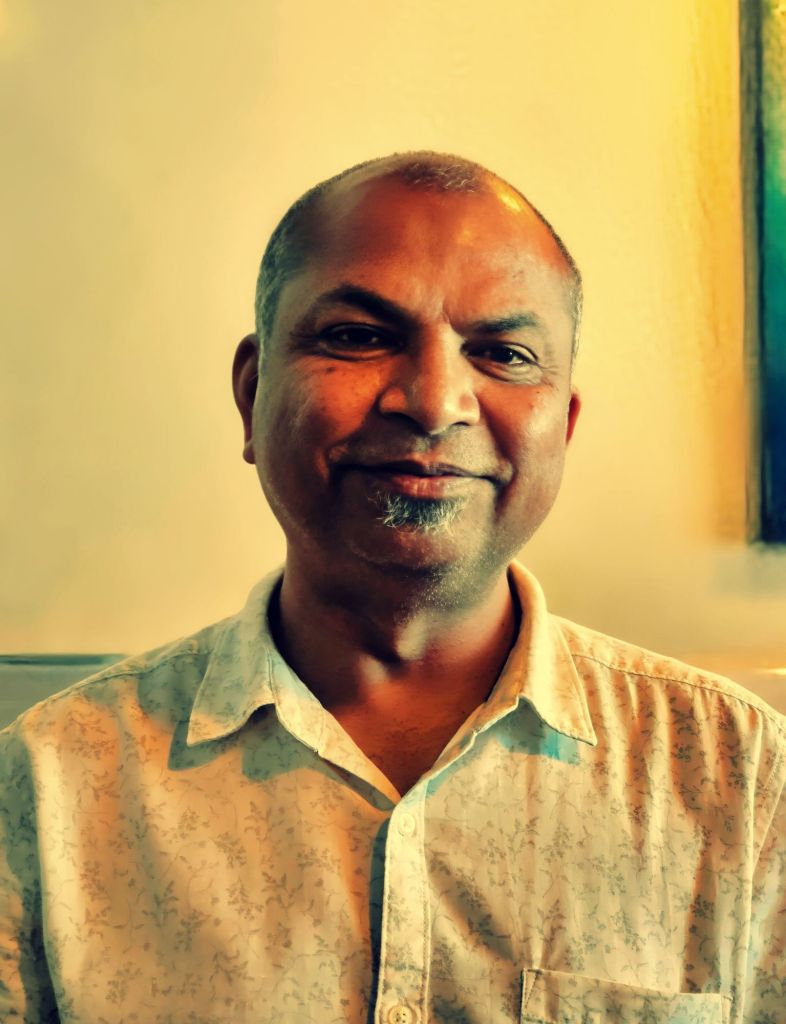
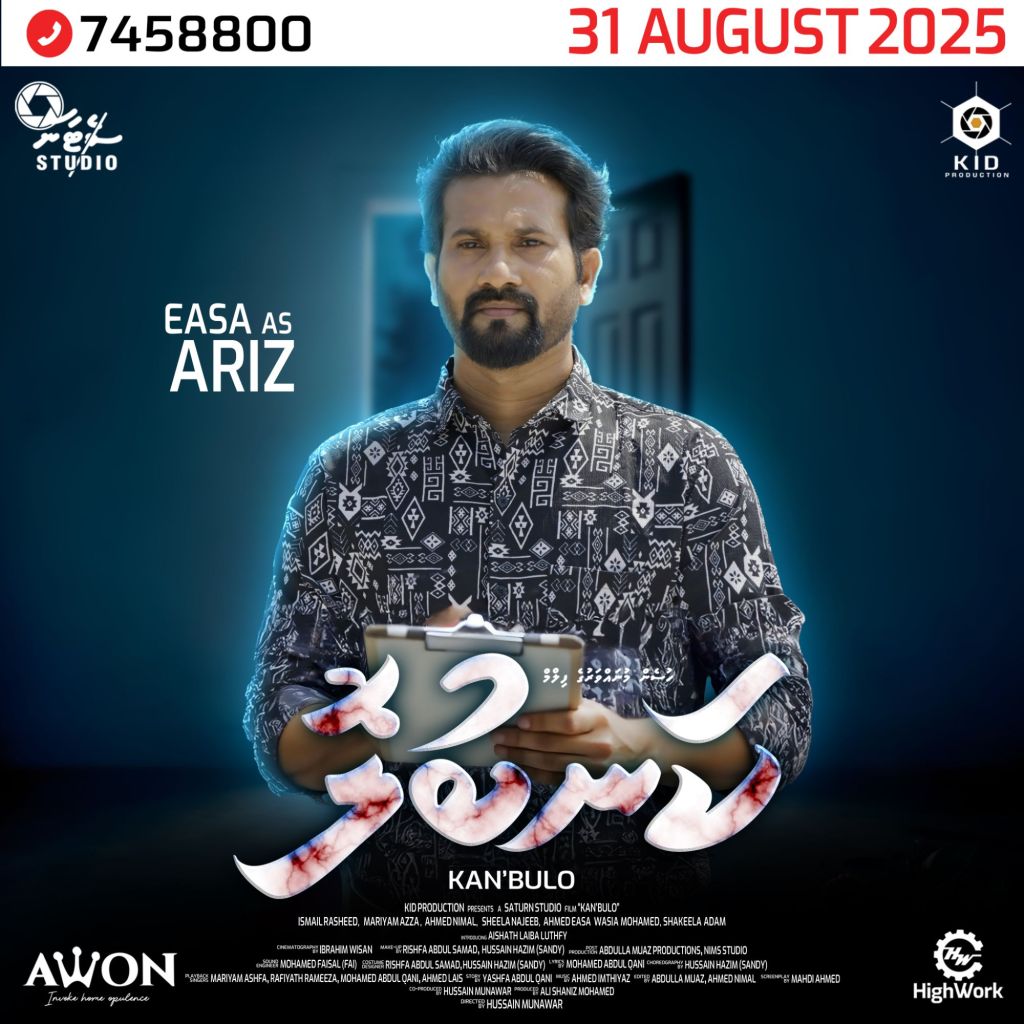
AHMED EASA: THE QUIET STORM BEHIND ARIZ

As a screenwriter, you sometimes write a character who speaks more through silence than words—whose weight lies not in dialogue, but in what’s left unsaid. Ariz was one of those characters. A man pieced together by betrayal and the cautious rediscovery of love, Ariz required not just performance, but restraint. And Ahmed Easa, in my view, is one of the few actors in this industry who could have walked that emotional tightrope without tipping into melodrama.

Easa is, without question, the most underrated actor working today. But that’s precisely because he never overreaches. He underplays. He listens. He breathes between lines. He reacts like a man carrying history—and that’s exactly what Ariz was written to be.

What moved me most was his complete commitment. For the flashback sequences, he physically transformed himself to portray a younger, more hopeful Ariz. It wasn’t for vanity or surface-level impact—it was to truthfully embody a man suspended between two timelines: one touched by innocence, the other haunted by betrayal.

When we watched the rough cut, there were moments where Easa didn’t move a muscle—yet he conveyed everything I had written in subtext. That’s rare. That’s craft.

I’ve written roles for many performers over the years. But with Ahmed Easa, I experienced what every screenwriter dreams of: the feeling that someone out there truly read between the lines.

If Kan’bulo manages to break hearts, much of it will be because of the man who stood quietly at the center of it all.

Kan’bulo is set to release on 31 August 2025.