Mahdi Ahmed

Scripting waves of imagination from the sunny side of the Maldives.

Posts from the ‘Movies’ category

THE YEAR ENDED IN SILENCE

Before anything else, 2025 asked for silence.

On 30th December 2025, the industry lost Abdul Faththaah—producer, director, and one of the quiet pillars of Maldivian cinema.

Some losses announce themselves with chaos. This one arrived like a power cut. No warning. No drama. Just the sudden absence of light. You keep standing in the same room, touching the same walls, but something essential is gone.

May Allah grant Fatthaah eternal peace.

His passing drained the end of the year of its usual noise. Celebration felt misplaced. Reflection became unavoidable. Silence felt earned. It was a reminder—too sharp, too final—that time does not wait for postponed calls, delayed meetings, or films we casually assume we will make “one day.”

As the calendar turned, the new year began on another quiet, heavy note. News came that a fellow legend of our film industry had been taken to the ICU, his condition critical. It was a sobering reminder that even as time moves forward, fragility moves with it. I pray for his recovery—for strength, mercy, and a return to light.

I begin this reflection here because anything else would feel dishonest.

Some years arrive with applause.

This one lowered its voice first.

I didn’t shout much last year.

But I wrote. And that, for me, is the loudest thing.

2025 was not about one big film, one viral moment, or one shiny headline. It was about showing up to the page—again and again—even when life, health scares, deadlines, family responsibilities, and plain old fatigue tried to steal the chair from under me.

Last year, I completed multiple screenplays. Some long. Some short. Some painfully intimate. Some deceptively simple. A few made me laugh while writing. A few made me stop and stare at the wall for longer than I care to admit.

What changed last year was intent.

I found myself writing more quietly—but with sharper clarity. Less noise. Fewer clever tricks. More listening. More restraint. I trusted pauses. I trusted silence. I trusted children’s voices to carry adult pain. I trusted emotion without explaining it to death.

I also noticed something else:

I no longer wrote to prove anything.

After three decades in this industry, that feels like progress.

Some stories last year leaned into family—fragile homes held together by routine, love, and denial. Some explored absence, illness, addiction, separation, memory. Some surprised me by becoming lighter than planned, as if the characters themselves needed a laugh before the storm.

I let them have it.

I also pushed myself formally—structure, rhythm, economy. I trimmed indulgence. I fought the urge to overwrite. I allowed scenes to breathe, and when they refused, I let them suffocate honestly. That mattered.

Not everything I wrote last year was made.

That’s fine.

A screenplay doesn’t fail because it waits. Some of them are just resting.

Personally, 2025 reminded me why I started writing in the first place—not for awards, not for validation, not even for release days—but because writing helps me remember what time does to us, and what we try to protect while it does its work.

And then, quietly—almost politely—Kamanaa walked into the room with a reminder.

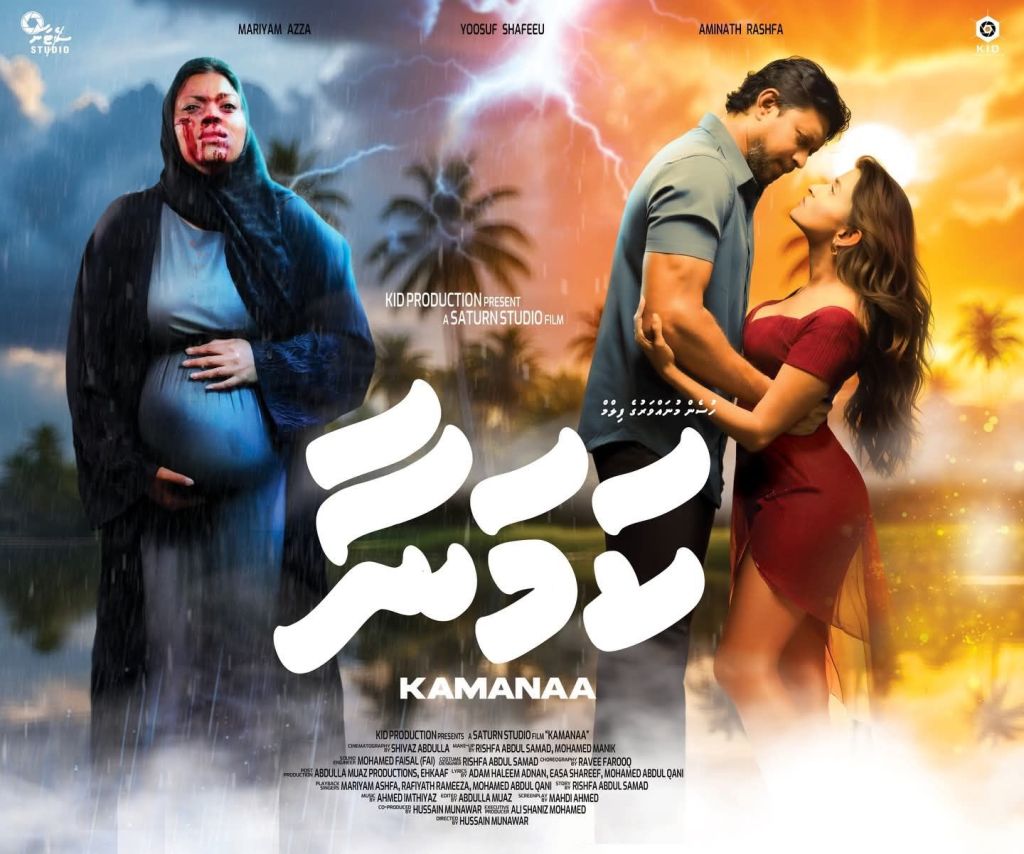
On 28th December 2025, at the 5th Karnatakaa International Film Festival, the film was honoured with Best Director for Hussain Munawwar, Best Actor for Yousuf Shafeeu, and Best Actress for Mariyam Azza.

No fireworks. No victory laps. Just that calm, grounding moment when you realise the quiet work was heard.

Kamanaa was written in the same spirit that defined my year—restraint over noise, emotion over explanation, trust over tricks. Watching it travel, and watching its director and actors be recognised for carrying that honesty, felt less like a win and more like a gentle nod from the universe: keep going.

Awards don’t change why I write. But they do remind me that silence, when shaped well, can travel far.

And that’s a good way to end a year.

Looking ahead to 2026, I don’t feel excitement as much as I feel awareness.

Time feels closer now. Louder, even in silence.

There are stories waiting—some unfinished, some only half-formed—but I’m more conscious than ever that writing them is not guaranteed. It is borrowed time. A privilege that can disappear without announcement.

I hope to write with more courage, yes—but also with more urgency. To make fewer assumptions about tomorrows. To finish conversations while they are still possible. To leave less unsaid on the page and off it.

2025 didn’t end with closure. It ended with a pause.

And perhaps that is what it offered me: the reminder that silence is not empty— it is time passing.

I step into the new year carrying that knowledge.

Quieter.

More careful.

Still writing.

Onward.

Happy New Year!
BEYOND THE FRAME, BEYOND THE FILM

Today, Maldivian cinema lost a giant.

And I lost someone who quietly, decisively shaped the writer I became.

Abdul Fatthaah was many things — a director, a producer, an editor, a storyteller.

But to me, he was something rarer.

He was someone who trusted writers.

I admired his work long before I worked with him. His films had heart. Restraint. Courage. They didn’t shout at you — they stayed with you.

When I finally had the privilege of working with him, I realised something important:
Faththaah didn’t direct from fear.

He directed from clarity.

That clarity changed my life during Hinithunvelaashey Kalaa, the 52-episode TVM drama that went on to become a national sensation. It entered homes. Conversations. Memories. People still talk about it.

But for me, its greatest impact wasn’t public.

It was deeply personal.

For the first time in my life, a director allowed me to write as freely as a writer possibly can.

No constant corrections.

No fear-driven notes.

No creative handcuffs.

Just trust.

That kind of freedom is rare. And when it’s given at the right moment, it can change everything.

That series didn’t just shape my career.

It made me the writer I am today.

Faththaah understood something many never do — that strong direction doesn’t mean control. It means knowing when to guide… and when to step back. He had an instinctive respect for writers, actors, and technicians. He listened. He observed. Then he guided — gently, but firmly.

Whether it was Himeyn Dhuniye, Vehey Vaarey Therein, Hahdhu, or his television works, his stories always carried empathy. He approached sensitive themes with courage, but never without dignity. He wasn’t chasing noise. He was chasing truth.

Beyond cinema, he cared about society. About people. About responsibility. You could feel that — not just in the stories he told, but in the way he treated those around him.

Some people influence your journey.

Others define it.

Abdul Faththaah defined mine.

I will always be grateful — not just for the opportunities, but for the belief. For seeing the writer before the writer fully believed in himself. For trusting me at my most vulnerable creative stage.

To his family — your loss is beyond words. But please know this: his legacy lives far beyond awards or filmographies. It lives in the writers he trusted, the actors he shaped, and the countless lives his stories touched.

He mattered.

Deeply.

And he will never be forgotten.

Thank you, Faththaah.

For the trust.

For the freedom.

For everything.

Rest in peace, Buddy.

KAMANAA WINS BIG

Some days quietly remind you why cinema matters. Today was one of those days.

Kamanaa walked away with three major awards at the Karnatakaa International Film Festival 2025, and I couldn’t be prouder.

Best Director — Hussain Munawwar

Best Actor — Yousuf Shafeeu

Best Actress — Mariyam Azza

This isn’t just a list of trophies. It’s recognition for quiet courage, honest storytelling, and performances that didn’t beg for applause—but earned it anyway.

Munawwaru directed Kamanaa with restraint and confidence, trusting silence as much as dialogue. Yousuf Shafeeu delivered a performance that feels lived-in, not performed. And Azza—what can I say—she carried emotional weight with a grace that lingers long after the screen goes dark.

For Maldivian cinema, moments like this matter. Not because we chase validation, but because stories born in our small islands are finding resonance far beyond our shores.

Today, Kamanaa spoke—and the world listened.

Grateful. Proud. And quietly smiling.

LOKAH CHAPTER 1: A NEON DREAM, A MYTH REBORN

If you’re reading this, you already know — I only write about films I love. And oh, boy, did I love Lokah Chapter 1: Chandra.

Let’s start with this: Lokah is ambitious. The kind of ambition that makes a producer both terrified and deeply impressed. It’s one of those “historic, colossal, echoing commercial flop” risks that somehow didn’t flop — because every rupee of that ambition is right there on screen. Hats off to producer Dulquer Salmaan and director Dominic Arun. They didn’t just swing for the fences; they built an entirely new stadium out of folklore, neon, and sheer audacity.

For a Malayalam film, the technical brilliance isn’t just “good.” It’s jaw-dropping. Nimish Ravi’s cinematography turns Bengaluru into a rain-slicked cyberpunk fever dream. The VFX? Seamless. Jakes Bejoy’s score? An electrifying, myth-soaked pulse that doesn’t just accompany scenes — it devours them. It looks and sounds like a 100-crore film, and it feels like a benchmark for what Malayalam cinema can be.

Now, I’ve seen the hot takes. “It’s all setup.” “The plot’s thin.” “It’s just a Chapter One.”

As a screenwriter, I say: Exactly. That’s the brilliance.

We’ve been spoon-fed tidy, three-act comfort-food stories for so long that we’ve forgotten the thrill of a real saga beginning to unfold. Lokah isn’t incomplete; it’s deliberately patient. It’s the cinematic equivalent of the first hundred pages of a dense fantasy epic — a world-building overture that trusts the audience to lean in and connect the dots.

The organ-trafficking plot? That’s not the story — that’s the ignition. The simple thread that drags us into a dense, mythic world. It gives Chandra (Kalyani Priyadarshan) something to punch — and she does, with elegance and raw ferocity.

And speaking of her — what a performance. Kalyani’s quiet, internal portrayal is the definition of “less is more.” She’s not emotionless; she’s anciently tired. You can see the centuries in her silence. That’s a hard thing to play — and a harder thing to appreciate if you’re scrolling your phone between scenes. But for those of us who watch, it’s a treat.

As a filmmaker, I wasn’t just impressed by Lokah — I was envious. It’s bold, beautiful, and unapologetically itself.

Lokah Chapter 1 doesn’t just raise the bar — it redraws it with fire and neon. This is the kind of cinema that reminds me why I fell in love with movies in the first place.

A must-see.

PS. Turning those narrative moments into living comic panels, that wasn’t just style. That was storytelling evolution — smart, gutsy, and perfectly executed. More of that, please.

3 NOVEMBER — A PERSONAL RETELLING

A personal recollection of the 1988 coup — and how it became a story I had to tell.

It started with a bang.

I was still half asleep in Colombo when my Sri Lankan landlady burst into my room and shouted,

“Maldives has been attacked!”

For a moment, I thought I was dreaming. But her voice had that tremor people get when the world suddenly tilts.

Back then, social media wasn’t even a dream, and the internet was just a rumor from another planet. Communication was fragile and expensive — one cut cable, one dead line, and a nation could vanish into silence.

That morning, the telephone lines to the Maldives went dead. Every few minutes, I twisted the dial on my FM radio, trying to catch Voice of Maldives — the station where my mother was an anchor.

Normally, even through weak signals, I could recognize the rhythm of home: the calm, familiar tone of the announcers — especially hers — and a song fading gently in and out.

But that day, there was only static. A haunting, endless static.

It felt like the country itself had been swallowed by it. That feeling — helplessness mixed with fear — stayed with me.

Fourteen years later, in 2002, I turned that memory into a story.

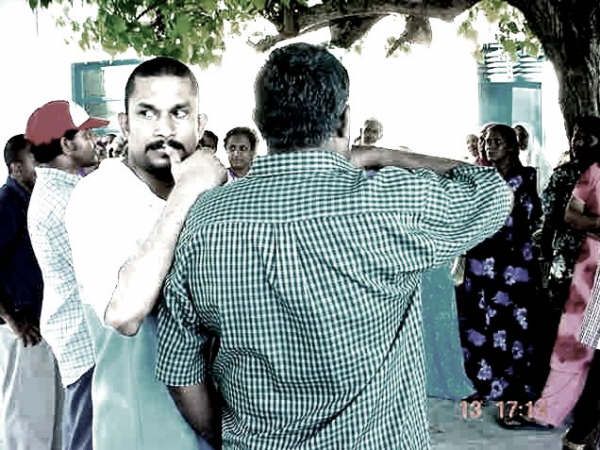
Representing the Ministry of Atolls Administration, I wrote and directed a TV drama for the TVM Office Teledrama Competition.

But I didn’t want to tell the story from the frontlines of Malé. I wanted to tell it from the edges — from a remote island where the only connection to the world was rumor and radio.

The story followed Arif (Ali Waheed), a banished drug addict from Malé, serving his term in that island. Beneath his rebellion and defiance lay a lifetime of unresolved pain — an unhealed wound from his father, Sattar (Mohamed Asif).

When the coup unfolds, and communication with Malé is cut off, Arif’s fear for his estranged father becomes the story’s emotional heartbeat. The thought that something might have happened to the man he both hated and missed forces him to confront what he’s been running from all along.

The drama opened the same way that morning had begun for me — Jameel (the late Mohamed Saleem), Arif’s caretaker, twisting the radio dial, searching for a voice in the static.

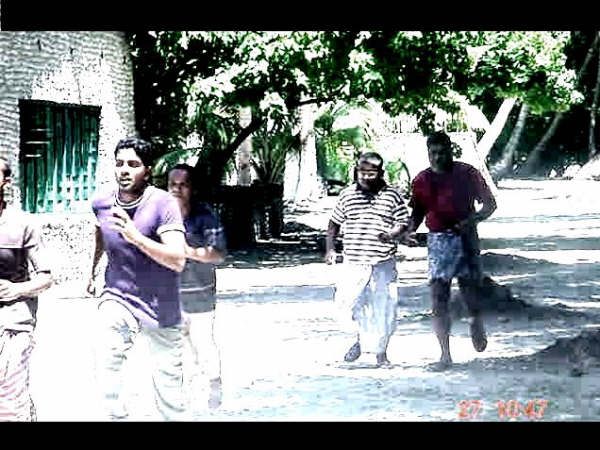
As Jameel, Arif, and their co-workers debated over the silent radio, someone ran through the forest shouting,

“Malé has been taken over!”

The island erupted in fear.

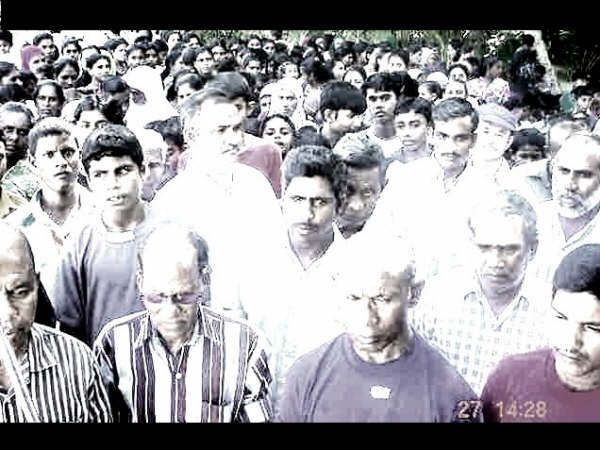
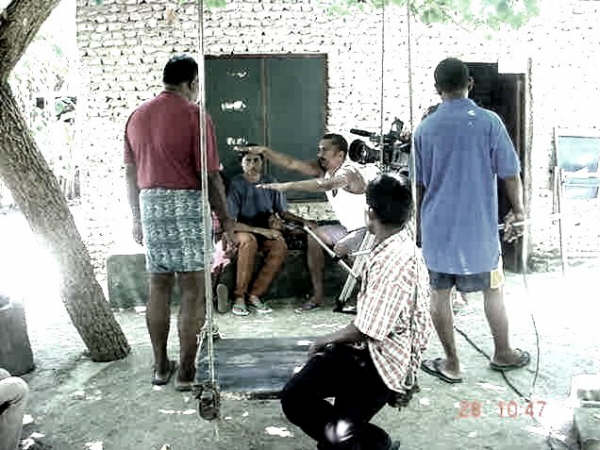
That scene was the most logistically challenging I’ve ever shot. My cinematographer, Abdul Latheef, and I spent a week planning every frame — the crane shots, crowd movements, and pure, unfiltered chaos.

We shot on a Friday, when most islanders were home. We started wide and ended close, knowing our extras’ patience would fade before our energy did. By the time we wrapped, half the crowd had gone home — but the emotion stayed raw and real.

It remains one of my favorite sequences I’ve ever directed.

And I didn’t create it alone.

The late Mohamed Saleem was my compass. He wasn’t just an actor — he was part of that history. On the day of the coup, he was serving in the NSS (now MNDF) and had been taken captive by the mercenaries.

His firsthand memories shaped the script. He helped me understand the fear, the sound, the silence.

When Saleem looked at that radio, he wasn’t acting — he was remembering.

Before filming, I studied every account I could find. But what truly shaped the drama was a three-hour home video my brother-in-law had filmed in Malé during the coup.

He recorded everything — crowds, panic, prayers, and the pulse of a nation on edge. That tape became my time machine.

Later in the story, Arif rushes to a group of islanders gathered around a radio. He tunes until he catches a faint Voice of America broadcast. The crowd leans in as he translates:

“The capital is under attack. The President and his cabinet have been captured.”

That moment wasn’t fiction — it used real audio from that same tape. Every crackle of static, every tremble in the voice, untouched.

From that tape, I also recreated scenes of panic — islanders queuing at shops, buying rice and tinned food, preparing for an uncertain tomorrow.

The next morning, in real life, I was still in Colombo when the radio came alive again.

And then I heard it.

My mother’s voice.

Through that fragile frequency, she announced that the mercenaries had fled — that the country was safe. Her voice trembled with exhaustion and relief.

I’ll never forget that sound.

In the drama, Arif wakes to the same moment. The radio hums softly with a Qur’an recitation, the same surah that played before my mother’s real-life announcement. Then — the words of salvation.

What followed was a montage of joy — children running, flags raised, laughter through tears. My small tribute to the kind of humanity Michael Bay often captures after chaos.

But one voice was still missing.

I wanted to include the President’s full post-victory speech — the one broadcast right after calm returned. Finding it became a mission.

I searched archives, old offices, and friends — until my brother-in-law’s brother found a copy.

At first, I planned to use only a few seconds. But during post-production, I realized it wasn’t just a speech. It was the sound of a nation breathing again.

I used the entire address, layering it over visuals of people listening on radios — at communal spots, verandahs, and corners. Faces in awe. Faces in prayer. Faces in gratitude.

In the final scene, a worried Arif, unable to contact his family, watches locals playing football. Jameel calls out to him.

“Arif!”

Arif turns.

Jameel and his friends step aside.

And there — in the center of the frame — stands Sattar, his father.

No dialogue. No explanation.
Just two men — broken, and finally whole.

It remains one of the most honest endings I’ve ever filmed.

The drama went on to win Best Director, and on most 3rd Novembers, TVM re-runs it.

For me, 3rd November is not just a celebration of triumph. It’s the sound of static turning into a heartbeat. It’s Saleem’s trembling hands on a radio dial. It’s the voice of a mother breaking through fear. It’s the moment a nation — terrified, disconnected, but unbroken — found its voice again.

Because sometimes, history doesn’t begin with silence. It begins with a bang.

KAN’BULO: WHEN SILENCE BECAME THE LOUDEST VOICE

Last night, Kan’bulo completed its historic run at Olympus — 52 housefull shows. The first Dhivehi film ever to achieve such a milestone. Sitting with that number, I don’t just feel pride, I feel a deep sense of gratitude. For me, this journey has never been about breaking records. It has always been about reaching hearts. And knowing that so many people stepped into Kan’bulo’s world, carried her pain, and walked out changed — that’s the real triumph.

When I began writing Kan’bulo, I told myself this couldn’t simply be another screenplay. It had to be a lived experience. I wanted every silence, every breath, every hesitation on the page to pull the audience into Kan’bulo’s skin. I didn’t want them to merely watch her story unfold. I wanted them to breathe with her, to ache with her, to hold her fear as if it were their own.

This demanded restraint. It is easy for a writer to fall into the trap of overexplaining, to wrap emotion in too many words. But Kan’bulo taught me the power of what remains unsaid. The silences became my dialogue. And in those silences, the audience leaned closer, feeling more than words could ever spell out.

The shell motif will always remain the heart of my writing journey in this film. In that moment where Kan’bulo tries to cast her half of the shell into the sea, all hope gone — Ariz stops her, placing his half upon hers. That single gesture carried the weight of volumes of dialogue I could have written. But instead, silence filled the hall. A silence so profound that it became shared, collective, almost sacred. I remember sitting in the cinema, watching the audience hold their breath with me, and I knew then — the silence had spoken.

Structurally, the screenplay was written with a clear emotional trajectory: the simmer, the boil, and then the eruption. The pacing isn’t accidental. Every scene builds incrementally, creating pressure just beneath the surface until it inevitably breaks. That breaking point — the climax — is where craft and emotion converge. It’s not spectacle for the sake of shock, but catharsis in the truest Aristotelian sense: the purging of emotion, not only for Kan’bulo, but for the audience who has carried her burdens alongside her.

But none of this would have been possible if the words had stayed on paper. My deepest gratitude goes to Hussain Munavvar, who entrusted me with the chance to write this screenplay and then carried it to the screen with vision and courage. To every single member of the cast and crew — you gave my pages flesh, blood, and heartbeat. You transformed silence into cinema, and for that, I am forever thankful.

As I look back now, what stays with me isn’t just the record of 52 housefull shows. It’s the hope that every Kan’bulo out there — every girl who suffers in silence, every soul who feels unseen — will be given the protection, dignity, and safety they deserve. Stories can open eyes, but it is our duty as a society to open our arms.

To me, Kan’bulo will never just be a film. It will always be a promise — that no girl should ever have to carry such burdens alone.

THODDOO, 26 YEARS LATER

I arrived in Thoddoo this evening for a very different reason than my first visit here. My son’s academy is playing in a football tournament, and I came as a parent in the stands, cheering for him. But my mind can’t help but travel back 26 years to 1999, when I first set foot on this island.

Back then, I wasn’t here for sports. I had just been transferred to the Ministry of Atolls Administration, and that year the Ministry decided to take part in TVM’s Office Teledrama competition—a Ramadan tradition that was quite popular. The previous year’s entry from the Atolls didn’t land well, so the responsibility fell on me to write and direct the new one. That’s how Thauba (Atonement) was born.

It was the story of a simple island girl whose one mistake spirals her life into chaos, drowning her in shame and straining her bond with her father. A straightforward tale, but with enough emotional weight to test TVM’s broadcasting codes. Thankfully, it aired the way I envisioned, though years later I saw a re-run that had been chopped mercilessly.

Since the drama was set on an island, choosing a location was easy—after all, the Ministry oversaw them all. But fate pointed me toward Thoddoo. One of my colleagues was from here, and he became my guide, suggesting locations as I wrote and later serving as project manager. That was how I first arrived in Thoddoo.

I don’t recall all the exact places we filmed, but certain images stay vivid. A rainy-night scene where the girl wakes from a nightmare, stepping out into the downpour as if to cleanse her sins—it was shot in the backyard of a local house.

Another unforgettable shoot was the nightmare sequence surrounded by fire. We staged it in a wide open ground, taking every safety precaution. Even so, the smoke was too much—the actress, who suffered from asthma, fainted and had to be rushed to the health center. I sometimes wonder if that ground was the football field I now walk past.

Despite these challenges, Thauba went on to win Best Drama that year. The late Hajja Mohamed, who played the girl, won Best Actress runner-up. Many of the cast and crew who made that teledrama possible are no longer with us—Hajja, Mohamed Saleem (Umbe), Ahmed Saeed. They were the backbone of the Atolls dramas. May they all rest in peace.

So yes, being here again feels oddly comforting. I may not remember every street or backyard, but I do remember that a story we shot here once carried weight, stirred emotions, and even made history in its own little way. Today, I return as a father, with different emotions but the same sense of gratitude to Thoddoo.

SAIYAARA (2025) – A LYRICAL REFLECTION ON LOVE, MEMORY AND TIME

Some films don’t rush to dazzle you; they quietly earn your trust, then break your heart—gently. Saiyaara is that kind of romance. Structurally, it’s a clean three-act glide, anchored by an early motif—a diary—that threads private feeling into shared experience. Without giving anything away, the film treats time and memory like tides: always moving, sometimes generous, sometimes unforgiving. You sense it more than you “spot” it.

What gives the film its beating heart is not perfection, but fracture. Vaani enters the story carrying the sting of betrayal—her trust shattered at the very moment she expected stability. Krish, on the other hand, is marked by angst and distance, shaped by an uneasy relationship with his father. They meet carrying these quiet wounds, and the romance doesn’t erase them; it begins with healing. Their brokenness is the foundation, their small acts of mending the mortar. That’s why their love feels earned rather than scripted.

Casting fresh faces in a big-hearted romance is a risk that pays off. Ahaan Panday as Krish and Aneet Padda as Vaani bring unvarnished innocence, chemistry that feels observed rather than engineered. Their performances turn first love into something lived-in rather than lab-grown. This feels like the true launchpad of their careers, and you can see why.

Director Mohit Suri shoots the film with an ear for music and an eye for youth. His grammar has always been songs as story, not interruptions, and Saiyaara leans into this conviction. You don’t wait for the music here—you ride it. The lyrics often function as dialogue, filling spaces that words alone can’t.

From a writer’s chair, what impresses most is the use of plot devices with quiet precision. A personal belonging becomes an emotional compass. A chance encounter propels the story without feeling contrived. Minor misplacements and slips are gentle foreshadowing, never telegraphed. And a parallel family subplot mirrors the central romance, echoing bigger questions of love, silence, and expression. These devices never draw attention to themselves; they act as invisible scaffolding, holding up the emotional architecture.

Last night, I watched Saiyaara on Netflix with my wife—my muse, my first reader, my fiercest critic. And here’s the thing: we didn’t just tear up at the end. No, we cried almost through the entire duration of the movie. We turned into two people locked in a tear-wiping competition. If a tissue box had been nearby, dozens wouldn’t have been enough—we’d have needed wholesale cartons. It’s not our usual style, but then again, it’s very us. That’s this film’s trick: it makes crying together feel less like defeat and more like a strange, soggy victory lap.

As a title, Saiyaara belongs exactly where it points—up there with the brightest of stars. Yes, among the Bollywood, Hollywood, or any-wood constellations. And it gets there the honest way: with feeling, craft, and faces you’ll believe in.

A must-see.

P.S. The editing by Rohit Makwana and Devendra Murdeshwar is crisp and potent, never indulgent, with many sequences that had me grinning ear to ear, even when I was crying.

ALI SHANIZ: THE CAPTAIN WHO DIDN’T FLINCH

It takes a certain kind of producer to make a blockbuster. But it takes a braver one to follow it up with something as raw, unsettling, and emotionally demanding as Kan’bulo.

Ali Shaniz, the producer behind Kamanaa—the biggest Dhivehi blockbuster of 2024—could have played it safe. He had every reason to. After delivering one of the most commercially successful films in recent memory, most would steer toward lighter waters. But Shaniz chose the storm. He chose Kan’bulo.

This isn’t just a film. It’s a cinematic reckoning. A story laced with silence, trauma, and emotional violence—territory most producers would instinctively avoid. But not Shaniz. When director Hussain Munavvaru handed him the screenplay, Shaniz didn’t hesitate. He understood what the story was asking of him—not just financially, but morally. And he said yes.

Producing a film like Kan’bulo is not just about funding—it’s about backing the emotional and social weight of the story. Shaniz never once tried to soften the edges. He never once asked, “Can this be toned down?” Instead, he leaned in. He created the space for this film to be what it needed to be: unflinching and honest.

It’s also worth noting that this was the very same team that made Kamanaa what it was. From post-production to performances, Shaniz believed in bringing everyone back—not for familiarity’s sake, but because he understood that a story this delicate needed people who could hold it with care.

As a writer, it’s rare to find a producer who not only respects the page but also protects it. Shaniz is that kind of producer. He doesn’t just produce movies—he shoulders them. With grit. With grace. And most of all, with guts.

Producer Ali Shaniz is once again at the helm, this time navigating far rougher waters with Kan’bulo. But steady as ever, he’s steering this ship straight through the storm. And if there’s anyone I’d trust to sail a story this heavy into harbor—it’s him. Aye, Captain.

Kan’bulo is currently enjoying a successful run at Olympus.

KAN’BULO: THE SHELL MOTIF

One of the most rewarding experiences as a screenwriter is when a simple motif quietly transforms into the heartbeat of a story. In Kan’bulo, that motif was the shell.

The shell begins its journey as a tender gesture — Ariz gifting half of it to Kan’bulo. On the surface, it feels like a token of affection, but beneath that lies a symbol of incompleteness, of two halves belonging together. It’s fragile, ordinary even, yet it carries the weight of connection and hope.

The true resonance of the shell revealed itself in the crucial scene where Kan’bulo, utterly broken and stripped of all hope, decides to throw away her half into the sea — as if to surrender everything she has left. On paper, this was the perfect place for dialogue, the kind of moment where one could write pages of desperate exchanges. But instead, I chose silence.

From a screenwriting perspective, this was an intentional technical decision. I let the motif do the storytelling. In screenwriting, dialogue often competes with action, but when a motif is planted and nurtured throughout the narrative, it earns the right to replace words. The act of Ariz stopping her hand and placing his half-shell over hers became a complete scene arc: setup (the decision to throw), conflict (his intervention), and resolution (the joining of the halves). No words needed.

The result was powerful. In the theatre that night, silence extended beyond the screen — the audience, too, fell into complete stillness. You could feel them breathing with Kan’bulo, watching two halves become whole. That shared silence was not emptiness but resonance. It was cinema at its purest: visual storytelling carrying emotion more strongly than dialogue ever could.

For me, that moment alone made the journey of writing Kan’bulo worthwhile. The shell was no longer just a prop — it became the soul of the film, binding the characters and the audience in one collective heartbeat. Sometimes, it is in the absence of words that cinema finds its truest voice.

Kan’bulo is currently enjoying a successful run at Olympus.