Mahdi Ahmed

Scripting waves of imagination from the sunny side of the Maldives.

Posts by mahdiahmed

KAMANAA: NATHA THE CATALYST

Nathasha Jaleel first caught my eye in Thin Bibee, a comedy skit series I wrote for the streaming platform Baiskoafu from 2019 to 2020. Her comic timing was impeccable—delivering punchlines like a seasoned pro. Back then, I thought she was made exclusively for skits, but Nathasha has since proven herself as a versatile actress capable of handling a wide range of roles.

Over the years, Natasha has taken on various challenging roles, mostly in dramas, where she has demonstrated her ability to portray complex, flawed characters. One of her standout performances was as Abida in the 2023 film Nina. Her portrayal of a physically abused character showed a side of her acting that left a lasting impression on me.

In 2021, Nathasha took on the role of Sara, a high-profile, no-nonsense heiress, in the first season of Girlfriends, which I wrote along with the second season. She brought a remarkable level of swagger to the character, once again proving her adaptability and range as an actress.

But it was in the episode Khadeeja of Vihaali Season 2 in 2024 where Nathasha truly delivered a career-best performance. Her portrayal in that episode was nothing short of mesmerizing, showcasing her growth and maturity as an actress.

Now, in Kamanaa, Natasha plays Zulfa, the prim and proper first wife of businessman Abbas. It’s her emotional plea to Abbas to take a second wife that sets the entire narrative in motion—a decision she later painfully regrets as the story spirals out of control. Natasha’s portrayal of Zulfa is deeply moving, capturing the character’s emotional depth and inner turmoil with grace and authenticity. Her performance in Kamanaa shows her exceptional talent, bringing a quiet strength and complexity to the role that will undoubtedly resonate with audiences.

Get ready to witness Nathasha Jaleel in her most emotionally charged role yet when Kamanaa hits theaters on 27 August 2024. This is one performance you won’t want to miss!

KAMANAA: THROUGH THE LENS OF MAASKEY

In the film industry, cinematographer Shivaz Abdulla, also known as Maaskey, is widely recognized for his unwavering dedication and exceptional visual creativity. While I have not personally observed his work on set, individuals who have collaborated with him, both as part of the cast and crew, consistently highlight his relentless pursuit of perfection in every single frame.

Maaskey’s commitment to his craft is evident in his ability to make each shot visually striking and breathtaking. His work as a cinematographer is not just about capturing images but about telling a story through the lens, where every detail matters, and every frame speaks volumes.

Having worked on three of my written projects—Dhilakani (2013), Ahsham (2015), and Zoya (2023)—I can attest to Maaskey’s exceptional skill in bringing a screenplay to life. His dedication has earned him two nominations at the National Film Awards, and he won the award for Best Cinematography for Ahsham at the 8th National Film Awards. His ability to enhance the narrative with his visual storytelling is nothing short of remarkable.

In Kamanaa, Maaskey has once again showcased his exceptional skills. The scenes I crafted have been elevated into visually captivating moments, each more breathtaking than the last. His talent lies in infusing every frame with emotion and beauty, thus ensuring the film is a visual feast for the audience.

Prepare to be mesmerized by the stunning cinematography of Shivaz “Maaskey” Abdulla when Kamanaa hits theaters on 27 August 2024. This is a film where every frame is a work of art, thanks to the dedication and skill of one of the finest cinematographers in the industry.

KAMANAA: PRODUCING SHANIZ

If my memory serves me right, producer Ali Shaniz and I have been friends for over a decade now, despite not knowing each other too personally. He knows me as a screenwriter, and I know him as a producer with six films under his belt. Yet, somehow, we’ve always felt like we’ve known each other well.

Shaniz is one of those rare individuals with a personality that’s both friendly and outgoing, yet refreshingly direct. He doesn’t leave anything to assumption—he’s clear, concise, and gets straight to the point.

When he decided to produce Kamanaa, it was after reading the screenplay I wrote. Director Hussain Munavvar passed it on to him, and in one sitting, Shaniz devoured the screenplay and felt he was holding something truly special. That’s exactly what he told me, in his own words. And the best part? Never in my writing career had my payment been settled the same day after delivering the final screenplay. That’s the kind of producer Shaniz is—efficient, straightforward, and committed.

After the pre-production kicked off, the cast and crew flew to the island of HDh. Molhadhoo for filming. Normally, once my screenplay is sold, I don’t stay involved in the production process, unless I am requested. But Shaniz made sure I felt like I was part of the team. He’d call me up for coffee, update me on how things were progressing, and during our chats, he’d even call the director to get the latest on what was happening on set. It was as if he were a dad checking in on his kids while they were away on a trip. Nothing was left unattended because Shaniz’s philosophy is clear: less talk, more action.

He’s available for discussions at any hour, day or night. Just a day ago, I had to rewrite the post-credit scene. The production team initially felt it wasn’t necessary, but they eventually decided to include it. The scene needed a rewrite because an important actor cast for a cameo was unavailable, and the location had to be changed to accommodate the tight production schedule. That night, after discussing the changes with Munavvar, I quickly wrote the new scene and sent it to both Munavvar and Shaniz. Shaniz, true to form, read it immediately, discussed it with Munavvar, and called me to finalize it as soon as they were done.

Producer Shaniz Ali is the true captain of this ship, steering Kamanaa smoothly toward its release on 27 August 2024. If there’s anyone I’d say “Aye, Captain!” to, it’s him.

KAMANAA: RISHFA, THE BRAINCHILD

In the Dhivehi film industry, many know Rishfa Abdul Samad as the hardworking mother, a professional beautician, and a creative seamstress, as well as the loving wife of director Hussain Munavvaru. But what some may not realize is that she is the brainchild behind the upcoming film Kamanaa.

It was during her second trimester of pregnancy when Munavvar called me up for coffee to narrate a true-life account of a victim of domestic violence—a story that Rishfa had shared with him. The victim was a close friend of hers, and the raw, emotional weight of the story resonated deeply to become the spiritual sequel to the 2011 release Sazaa, my first collaboration with Munavvar and his directorial debut.

Although I never had the opportunity to hear the story directly from Rishfa, her influence on the screenplay was profound. She provided incredibly constructive feedback on my draft, and her insights made the final version of the screenplay more polished and emotionally resonant. Rishfa’s keen understanding of the nuances of the story ensured that Kamanaa would not only be a powerful film but also a truthful one.

I have immense respect for Rishfa for convincing Munavvar to bring this story to the Dhivehi audience. Domestic violence is a pervasive issue in our society, and Kamanaa doesn’t shy away from showing the horrifying extent to which it can go—even if it means a husband brutally beating the woman he once vowed to love and protect. As filmmakers, it is our duty to shine a light on these dark corners of society, and I’m grateful to Rishfa for her unwavering commitment to doing just that.

Thank you, Rishfa, for your courage and vision in bringing this important story to life. Kamanaa is not just a film; it is a call to action, and it’s all thanks to you.

Kamanaa is set to release on 27 August 2024.

KAMANAA: INTHI SCORED GOLD

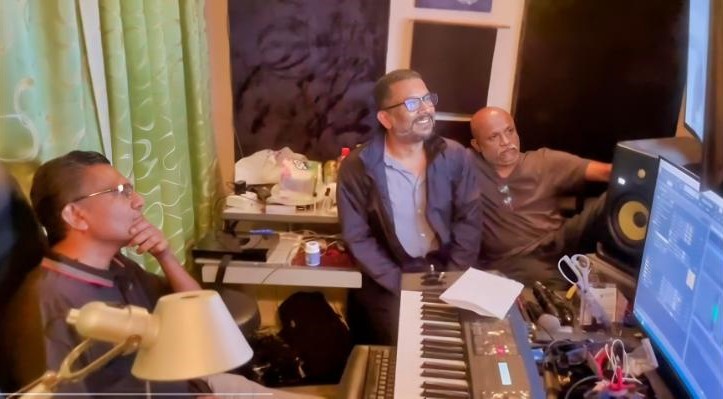
Yesterday, when director Hussain Munawwar invited me to watch the music score for Kamanaa, I was curious, yet a bit skeptical. Having never seen any of its music composer, Ahmed Imthiyaz or Inthi’s previous work, the score was the most doubtful area of the film for me.

As the scenes played out, especially the climax and the moments leading up to it, I was utterly captivated. Inthi’s music didn’t just complement the scenes; it breathed life into them. The emotion, the tension, the pain—all were amplified to a level that I hadn’t anticipated. I found myself completely absorbed, so much so that I realized I was holding my breath until the final frame.

The music seemed to interweave with the narrative, enhancing the intricacies of each character’s inner turmoil and elevating the impact of every pivotal moment. It was as if the melodies became an essential character in the story, shaping the atmosphere and guiding the viewer’s emotional journey with remarkable finesse. The synergy between the visuals and the music created a profound sensory experience, leaving a lasting impression that lingered long after the film concluded.

After the scenes ended, there was a moment of silence. It wasn’t just in the room; it was within me. I felt every ounce of what the protagonist endured, as if I had lived those moments myself. When Munawwar suggested we watch a few more scenes from the start, I simply shook my head—I didn’t need to see more to be convinced.

I turned to Inthi and shook his hand, acknowledging the tremendous job he had done. His score is a masterpiece, adding a depth to “Kamanaa” that will leave audiences as breathless as I was.

“Kamanaa” is set to release on 27th August 2024, and with a score like this, it promises to be an unforgettable cinematic experience.

KAMANAA: THE MASTERFUL TOUCH OF BHAAI

When it comes to post-production, every element counts, and multi-talented editor Abdulla Muaz aka Bhaai has truly outdone himself with Kamanaa. Not only has he delivered a well-paced and crisp edit, but he has also set a new standard for Dhivehi films with his meticulous craftsmanship. The editing in Kamanaa is sharp and precise, keeping the narrative flowing smoothly, and building up to the rousing climax with perfect pacing.

But Bhaai’s talent doesn’t stop at editing. He’s also a master of color grading and CGI, transforming ordinary scenes into visually breathtaking moments. The official trailer, for instance, features a scene where Nora played by Asha runs along a boardwalk—a scene so stunning that many thought the location was as scenic as was seen. In reality, it was Bhaai’s imagination and skill in post-production that brought this scene to life, making it a complete visual feast.

Bhaai has struck a perfect balance between fast-paced action and moments of quiet intensity, ensuring that the film’s emotional beats hit just as hard as its visual spectacles. His work has truly brought Kamanaa to life, making it an immersive and captivating experience from start to finish.

As we approach the release of Kamanaa on 27th August 2024, I can’t help but admire the remarkable job Bhaai has done. His contributions have elevated the film to new heights, and I’m confident audiences will be just as captivated by his work as I have been.

EMBRACING SILENT SORROW

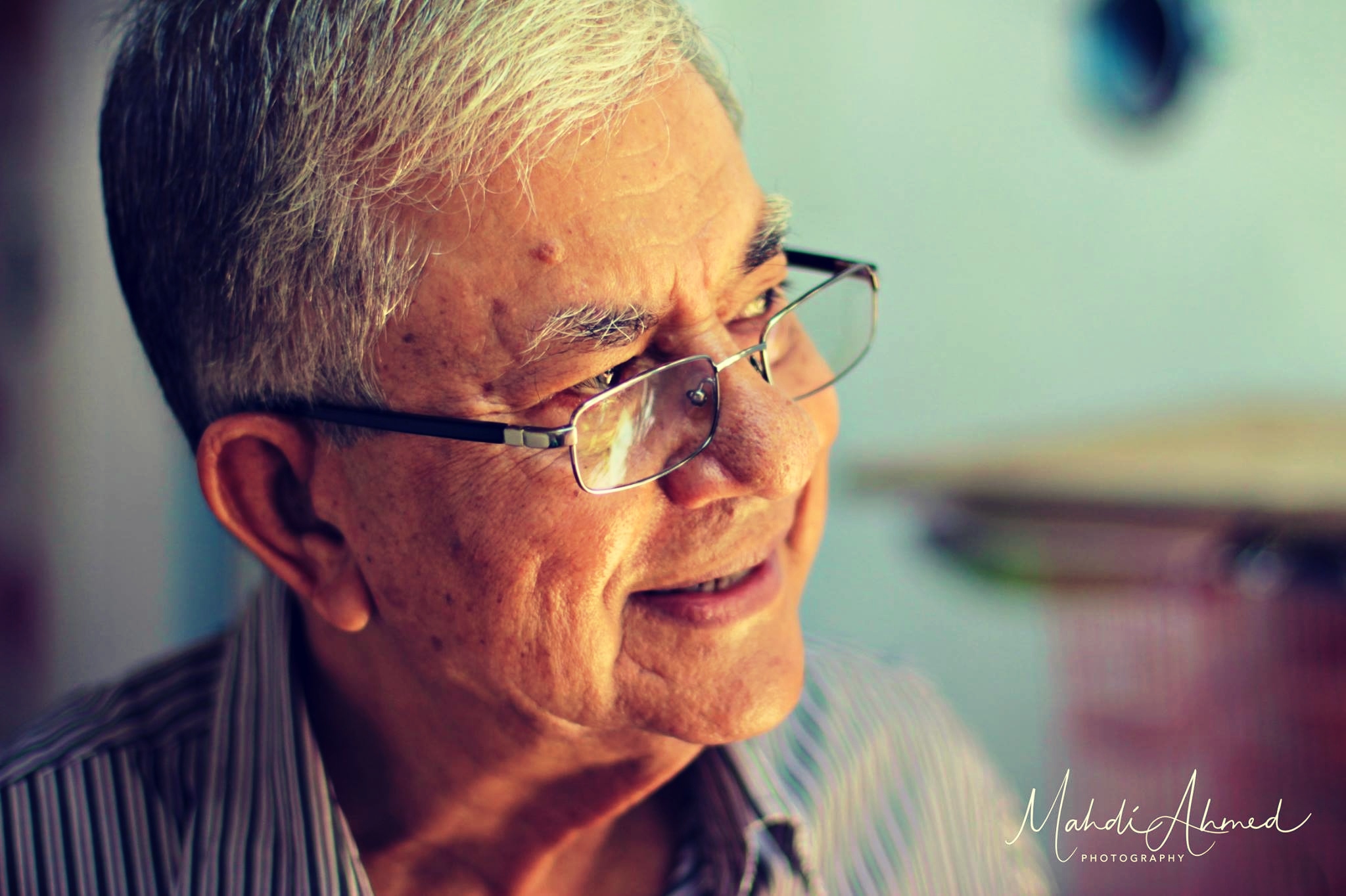
In the quiet hours of August 5th, 2022, as dawn crept upon me, I stood in the sterile, unforgiving cold of the ER. I watched helplessly as the very essence of your life, once so robust and commanding, dwindled rapidly before my eyes. When they whisked you away to the defib room, I stood by, the door ajar, catching glimpses of your feet jolting with each shock—a sight that shattered me. Forty-five excruciating minutes passed, each one a lifetime, until the doctor emerged at 07:33 AM with words that shattered my world: you were gone. At that moment, I was frozen, every part of me screaming in disbelief as I lost all sense of reality.

Holding your hand inside the  confines of the ambulance, a grim procession to the morgue felt like an eternity of torture. Your face, etched with an unnatural stillness, mocked my fervent pleas for you to wake. The minutes stretched into an endless, bleak desert, each grain of sand a fresh pang of sorrow. And then, the earth closed over you, burying a part of my soul with you.

Two years have passed, yet the wound remains as fresh as ever, the memories as raw as the day they were born. Your stories, Dad, reverberate in my mind as if you were here, narrating them once more. Tales of your youth, your pride in being the 40th to join the police force, your firsthand accounts of the pivotal moments in our nation’s history—from the unruly onslaught of Amin Didi to British negotiations for independence to the uprisings in the South. These tales, so vibrant and compelling, are etched into the core of my being. My greatest regret is not recording your experiences as grim and golden chapters of Maldivian history.

I can still vividly hear my siblings’ and neighbors’ laughter echoing through the yard as we played, all while you dutifully served in the police force. The unmistakable roar of your motorcycle would send us into a frenzy, causing us to scatter in all directions.

Even in your twilight years, hobbling with a cane, whenever the doctor gave you a clean bill of health, your face would light up with a proud blush. You’d break into a grin, showcasing your vigor with an impromptu display of bending and stretching, as if you were about to compete in the Olympics. Watching you attempt those athletic moves was both heartwarming and amusing—a bittersweet reminder of your relentless spirit, blending the vigor of your youth with the tender fragility of your age.

Your absence is an abyss that words can scarcely bridge. I ache for your presence, your wisdom, and the indomitable strength you embodied. On the previous day at the hospital, as the second septic shock struck in the X-ray room, I was there, holding you, placing you on the stretcher with trembling hands and a heart gripped by fear for your precious life. Yet, you never relinquished your faith in living. That night, in the ER, as the third shock took hold while I stood beside you, you clung to life with a tenacity that seemed both sacred and sorrowful. My very essence drained away as your courage stood as a poignant proof of the incredible spirit you possessed, even as destiny slowly pulled you away from us.

Dad, as I pour my heart out, it aches with longing and sorrow. Your memory, a heartrending reminder of the deep imprint you left on my life, is always with me. Although I failed to archive your stories, they reside within me, a silent homage to the extraordinary man you were.

With every ounce of my love and a heart filled with longing, I will persist in embracing silent sorrow.

KAMANAA: Unveiling the Haunting Reality of Domestic Violence

It all began one early morning on 04th June 2023 at Olympus Cafe. As usual, I sat with director Hussain Munawar, affectionately known as Kudafoolhu in the film fraternity, for our morning coffee. With his characteristic enthusiasm, he told me he had a story to share—a true one narrated by his wife, Rish, who got it from the source.

When he finished recounting the series of incidents, my coffee had gone cold, untouched except for one sip. Like the coffee, I felt a chill. Lately, stories with violence have been hard to stomach, and this one, about domestic violence, hit particularly hard. Munawar wanted it to be a spiritual sequel to his debut film “Sazaa,” which also dealt with violence against women and was our first collaboration in 2011. He promised to get an audio recording of the interview with the victim, and I agreed to start the detailed outlining once I received it. Little did I know this story would haunt me for the rest of the day.

The dramatic weight of the story put my brain into overdrive. That evening, on my way to Vilimale’ from Male’, I began crafting the screenplay on the ferry using my trusty Samsung S22 Ultra. By the time I reached Vilimale’, I had a rough outline. Later that evening, sprawled on the sitting room floor, I built up the backstory for all the separate acts of violence inflicted by a husband on his mild-mannered wife. I developed the characters, including the minor ones, and outlined the violent incidents leading up to the climax, staying true to the real story while reimagining it for the screen.

Days turned into weeks and weeks into months. I kept reminding Hussain about the interviews, but due to the subject’s sensitivity, Rish was still unable to record them. Meanwhile, casting had begun. Hussain locked down Mariyam Azza, the most sought-after actress, for the victimized wife and was negotiating with Yoosuf Shafeeu, the most decorated actor, for the violent husband role. He also scouted for an equally renowned actress to play the other woman. Despite some casting setbacks, he eventually onboarded the most up and coming actress, Aminath Rashfa, for the latter role. Veteran actor Mohamed Rasheed and promising actress Natasha Jaleel, along with Mohamed Manik, were assembled for the cast. I tweaked the characters and scenes to better fit the actors’ strengths, making my outline even more engaging.

Still waiting for the interviews, Hussain eventually informed me that he had set a date to begin production. He urged me to start writing. Luckily, I had the rough outline ready. I revised the outline in a day, removing repetitive violence and adding fresh, brutal scenes. Voila, the outline was complete and looked good.

With three weeks to write the screenplay, I divided my time, spending two hours in the morning and two in the evening. By the end of the final week, I had a draft ready and immediately sent it to Hussain for feedback. He shared it with the cast, and I received valuable input, particularly from Rish, who suggested additional scenes leading up to critical violent incidents and some character name changes.

The meeting with Yoosuf Shafeeu was a pivotal moment. When he approved the unrestricted interaction with the other woman, I couldn’t help but grin, my heart racing like a bullet train. I finished the final draft that night, adding intense violence and refining the interactions.

After a journey that began with a chilling tale over coffee, Hussain finally gave me the final title of the screenplay: ‘Kamanaa,’ a loving term in Dhivehi used to address a wife. What started as a daunting task had transformed into a powerful screenplay, getting ready to be brought to life on the big screen.

Kamanaa is set to release on 27th August 2024.

MAHARAJA: A Masterclass in Suspense and Emotions

Tamil film “Maharaja” (2024), masterfully penned and directed by Nithilan Saminathan, has mesmerized both audiences and critics. The film’s clever screenplay and multifaceted elements contribute significantly to its impact.

The narrative begins with a simple burglary, but the plot takes an intriguing turn when the protagonist, a mild mannered barber named Maharaja, portrayed brilliantly by Vijay Sethupathi, claims that his stolen “Lakshmi” is missing. This ambiguity hooks viewers instantly, leaving the audience to ponder whether Maharaja speaks of a literal valuable object or something more profound. Saminathan masterfully sustains this mystery, engaging viewers actively with the storyline.

The film’s non-linear narrative structure oscillates between the present, where Maharaja is on his quest to find his beloved “Lakshmi” and flashbacks that unveil his past. This dual approach not only builds suspense by leaving questions unanswered but also provides a deeper insight into Maharaja’s motivations. As his past unfolds, the audience witnesses the events that molded him and the emotional core driving his actions. This non-linear storytelling, though challenging at first, ultimately is rewarding as all narrative threads converge seamlessly.

While “Maharaja” fits within the thriller genre, Saminathan skillfully avoids a purely dark and gritty tone. The script injects humor through Maharaja’s interactions with a quirky police officer and several other oddball characters, providing comic relief without undermining the film’s seriousness. Additionally, the script explores Maharaja’s vulnerability, his love for his family, and the devastation wrought by the loss of his “Lakshmi.” This emotional depth adds weight to his actions, rendering him a more relatable protagonist.

The screenplay maintains suspense with well-placed twists and turns. Just as the audience thinks they have the plot figured out, the film surprises with a new revelation. These twists are not mere shocks; they naturally arise from the plot and character development. The climax, in particular, is lauded for its emotional resonance and the way it ties together all narrative elements.

Saminathan excels in using the power of suggestion and incorporating motifs and symbols throughout the film. Maharaja’s grief and rage are often conveyed through subtle expressions and actions rather than overt exposition. This technique allows viewers to connect with the character emotionally and engage actively with the story. This approach not only strengthens the film’s emotional impact but also fosters audience participation.

Initially, the missing “Lakshmi” serves as a McGuffin, a plot-driving object with no intrinsic value to the story. However, as the narrative progresses, “Lakshmi” evolves into a critical element tied to Maharaja’s past and motivation. It rises above the role of a simple McGuffin and becomes a Chekhov’s Gun. Similarly, other seemingly minor details introduced early in the film pay off later, foreshadowing future plot developments and solidifying the film’s tightly woven script.

The film features powerful performances by the lead cast, particularly Vijay Sethupathi, Anurag Kashyap as Selvam, the main antagonist, and the supporting actors. Sethupathi delivers a career-best performance, balancing vulnerability and intensity with finesse.

In summary, “Maharaja” (2024) stands as a masterclass in clever and engaging storytelling. It takes a familiar plot and elevates it through its unique structure, well-developed characters, and masterful use of suspense, humor, and emotional depth. The film exemplifies how filmmakers can employ various narrative techniques to craft a truly gripping cinematic experience.

Highly recommended.

P.S. The scene where Nallasivan re-enacts the robbery in Maharaja’s presence, along with the investigating police, and demonstrates how he strangled Maharaja reminded me of a powerful composition style Steven Spielberg used in his classic, The Color Purple, when Albert, engrossed in his newspaper, sees Cecile for the first time. Pure cinema magic.

KILL: A Gripping, Brutal Ride on the Rails

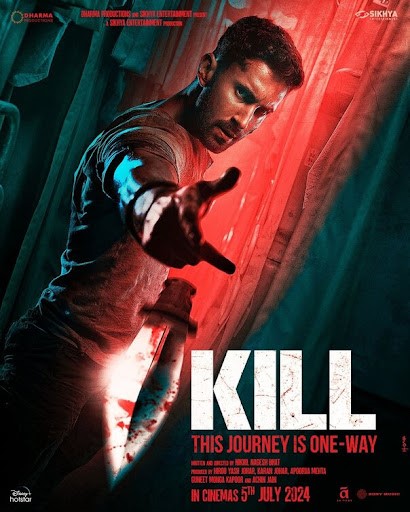
“Kill,” the latest Hindi action thriller from writer-director Nikhil Nagesh Bhat, captivates critics and audiences worldwide with its intense action sequences and daring departure from traditional Bollywood formulas. Set entirely on a train, the film eschews song-and-dance numbers and larger-than-life heroes, opting instead for a raw and unrelenting portrayal of violence.

The plot follows Amrit, a stoic army commando portrayed with impressive intensity by Lakshya, who boards a train to New Delhi to prevent his love, Tulika (Tanya Maniktala), from entering an unwanted arranged marriage. His mission gets derailed violently when a ruthless gang of dacoits, led by the merciless Fani (Raghav Juyal), hijacks the train. Driven by love and a strong sense of justice, Amrit becomes a one-man army, taking down the dacoits in a series of bone-crunching, jaw-dropping, and blood-gushing fight sequences that intensify with each frame.

The true highlight of “Kill” is its unapologetic and astonishing action. The fight scenes, a mix of martial arts and raw street brawling, are expertly devised by action directors Se-yeong Oh and Parvez Sheikh. Their creativity, supported by Rafey Mehmood’s brilliant cinematography, leaves viewers claustrophobic and on the edge of their seats as Amrit navigates the confined train compartments, creating a relentless atmosphere of tension.

Bhat’s concept, surprisingly inspired by James Cameron’s “Aliens,” focuses on a protagonist protecting someone vulnerable. Howerver, Bhat shifts the narrative’s perspective back and forth from protagonist to antagonist, elevating “Kill” beyond a typical action film by making it grittier, more relatable, and unexpectedly dramatic.

Lakshya, as Amrit, embodies the quiet rage of a soldier pushed to his limits. His steely gaze and determined body language convey more than words could. Meanwhile, Raghav Juyal, more popular as a dancer and choreographer, transforms into the chillingly charismatic villain, Fani. His menacing demeanor and razor-sharp delivery make him a formidable adversary in the vein of Hans Gruber.

The supporting cast also delivers strong performances, especially the dacoits. Cleverly, Bhat makes the narrative compelling by making all of them family, and their familial ties add an explosive emotional depth. Each bloody confrontation and brutal death realistically intensifies their horror and thirst for vengeance. Bhat also keeps the tension escalating amongst them by adding a conflict between their patriarch, Beni (Ashish Vidyarthi), and his son as Fani.

Kudos to editor Shivkumar V. Panicker for the film’s impeccably calibrated pace. Bhat, who never sits in the first edit, found Panicker ruthlessly cutting 12 minutes from the opening of his original vision and placing the main title card at an unexpected moment, which served as a great shock to everyone.

Production designer Mayur Sharma also deserves praise for constructing the train on a soundstage with movable walls to accommodate the fast-paced and intricate fight scenes Bhat envisioned.

In “Kill,” Bhat highlights the importance of art in portraying graphic violence and blood. The explicit violence serves to emphasize the stakes, desperation, and raw human emotions at play, making the film not just a visual experience but an immersive, visceral journey.

“Kill” is a bold experiment in Hindi cinema. Its raw energy, stellar performances, and innovative fight choreography make it a must-watch for fans of action thrillers seeking something fresh from Bollywood. The film’s relentless intensity evokes a profound response, leaving the audience either shaken or mesmerized.

P.S. For some strange reason, I burst into tears once the end credits started rolling. I’m not sure if I was overwhelmed by the brutal violence or the arduous journey Amrit had to endure.